AI agents, automation, and LLM-plus-n8n workflows you can actually ship.
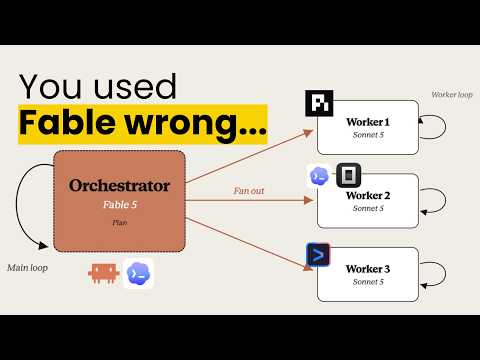
Using Fable 5 as an advisor and Sonnet 5 as the executor can cut token usage by 35%. Persistent agent sessions (sidekicks) maintain context, reducing costs significantly. Delegate tasks efficiently by defining roles in the cloud.md file.
Pi Agent offers a highly customizable coding environment for AI agents. It allows users to extend functionalities easily through custom extensions. Pi is designed to adapt to users rather than the other way around. The Cloud Code Playbook aids in maximizing the efficiency of agent systems. Users can modify the UI and harness behavior on-the-fly.
Successful loops can automate tasks and self-improve over time. Essential components of a loop: contract, state, and logs. Designing guardrails is crucial for any working loop. Example of automation includes using React Doctor for code checks. CRM loops facilitate targeted user outreach based on segmentation.
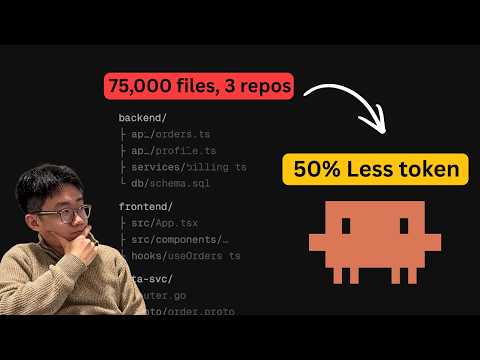
Improved coding agents can navigate large codebases effectively. Codebase Memory MCP transforms code into a relationship graph for better context. The tool significantly reduces token consumption by optimizing search processes.
Peter Steinberg is developing Crabbox to streamline agent testing. Crabbox allows parallel agent sessions to operate in isolated environments. The tool simplifies syncing changes and running tests without impacting other sessions.
Autonomous agent loops are crucial for enhancing workflow efficiency. Loop engineering focuses on designing systems that manage agent interactions effectively. The evolution of AI models has expanded the capabilities of task handling significantly. Understanding agent memory, tool access, and workflow management is key for effective loop engineering.
Self-improving companies leverage AI to enhance operational efficiency. AI agents can autonomously perform tasks and learn from feedback loops. Building an AI loop involves establishing a memory layer and skills for continuous improvement.
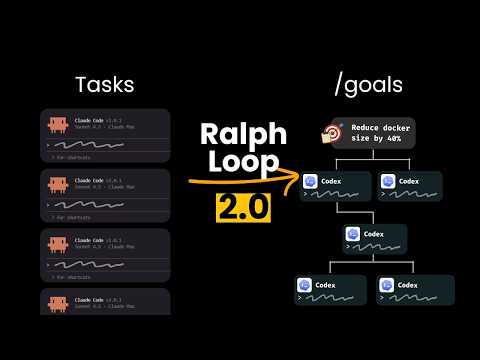
OpenAI's Codex introduces a goal feature for autonomous coding. This feature enhances project execution by allowing coding agents to work on tasks over extended periods. Hermes agent's persist ghost feature similarly aims to achieve long-term goals. The goal feature solves issues of agents completing tasks prematurely. Ideal for complex coding tasks like code migration and ambiguously defined goals.
OpenAI Symphony is an open-source orchestrator that manages coding agents through a ticket-based system. It shifts the focus from interactive coding sessions to managing tickets, reducing cognitive load for developers. The setup is powered by a flexible workflow.md file that configures agent operations and integrates with various ticketing systems.
December 2025 marked a turning point for AI, introducing fully autonomous long-running tasks. Harness engineers are evolving from prompt engineers, focusing on complex workflows across multiple sessions. Autonomous systems like Open Claw represent a significant shift in AI capabilities, allowing continuous operation and complex tasks.
Effective animation requires structured planning and scene-based prompts. Avoid vague requests to prevent chaotic animations; specify timing and states. Use tools like Superdesign and Gemini 3.1 Pro for better animation results.
Anthropic's updates on tool calling significantly enhance agent capabilities. New programmatic tool calling allows models to generate and execute code directly. Reduces inefficiencies in handling multiple tool calls, improving deterministic results.
Context management is a key limitation for coding agents. One Context improves agent memory with a new framework that logs actions and learnings. Cloud Code benefits with a 13% performance increase using this method.
Web MCP enables deterministic behavior for web agents on any website. Developers can register actions for specific web pages, enhancing agent interactions. It simplifies the process for agents to perform tasks without the need for complex translations.
Cloud Code's agent teams feature allows for collaborative task completion with multiple agents. Installation involves updating to version 2.1.34 and modifying the settings.json file. Agent teams communicate and manage tasks through new tools like team create, task create, and task update.
MCP is being replaced by a skill plus CRI tool setup for increased efficiency. Using skills reduces token consumption significantly, with reductions of over 70%. The CRI package allows for more complex actions with minimal context consumption.
Gemini 3 excels in design but needs enhanced animation for uniqueness. Effective web design involves research, content structure, and messaging. Using GSAP and motion.dev for complex animations is essential. HubSpot offers a free resource for creating high-converting landing pages. Good animations require careful planning and context.
Nano Banana enhances creativity in UI design with Gemini 3. A four-step process maximizes design outcomes effectively. Using references and context is crucial for optimal results. Nano Banana offers faster, more creative designs than standard coding agents.
Gemini 3 requires clear and concise prompting for optimal performance. Overly complex prompts can hinder Gemini 3's reasoning capabilities. An effective prompt can significantly change model output quality.
Teaching AI design styles requires more than just screenshots. Co-create with AI to achieve pixel-perfect designs. Use tools like AEO grader for improving brand visibility.
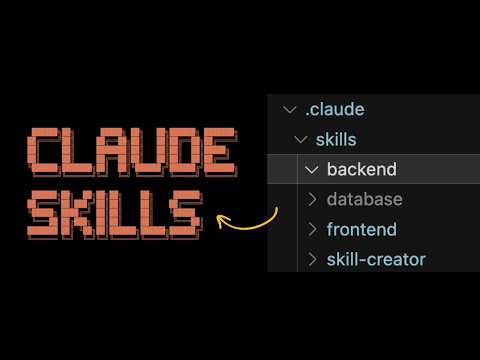
Claude introduces agent skills, a simplified yet capable concept. Agent skills use a skill.md file for efficient implementation. Skills can significantly reduce token consumption compared to MCPs. Examples include Slack GIF creator and algorithm art generation.