AI coding tutorials with Cursor, Claude Code, and modern dev workflows.
Developers can connect AI coding assistants to over 9,000 external applications using three open-source Zapier repositories. Zapier MCP enables natural language chat commands inside development environments like Cursor to trigger real-world actions directly. The Zapier SDK provides reusable scripted code for recurring or automated tasks, significantly lowering token and context costs compared to repeated MCP chat calls. Zapier Connectors allow running a standalone MCP server for individual tools without needing an active Zapier platform account by using direct API tokens. Zapier manages consolidated security logging and persistent authentication credentials so users do not have to reauthorize repetitive automated actions.
Grok Bot provides autonomous AI teammates that operate inside dedicated virtual machines to execute digital tasks and browse the web. The Teach a Task feature allows users to record their screen actions so the software can convert manual demonstrations into repeatable automated skills. Routines can be scheduled at recurring times or triggered by external events, including Slack messages, Teams messages, Git events, and webhooks. Grok Bot integrates directly with the Cursor plugin ecosystem, supporting tools such as Gmail, Google Drive, Google Calendar, and AWS SageMaker. Multiple AI bots can be organized into shared communication channels to collaborate, share context, and handle complex multi-step workflows.
Software creators do not directly handle or store customer credit card numbers when receiving payments. Stripe manages interactions with card networks, fraud detection, and regulatory banking requirements. Handling payment infrastructure independently historically required obtaining a banking license and coordinating directly with card networks like Visa and Mastercard. Stripe takes a 3 percent cut of transactions in exchange for processing payments and depositing the remaining funds into user bank accounts.
A terminal is essentially a way of texting instructions directly to a computer rather than a tool for attacking or hacking. Standard graphical interactions, such as opening folders or deleting files, have underlying written commands. Using a terminal bypasses the graphical clicking process and executes underlying computer commands directly. Modern AI coding tools like Cursor, Claude, and Codex complete tasks by executing terminal commands. Terminal commands serve as the direct language AI tools use to interact with a computer without manual clicking.
An AI email agent can triage incoming emails by dropping irrelevant newsletters and promotional messages at zero cost while drafting responses for critical messages. The Zapier SDK provides pre-built authentication, token refresh, and integration tools to connect web applications directly to Gmail and over 9,000 other services. Using plain Node.js and a single HTML file without frameworks creates a lightweight local dashboard for monitoring triage decisions and live token costs. Generating drafted replies in Gmail allows human review before sending rather than giving an AI agent unrestricted auto-send permissions. Customizing system instructions with specific business rules, FAQs, and past correspondence enables the agent to replicate personal drafting styles accurately.
Any computer task performed more than twice should be automated rather than done manually a third time. A code script is defined as a file containing a sequence of commands that a computer executes from top to bottom. Common use cases for code scripts include renaming thousands of files, backing up photo collections, and deploying applications. Code scripts function like automated to-do lists, running via a single command without human boredom or manual typos.
AI coding agents frequently choose Next.js for projects because it works reliably out of the box. Next.js is built on React with foundational architecture choices like routing, performance, and SEO preconfigured. Developers only need to write page code while Next.js handles the underlying infrastructure and plumbing. React serves as the engine, whereas Next.js provides the complete vehicle including wheels, seats, and steering. Next.js is created and maintained by the platform company Vercel.
Amazon Web Services provides rentable compute, storage, and specialized modular cloud services across global data center facilities. Many modern developer platforms, including Vercel and Supabase, operate as user-friendly interface wrappers built on top of AWS infrastructure. Direct use of AWS services like Amazon Simple Email Service (SES) allows developers to handle email delivery at a fraction of the cost of higher-level marketing platforms. AWS organizes its infrastructure around specific geographic data centers and regions, such as US East (Virginia) and US Central (Ohio). The platform allows applications to scale from a single user to over one hundred million users without changing the underlying infrastructure provider.
HTML serves as the skeleton of a website, while CSS provides the visual skin. JavaScript acts as the muscle that powers interactivity, motion, and live updates on a page. Common interactions like incrementing a like count, opening a dropdown menu, or adding items to a cart are executed by JavaScript. JavaScript is the only programming language that every web browser on Earth natively understands. Writing JavaScript allows code to run universally across mobile phones, laptops, and other devices. Together, HTML, CSS, and JavaScript constitute the entire front end of web development.
Set up your NVIDIA DGX Spark for continuous operation. Connect the device to power and Ethernet for optimal performance. Use GitHub for version control in your project setup. Install necessary software to communicate with the hardware. Create a user-friendly setup by naming devices and managing logins.
Localhost 3000 is simply code running on your computer. It is often used in development to view applications locally. Understanding localhost 3000 can prevent confusion when sharing projects.
A proxy server acts as an intermediary between a user and the internet. Using proxies can protect user privacy by masking their IP address. Proxies help maintain the security of the original server by filtering requests.
ENV files are used for storing sensitive variables like API keys. They should never be shared or pushed to the cloud, such as GitHub. For cloud access, use tools like Google Secret Manager.
Learn to set up a 24/7 local AI model using Nvidia Spark. Key factors include hardware choice and its implications for performance. Workflow demonstration will automate video content creation tasks.
Cloudflare provides server rooms that reduce latency. It connects users to edge servers for faster website access. Cloudflare offers redundancy, enhancing application reliability.
A Content Delivery Network (CDN) speeds up website performance by storing copies of content closer to users. CDNs reduce server load and latency, enhancing user experience and saving costs. Using a CDN helps manage high traffic efficiently by distributing requests across multiple edge servers.
Cloud agents are AI services hosted in the cloud. They allow users to run tasks on virtual machines indefinitely. Cloud agents enable outsourcing of computing power for specific tasks.
WebSockets provide a fast and efficient way to deliver real-time data. They maintain an always-open connection, reducing latency significantly. Examples include live stock prices, AI voice interactions, and real-time collaboration.
Authentication is crucial for online security. Common examples include signing in with Google or Microsoft. A unique identifier (UID) is used to associate your account with your email or phone number.
Cloud agents are AI tools that run code in the cloud. They can perform specific tasks like transcription and image processing. Cloud agents free up your time by operating continuously without your presence.
API enables communication between different software applications. APIs allow for functionality like posting to social media from external applications. Understanding APIs is essential for developers and coders.
Vercel simplifies application deployment. It rents servers from Amazon for convenience. While cheaper options exist, Vercel focuses on user experience.
Learn how to use Codex for app development from scratch. Understand key concepts like projects, branches, and automations. Explore practical examples of creating internal applications with Codex.
MCP stands for Model Context Protocol. It allows AI to connect directly to various applications. MCP functions like a USB for AI, enabling streamlined communication.
GitHub is like Google Drive for code. It enables collaboration among teams. Users can revert to previous versions of their projects. A resource for accessing free code from various organizations.
The government recently banned Anthropic's Fable 5 AI. The ban lasted over four weeks before being lifted. Capable AI models are increasingly subject to government restrictions. Access to advanced AI may be restricted to a privileged few.
Localhost:3000 is a local server running code on your computer. Port 3000 is commonly used for development, chosen arbitrarily by developers. You cannot share your localhost applications with others-they're local to your machine. It's a visual representation of running applications, similar to Chrome or Spotify.
Webhooks are essential for enabling communication between apps. They operate using HTTP requests like GET and POST to send and receive data. JSON payloads are commonly used for structuring the data exchanged via webhooks. A practical example includes using webhooks with Stripe for payment processing.
.env files store sensitive environment variables securely on local machines. There are different types of .env files like .env.example and .env.production for various environments. Never share .env files publicly; use placeholders in .env.example instead. Environment variables can differ across development, QA, and production settings.
Docker creates isolated environments for running applications. Containers are like zipped files that package code for consistency across platforms. Docker enables testing locally before deploying applications to real environments.
AI agents can trade with real money using defined strategies. Kraken's CLI offers comprehensive tools for trading automation. Users can set up customized trading algorithms with a paper trading account. The video demo includes a Bitcoin trading bot example. Multiple trading strategies can be implemented through the CLI.
DNS translates domain names into IP addresses, allowing users to access websites easily. Purchasing a domain is essentially renting an IP address associated with it. Cloudflare offers DNS services with added security features for your domains. Understanding DNS is crucial for anyone involved in web development or online presence.
Cloudflare acts as a security and performance layer between users and web servers. It owns its own servers and provides edge computing to deliver content quickly from the nearest location. Many major companies, including OpenAI and Shopify, use Cloudflare for enhanced security and speed.
Brand visibility is crucial for businesses. Semrush's MCP tool integrates with AI chatbots for actionable data. You can assess website performance and discover organic keywords.
APIs allow developers to access external data without building the infrastructure themselves. APIs use URLs and JSON payloads to facilitate software communication. Free and paid APIs exist, with various functionalities, from data retrieval to CRUD operations. Integrating APIs saves time and resources when building applications.
Authentication is the process of verifying user identity when signing up or logging into software. Unique identifiers (UIDs) are created for each user to maintain data association and security. Authentication enables personalized user experiences and access controls.
Vercel simplifies the deployment of code by acting as a wrapper for AWS servers. It allows developers to deploy live websites easily, without deep technical knowledge of cloud infrastructure. Edge servers enhance performance by distributing website code to locations closer to users globally.
Storyboards help organize mobile app development to avoid AI-generated slop code. A storyboard outlines the flow and user interactions within an application. Consistency in design elements across an app is crucial to prevent fragmentation. Using storyboards supports scalable architecture and simplifies testing. Creating a detailed storyboard tab can streamline development and reduce errors.
SQL databases are essentially advanced spreadsheets for managing large data sets. CRUD operations (Create, Read, Update, Delete) are fundamental for working with SQL databases. SQL allows fast and efficient handling of millions of records, making it ideal for applications with extensive data.
Build a no-code AI trading bot using Zapier and Alpaca API. Zapier SDK simplifies integration with over 9,000 applications. Use paper trading for safe testing before executing live trades.
Leverage parallel AI agents to speed up app development. Create reusable design primitives for consistent UI. Use Docker for local development without internet dependency. Build entire applications in a fraction of the time, improving productivity.
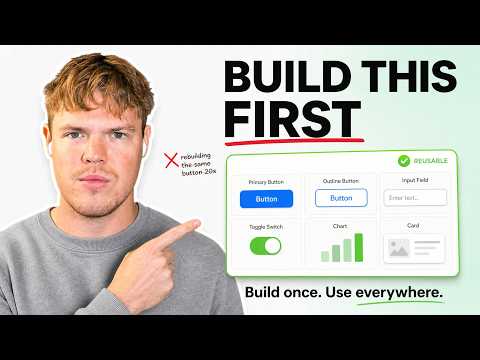
Develop reusable components, called primitives, for efficient UI design. Focus on standardized elements for 80% of the application. Use a sandbox for experimentation without risk.
APIs allow software applications to perform specific actions. The video demonstrates integrating an API into a platform with minimal coding experience. A focus is on using the Alpaca API for building a trading app. Proper structuring and documentation are crucial in API integration. AI tools can simplify the API documentation and integration process.
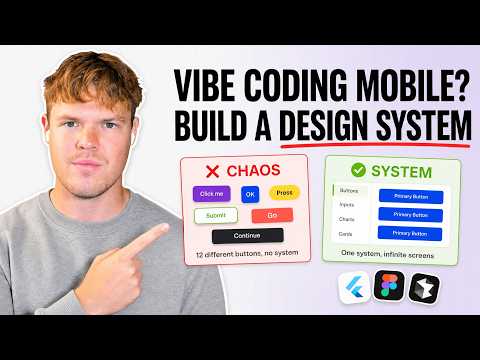
Building a mobile app design system using Flutter for iOS and Android. Focus on creating user interface elements before backend integration. Use custom scripts for efficient terminal commands.
Use Flutter for cross-platform mobile app development. Docker provides a local environment to simulate back-end functionality. You can develop without engaging cloud services initially.
Learn how to design front-ends using AI from a senior engineer's perspective. Explore the process of creating logos and implementing design changes with AI tools. Understand key SEO practices and technical requirements for a successful front-end.
Learn to build a landing page from scratch with best practices. Understand key elements: header, meat, and footer. Focus on mobile responsiveness and SEO. Use tech stacks like Next.js, Tailwind, and TypeScript. Practice building with AI tools for efficient coding.
AI agents can benefit from additional layers for crash-proofing. Implementing Agent Span allows workflows to save progress during failures. The integration improves visibility and control over AI pipelines.