Data analysts should move beyond basic Pandas operations to master merging, grouping, handling missing values, and pivot tables. Data cleaning and validation must precede analysis to identify mismatched types, duplicates, and outliers. Python scripts can replace repetitive manual reporting by automating file concatenation and standard data workflows. Visualization libraries such as Matplotlib, Seaborn, and Plotly should be used to communicate business findings clearly to non-technical stakeholders. Repetitive data transformations should be packaged into reusable, testable functions rather than duplicated across scripts. Portfolio projects are most effective when they combine at least three core skills and explain the business problems solved.
A customer churn model teaches essential machine learning concepts including class imbalance, data leakage, decision thresholds, and trade-offs between false positives and false negatives. A recommendation system project provides hands-on experience with ranking, behavioral data, cold-start challenges, and situations where models perform well statistically but fail user expectations. A fraud or anomaly detection system builds skills in precision, recall, handling false alarms, and monitoring performance as real-world behavior shifts. A customer churn model is the top priority among beginner projects because it demonstrates the most direct connection between model output and practical business decisions. Portfolio projects should not simply be raw code notebooks, but must include explanations of the problem solved, decisions made, and evaluation methods used.
Answering interview questions immediately without clarifying assumptions prevents candidates from demonstrating how they manage ambiguity. Solving interview problems in silence prevents interviewers from assessing a candidate's thought process, rationale, and evaluation of trade-offs. Reacting defensively to pushback fails to show interviewers that a candidate can incorporate new information and adjust their strategy. Interviewers evaluate whether a candidate communicates effectively, handles unclear problems, and collaborates well with a team, not just whether they provide a correct answer. Rejection in a difficult job market does not necessarily indicate a lack of qualifications, but candidates can control how clearly they demonstrate their thinking.
Maxing out 401(k) contributions at the beginning of each year allowed Khalid to capture Google's employer match of approximately $12,000. Khalid lived entirely on her 9-to-5 salary and directed 100 percent of her side-hustle earnings into an investment account. Google provided access to financial advisors who reviewed Khalid's portfolio and helped prioritize investment strategies. Working with professional advisors helped Khalid learn complex financial topics that were difficult to master through self-study alone.
Artificial intelligence has successfully automated routine execution tasks like basic SQL writing, simple data cleaning, and chart generation, but it has not eliminated data analyst roles. The current difficulty in finding analytics roles stems primarily from a broader tech hiring slump with postings remaining 34 percent below pre-pandemic levels, rather than wholesale AI replacement. Artificial intelligence tools struggle with business context and domain-specific tribal knowledge, resulting in low accuracy unless paired with a curated semantic layer. Human judgment remains critical to validate plausible-sounding AI explanations against actual business and product changes that models cannot observe. Job descriptions increasingly demand AI proficiency, shifting the data analyst role from manual execution toward metric definition, request challenging, and strategic decision support.
Anthropic offers 22 free AI courses through its learning academy. Beginners new to Claude should start with Claude 101 followed by AI Fluency: Framework and Foundations. Workplace professionals already familiar with AI can take Introduction to Claude Cowork to handle research and multi-step file tasks. Developers have a dedicated track spanning Claude Code 101, Claude Code in Action, Claude Platform 101, Building with the Claude API, and Model Context Protocol courses. Anthropic provides specialized AI fluency courses for students, educators, small businesses, nonprofits, and builders. Practical AI fluency requires applying course concepts to real tasks such as workflow automation, report writing, or application development.
Sundas Khalid unboxes the pink base model Apple iPhone 16. The packaging includes the pink iPhone unit alongside a braided USB-C charging cable. The device is powered on to the iOS welcome screen, displaying the animated greetings. A damaged older smartphone displaying vertical display lines is shown beside the new phone. A matching magenta silicone protective case is unboxed and fitted onto the pink iPhone 16.
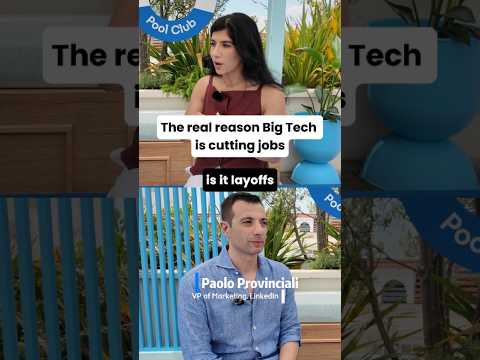
Tech industry data shows that productivity per employee grew between 2019 and 2024 rather than dropping. The sustained growth in employee productivity contradicts the popular claim that layoffs were simply a correction for post-COVID overhiring. Big Tech companies are making massive capital and infrastructure investments in artificial intelligence. Public companies are cutting operational costs to make financial room on their profit and loss statements for ballooning AI infrastructure expenses.
ChatGPT Work allows job candidates to connect scattered materials across Google Drive, Notion, local files, and email into a single project workspace. The tool can analyze job descriptions against an existing resume to tailor bullet points, refine wording, and identify qualification gaps. Candidates can generate condensed technical cheat sheets and structured behavioral interview stories based strictly on documented background experience. ChatGPT Work creates structured preparation outputs including a three-day study plan and key technical review topics. Users can conduct verbal mock interview sessions using the voice feature and publish an online resume webpage using the built-in Sites tool.
Google provides 14 free artificial intelligence courses covering introductory to advanced topics. Complete beginners are advised to start with AI Boost Bites, Introduction to Generative AI, and Introduction to Large Language Models. Working professionals seeking productivity gains can take Make AI Work for You to apply Google AI tools to workplace tasks. Learners interested in model mechanics can study Introduction to Responsible AI and the Machine Learning Crash Course. Developers are directed to courses covering Google's Agent Ecosystem, Google AI Studio prototyping, and Agentic AI on Google Cloud.