A single AI model simulates the behavior of many substances, from sliding sand to folding proteins
Researchers have highlighted an artificial intelligence model designed to simulate the physical behavior of various substances. Known as WorldParticle, the system learns fundamental principles of how matter moves, allowing it to cover phenomena ranging from sliding sand to folding proteins. This unified capability could support practical advancements in creating soft robots and developing medicines.
Key Takeaways
- A single artificial intelligence model called WorldParticle can emulate the physical movements of diverse materials, ranging from shifting sand grains to complex folding proteins.
Rather than relying on separate tools for different physical systems, the model learns the foundational principles governing how matter moves across various physical states.
- By accurately modeling material dynamics, the WorldParticle framework could help researchers innovate in fields such as soft robotics development and pharmaceutical creation.
The WorldParticle AI system can simulate physical behaviors across a wide variety of materials, ranging from sand to proteins.
- Potential applications for this technology include designing soft robots and creating new medicines.
- This generalized approach to physical simulation holds practical promise for multiple scientific and engineering disciplines.
- By studying the motion of matter, the model unifies different physical simulations into one framework.
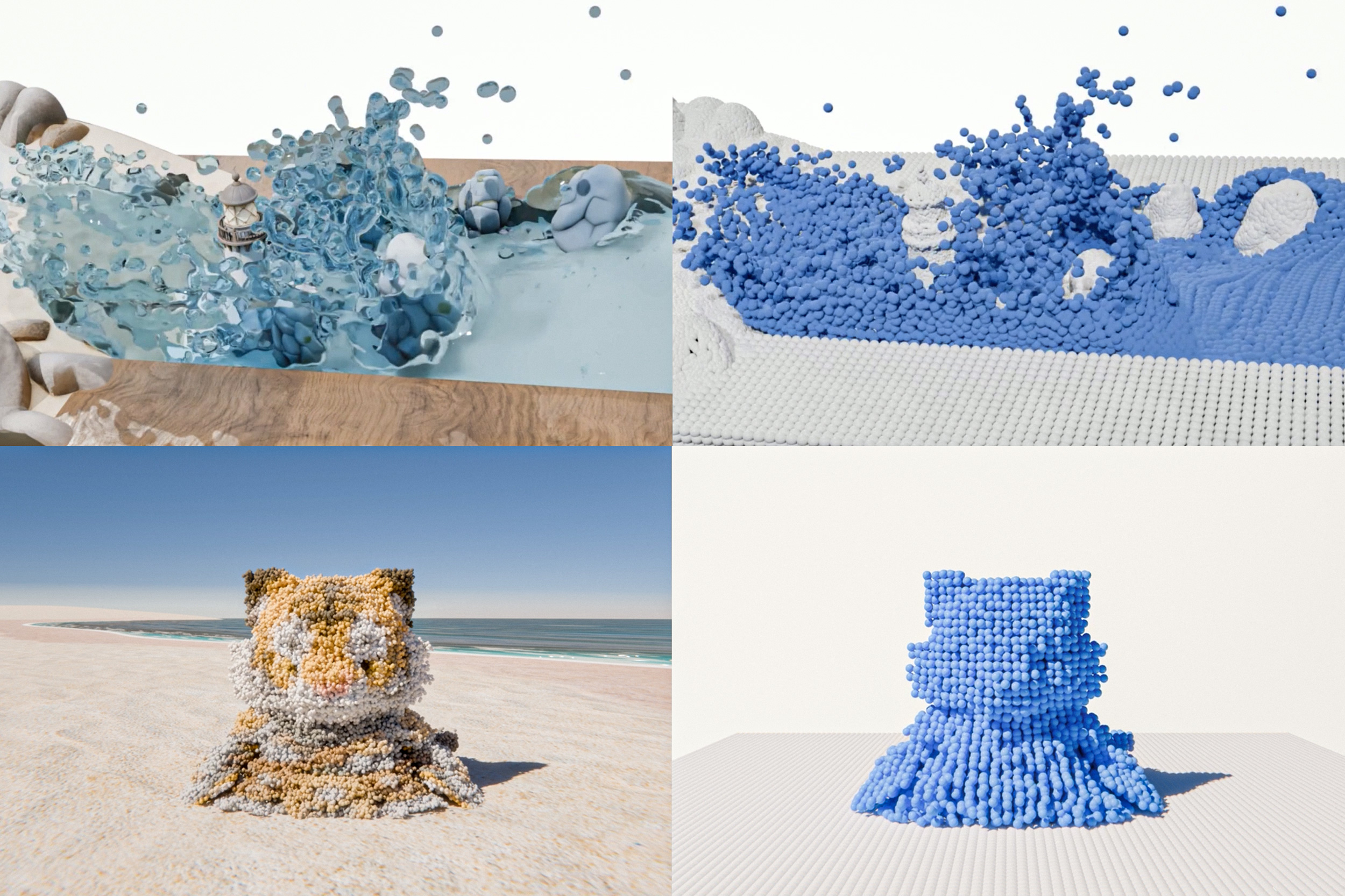
A single artificial intelligence model called WorldParticle can emulate the physical movements of diverse materials, ranging from shifting sand grains to complex folding proteins. Rather than relying on separate tools for different physical systems, the model learns the foundational principles governing how matter moves across various physical states. This generalized approach to physical simulation holds practical promise for multiple scientific and engineering disciplines.
By accurately modeling material dynamics, the WorldParticle framework could help researchers innovate in fields such as soft robotics development and pharmaceutical creation. The WorldParticle AI system can simulate physical behaviors across a wide variety of materials, ranging from sand to proteins. By studying the motion of matter, the model unifies different physical simulations into one framework.
For more details please read the original article at MIT News AI.
Continue Learning
Comments
Comments appear only after moderation. Your email identifies your submission to the moderator and is never displayed here.
No approved comments yet.