AI ambition is crashing into a decade of deferred IT maintenance, says Red Hat CEO
Speaking at Red Hat Summit 2026, Red Hat CEO Matt Hicks argued that enterprise AI ambition is colliding with a decade of deferred IT maintenance and technical debt. He says boards demand returns on AI while IT teams remain buried under unresolved complexity, making a return to basics like patching and simplicity nonnegotiable. Red Hat positions Ansible and Red Hat Enterprise Linux as the tools to close that maintenance gap before scaling production AI.
Key Takeaways
- Red Hat CEO Matt Hicks says AI ambition is crashing into a decade of deferred IT maintenance.
- Boards demand returns on AI investment while IT teams remain buried under unresolved complexity.
- Hicks says returning to basics like patching and simplicity is now nonnegotiable.
- Red Hat offers Ansible for automation and Red Hat Enterprise Linux as a stable foundation.
- Enterprises face two coexisting tracks: fast-updating AI workloads and mission-critical systems teams fear to touch.
Stats & Key Facts
- #Red Hat Summit 2026 is where Hicks spoke
- #IT teams have spent the last 10 years trying to get to cloud
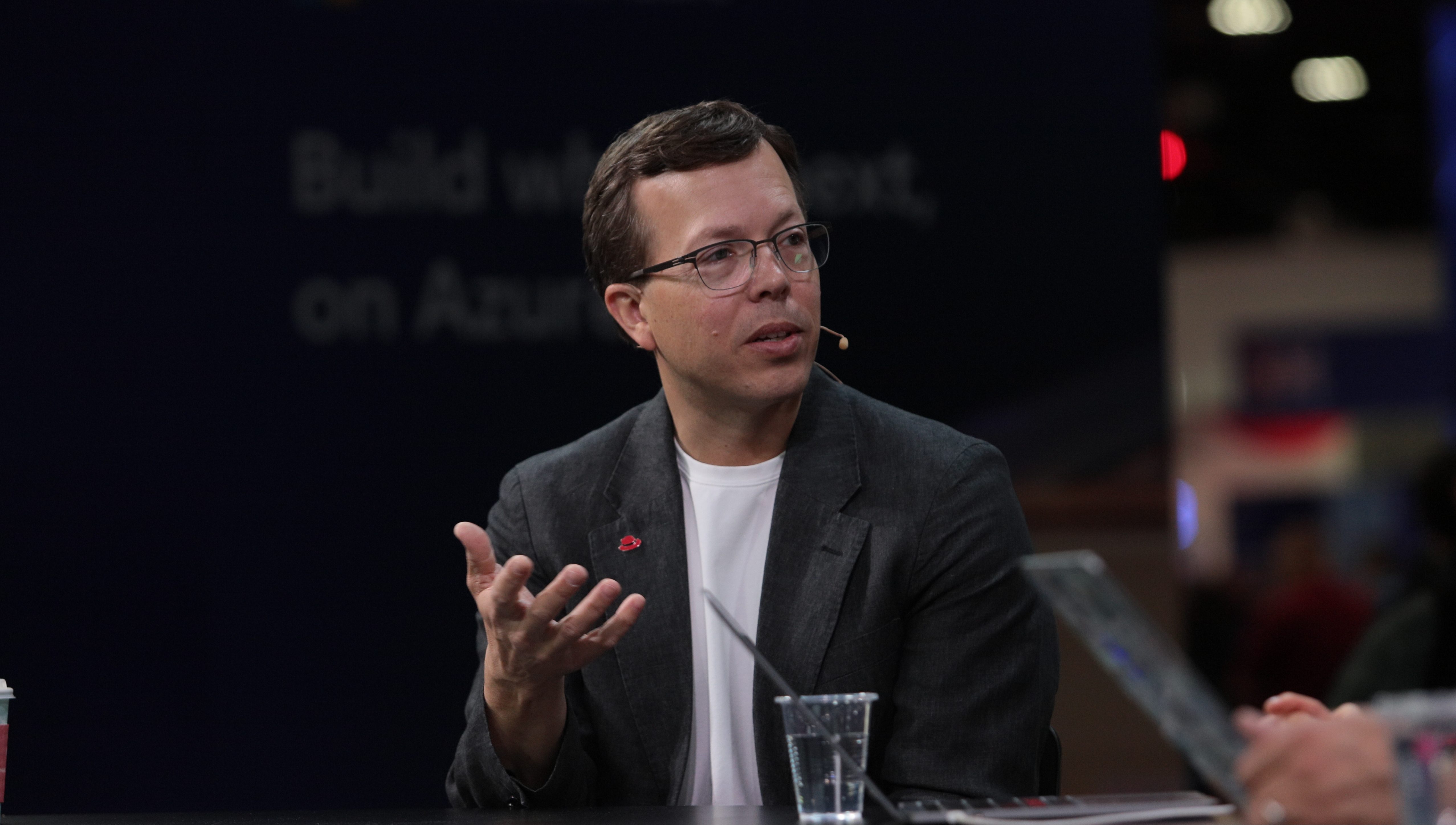
AI ambition meets technical debt
Two pressures are colliding at once.
- ›Organizations grapple with decades of technical debt while facing pressure to deploy AI.
- ›Boards apply top-down pressure to make use of what the technology can do.
- ›Hicks says the race to deploy AI is won or lost long before the first model hits production.
Hicks said that for the last 10 years IT teams tried to get to cloud, ended up in multiple spots and dealt with many technologies without always maintaining technical debt, and now it is all crashing down at once.
Why a return to basics
Maintenance can no longer be skipped.
- ›Hicks describes a 'back-to-basics' mode focused on patching systems.
- ›One year ago, skipping that risk might have been arguable; AI has made it not okay to skip.
- ›IT teams must both learn new tooling and drive maintenance and simplicity.
Hicks said teams that do not return to basics on maintenance and simplicity cannot compete in this world.
Red Hat's tools for the work
Two core products target the maintenance gap.
- ›Ansible is Red Hat's IT automation platform that handles patching and configuration at scale.
- ›Red Hat Enterprise Linux provides a stable, certified operating foundation for enterprise workloads.
- ›Red Hat is expanding its agentic AI strategy with new inference, automation and governance capabilities.
The company is working to steer customers toward closing the maintenance gap before chasing new capabilities.
Two infrastructure tracks
AI and mission-critical systems pull in opposite directions.
- ›AI workloads demand ultra-fast update cycles to stay secure.
- ›Mission-critical systems leave IT teams too nervous to touch anything, even when they should.
- ›Treating AI as a managed workload adds zero-vulnerability image requirements and rapid build cycles.
Common Vulnerabilities and Exposures images are system snapshots scrubbed of known security flaws, easy to demand but costly to deploy on systems organizations are afraid to update. Hicks said this tension shows up most in RHEL, where customers ask for zero CVE images but want them on systems that never change.
Frequently Asked Questions
What is Red Hat's CEO warning about?
Matt Hicks says enterprise AI ambition is crashing into a decade of deferred IT maintenance and technical debt, making a return to basics nonnegotiable.
Why has maintenance become urgent now?
Hicks says that one year ago the risk of skipping patching might have been acceptable, but AI has made skipping it no longer okay.
What tools does Red Hat offer for this?
Ansible, its IT automation platform for patching and configuration at scale, and Red Hat Enterprise Linux as a stable, certified operating foundation.
What are the two infrastructure tracks?
AI workloads demanding ultra-fast update cycles, and mission-critical systems where IT teams are too nervous to make changes.
What are zero CVE images?
Common Vulnerabilities and Exposures images are system snapshots scrubbed of known security flaws, which customers demand but find costly to deploy on systems they fear to update.
Hicks argues that closing the maintenance gap through patching and simplicity must come before enterprises can safely scale production AI.
Continue Learning
Comments
Sign in to join the conversation