AI Is Changing How Semiconductor Fabs Work - and Engineers Are Moving Faster Because of It
Artificial intelligence is transforming semiconductor fabrication processes and helping engineers complete tasks more quickly. This development occurs as global demand for advanced microchips expands and production methods become more complex. At the same time, the industry faces an increasingly narrow margin for error during chip manufacturing.
Key Takeaways
- An update from the NVIDIA Blog explains that artificial intelligence is actively transforming how semiconductor fabrication plants operate.
The shift enables engineers to perform their tasks more rapidly in response to growing industry demands.
- As advanced microchips become more sought after, the underlying fabrication steps needed to build them are growing far more complex.
These developments mean that semiconductor manufacturing now leaves very little room for mistakes, as the margin for error continues to decrease.
- To handle these demanding conditions, chipmakers are turning to automated systems to streamline production.
This shift shows how modern computing hardware manufacturing relies directly on intelligent software to maintain precision under tight operational constraints.
- Artificial intelligence is changing semiconductor fabrication operations, allowing engineers to increase their speed.
Global demand for advanced microchips is growing while manufacturing procedures become more complex.
- Semiconductor production is facing a shrinking margin for error as chip design complexity increases.
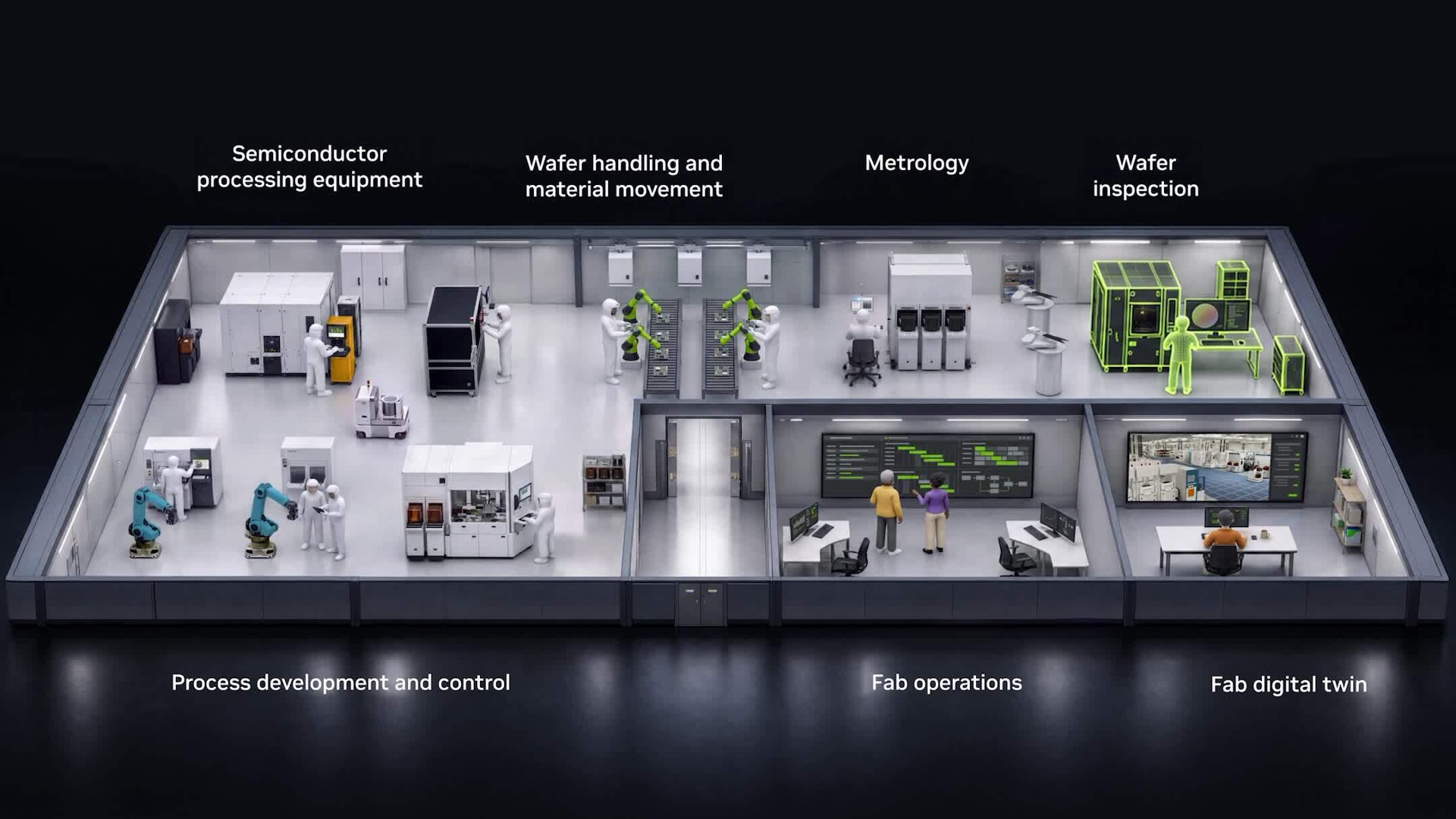
An update from the NVIDIA Blog explains that artificial intelligence is actively transforming how semiconductor fabrication plants operate. The shift enables engineers to perform their tasks more rapidly in response to growing industry demands. As advanced microchips become more sought after, the underlying fabrication steps needed to build them are growing far more complex.
These developments mean that semiconductor manufacturing now leaves very little room for mistakes, as the margin for error continues to decrease. To handle these demanding conditions, chipmakers are turning to automated systems to streamline production. This shift shows how modern computing hardware manufacturing relies directly on intelligent software to maintain precision under tight operational constraints.
Artificial intelligence is changing semiconductor fabrication operations, allowing engineers to increase their speed. Global demand for advanced microchips is growing while manufacturing procedures become more complex. Semiconductor production is facing a shrinking margin for error as chip design complexity increases.
For more details please read the original article at NVIDIA Blog.
Continue Learning
Comments
Comments appear only after moderation. Your email identifies your submission to the moderator and is never displayed here.
No approved comments yet.