AMD and Red Hat target enterprise AI costs with broader compute choice
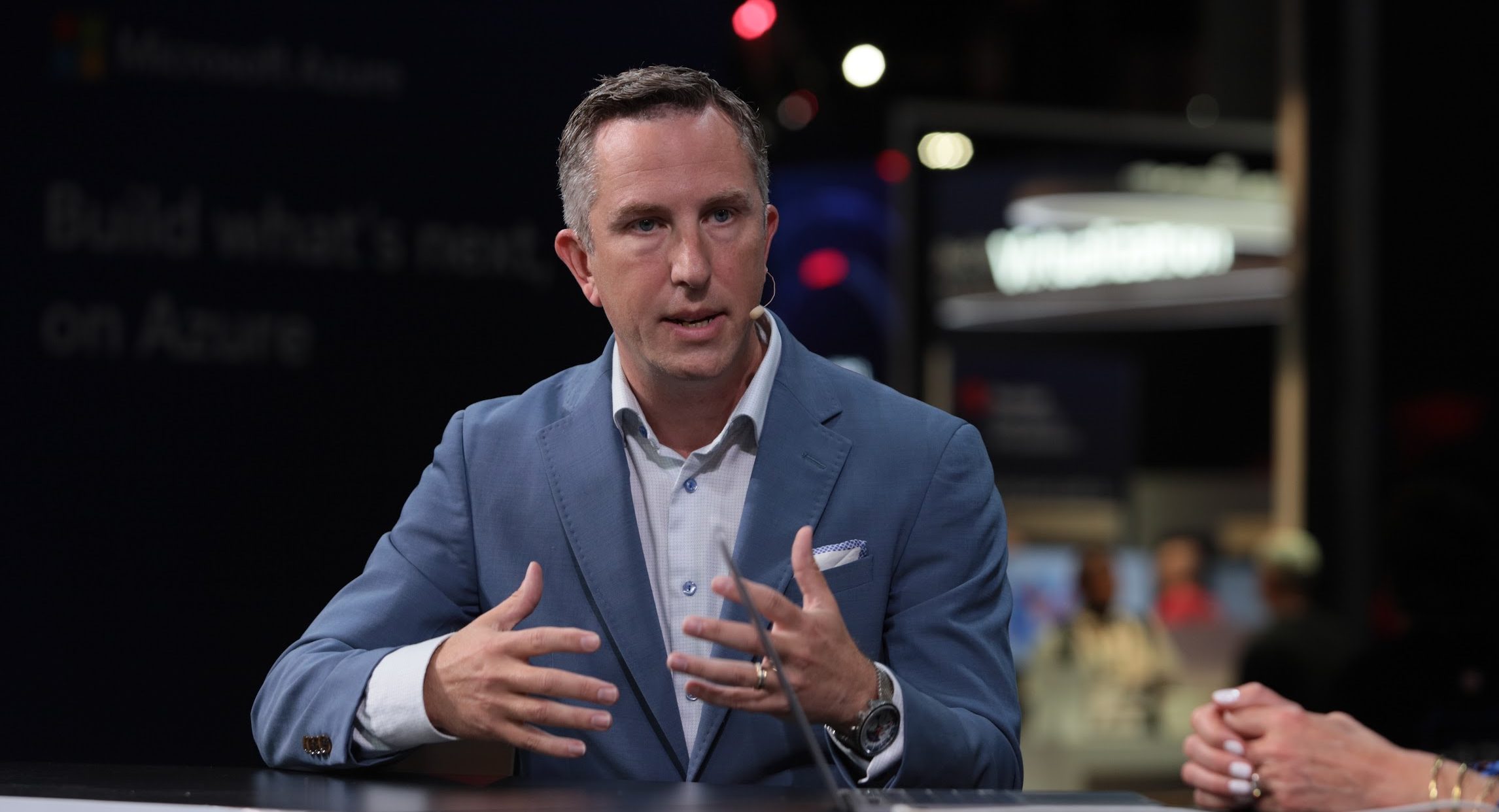
AMD and Red Hat are positioning AI choice, the ability to match workloads to the right compute rather than defaulting to the most powerful infrastructure, as the way enterprises control rising AI costs. Speaking at Red Hat Summit 2026, AMD's John Hampton said enterprises that bought big GPU clusters early are now facing costs few budgets anticipated. AMD pairs a full-spectrum compute portfolio across CPUs and GPUs with Red Hat's open software stack to map use cases to the most cost-effective option.
Key Takeaways
- AMD and Red Hat present AI choice as the critical factor for balancing performance, cost, and innovation.
- Enterprises that bought large GPU clusters early now face costs few budgets anticipated, a problem the industry calls tokenomics.
- AMD offers a full-spectrum compute portfolio across CPUs, cost-effective GPUs, and high-end accelerators.
- The AMD Instinct MI350P is a PCIe-based, air-cooled GPU designed as a drop-in for existing servers.
- Red Hat AI provides an enterprise platform for deploying and scaling AI agents across hybrid cloud.
- Server consolidation with AMD EPYC CPUs and Red Hat virtualization can shrink data center footprints.
Why AI choice matters now
The question has shifted from whether to invest in AI to how to do it wisely.
- ›AI choice means matching workloads to the right compute rather than defaulting to the most powerful infrastructure.
- ›It has become a growing priority as agentic workloads multiply and inference costs rise.
- ›AMD's John Hampton said enterprises keep telling him they need an alternative and choice.
Hampton, corporate vice president of global enterprise technical sales at AMD, said the AMD and Red Hat partnership brings that choice in an open environment versus a proprietary, closed approach.
The cost problem and tokenomics
Early infrastructure bets are proving costly at scale.
- ›Many enterprises ran out and bought big GPU clusters because they knew they had to solve for AI.
- ›Those clusters now generate costs few budgets anticipated.
- ›The industry calls this tokenomics, where every AI query carries a measurable, cumulative price tag.
Hampton said enterprises are coming to AMD saying their AI use is good but the cost is exploding and they cannot afford it anymore.
AMD's full-spectrum compute portfolio
AMD pairs hardware breadth with Red Hat's open software stack.
- ›AMD offers compute options across CPUs, cost-effective GPUs, and high-end accelerators.
- ›The AMD Instinct MI350P is a PCIe-based GPU designed as a cost-effective, air-cooled drop-in for existing servers.
- ›Red Hat AI provides an enterprise platform for deploying and scaling AI agents across hybrid cloud.
Hampton said AMD wants to map AI use cases to CPUs or to lower-power, lower-cost GPUs, and that it has a full spectrum of solutions across inferencing to find the most optimal option.
Server consolidation and freeing budget
Consolidation can free resources for AI initiatives.
- ›Server consolidation with AMD's EPYC CPUs and Red Hat's virtualization tools can shrink a data center footprint dramatically.
- ›These advances free budget and power capacity needed to fund AI.
- ›The goal is smarter compute decisions across hybrid environments.
The outlook
AMD frames the next chapter of AI around choice and results.
- ›Hampton said the story is all about choice.
- ›AMD wants to act as a trusted advisor to work through complexity.
- ›He suggested running a proof of concept to measure financial and technology impact.
The interview was part of theCUBE's coverage of Red Hat Summit 2026. AMD sponsored the segment, and the article notes sponsors do not have editorial control over the content.
Frequently Asked Questions
What is AI choice?
AI choice is the ability to match workloads to the right compute rather than defaulting to the most powerful infrastructure available, balancing performance, cost, and innovation.
What is tokenomics in this context?
It is the term the industry uses for the cumulative, measurable cost of AI, where every AI query carries a price tag, leaving enterprises with GPU cluster costs few budgets anticipated.
What is the AMD Instinct MI350P?
It is a PCIe-based GPU designed as a cost-effective, air-cooled drop-in for existing servers, rounding out AMD's inferencing range.
How do AMD and Red Hat help control costs?
AMD provides a full-spectrum compute portfolio across CPUs and GPUs, Red Hat provides an open software stack and AI platform, and server consolidation with EPYC CPUs and Red Hat virtualization can shrink the data center footprint.
Where was this discussed?
AMD's John Hampton spoke with theCUBE at Red Hat Summit 2026 in a segment sponsored by AMD.
AMD frames the next chapter of enterprise AI as defined by choice and concrete results.
Continue Learning
Comments
Sign in to join the conversation