Build context-rich research agents with Deep Agents and Bedrock AgentCore
AWS Machine Learning has published a guide on building context-rich competitive research agents using Deep Agents and Bedrock AgentCore. The resource targets developers who build multi-step artificial intelligence workflows that require isolated execution environments. It demonstrates how to deploy the agent to Bedrock AgentCore Runtime using the AgentCore CLI so that it operates as a managed service.
Key Takeaways
- AWS Machine Learning released a walkthrough showing how to build competitive research agents by leveraging Deep Agents and Bedrock AgentCore.
This technical guide focuses on developers creating multi-step AI workflows who need isolated execution environments to run their automated tasks safely.
- This step turns the agent into a managed, session-isolated service, providing practical insights into how cloud platforms host modular AI systems.
AWS Machine Learning published a walkthrough for creating competitive research agents.
- Developers can use the AgentCore CLI to deploy their agents to Bedrock AgentCore Runtime.
- The second part of the project notebook explains how to deploy the research agent to Bedrock AgentCore Runtime with the AgentCore CLI.
- The material targets developers who construct multi-step AI workflows in isolated environments.
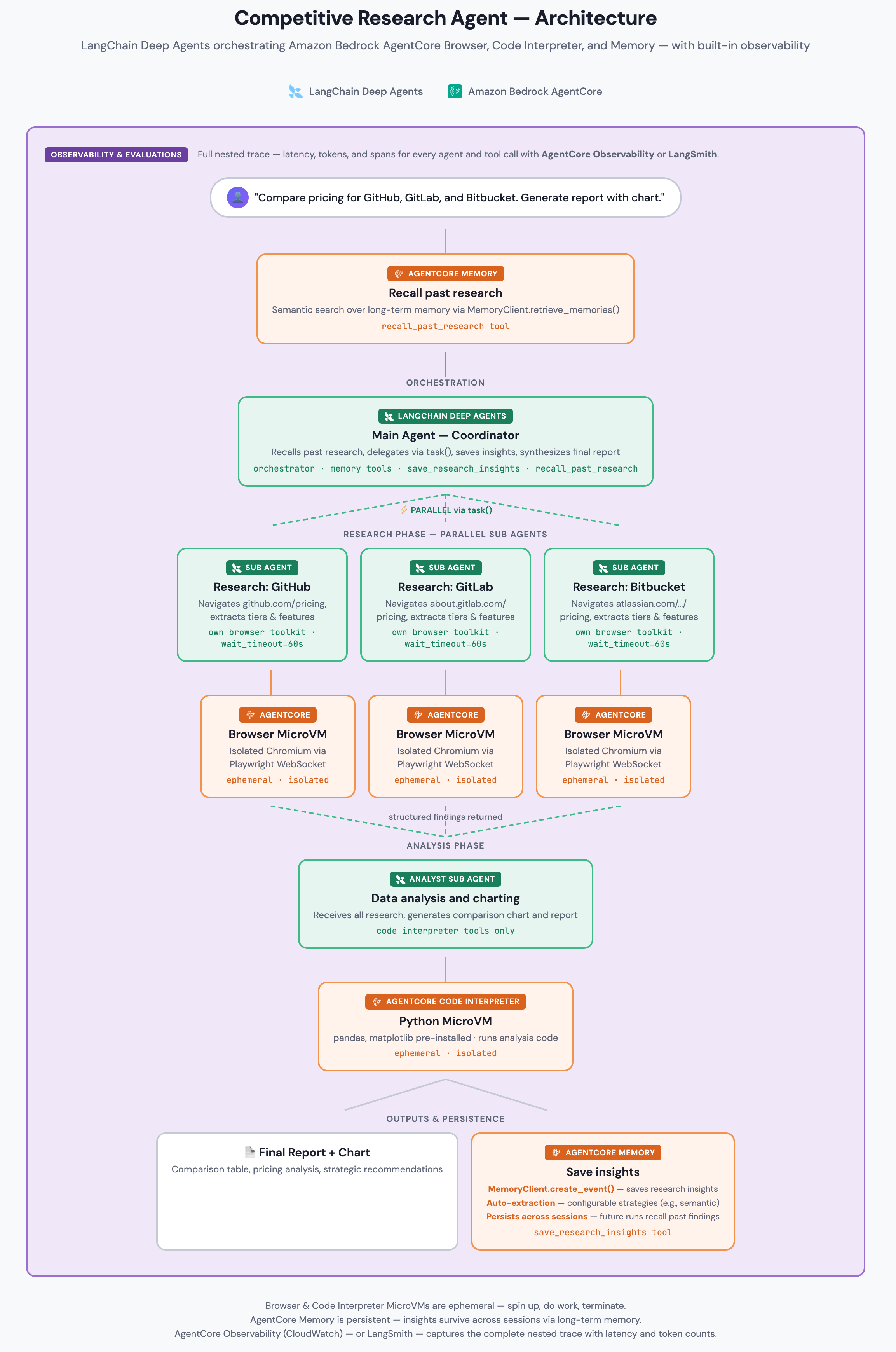
AWS Machine Learning released a walkthrough showing how to build competitive research agents by leveraging Deep Agents and Bedrock AgentCore. This technical guide focuses on developers creating multi-step AI workflows who need isolated execution environments to run their automated tasks safely. The second part of the project notebook explains how to deploy the research agent to Bedrock AgentCore Runtime with the AgentCore CLI.
This step turns the agent into a managed, session-isolated service, providing practical insights into how cloud platforms host modular AI systems. AWS Machine Learning published a walkthrough for creating competitive research agents. The material targets developers who construct multi-step AI workflows in isolated environments.
For more details please read the original article at AWS Machine Learning.
Continue Learning
Comments
Comments appear only after moderation. Your email identifies your submission to the moderator and is never displayed here.
No approved comments yet.