Celonis buys decision-intelligence startup Ikigai Labs to provide operational context for enterprise AI
Process mining company Celonis acquired MIT-linked decision intelligence startup Ikigai Labs to power a new Context Model, described as a real-time digital twin of a customer's business operations. Celonis argues enterprises cannot trust AI agents to make reliable decisions without a deterministic foundation of operational reality. The deal adds Ikigai's large graphical model technology to Celonis's process intelligence platform.
Key Takeaways
- Celonis acquired MIT-linked decision intelligence startup Ikigai Labs.
- The acquisition powers a new Celonis Context Model, a real-time digital twin of business operations.
- Celonis says AI agents cannot be trusted without a deterministic foundation of operational reality.
- Ikigai was founded in 2019 and specializes in structured data using 'large graphical models.'
- Celonis President Carsten Thoma said the company has worked on the Context Model for over two years.
Stats & Key Facts
- #Ikigai was founded in 2019
- #Celonis worked on the Context Model for over two years
The deal and its purpose
Celonis is targeting AI blind spots.
- ›Celonis will use Ikigai to power its new Context Model.
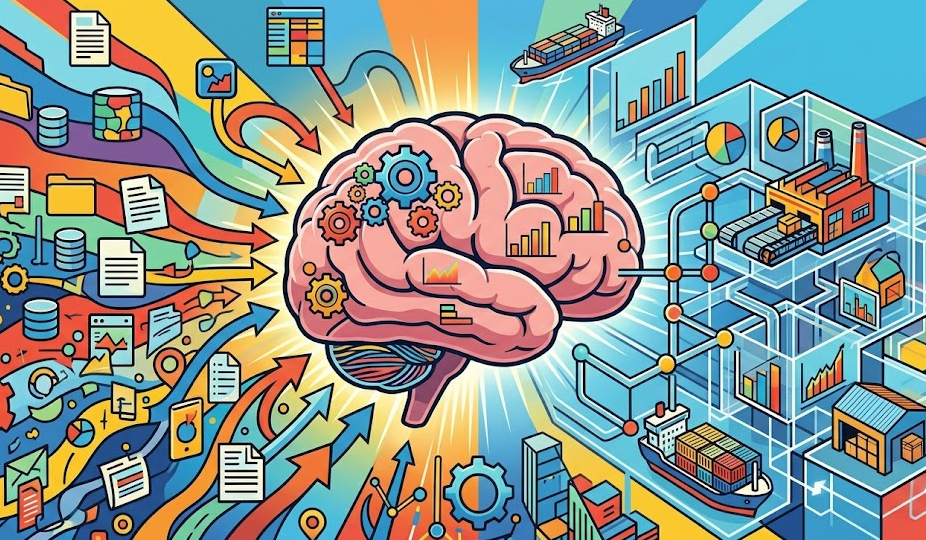
- ›The model functions as a real-time digital twin of customers' business operations.
- ›It aims to eliminate AI 'blind spots' in understanding how businesses operate.
The Context Model is built on process data and business knowledge from every application, system, device and interaction across an organization. Celonis says it provides the operational clarity AI needs to reason correctly.
Why context matters for AI
Celonis frames proprietary data as the missing layer.
- ›Chief Product Officer Dan Brown said AI models do not know how invoices relate to shipping records.
- ›That data is usually proprietary, private and fragmented across systems and apps.
- ›Without a deterministic foundation, Brown said no AI agent can be trusted to make reliable decisions.
Brown described the ground truth of operational reality as essential before agents can take actions that drive business outcomes.
What Ikigai brings
The startup adds a key technical piece.
- ›Ikigai was founded in 2019 and specializes in processing and analyzing structured data.
- ›It sells a generative AI platform based on 'large graphical models.'
- ›These models help AI understand the nuances of proprietary enterprise data.
Ikigai is led by Chief Executive and CTO Devavrat Shah, who also holds a professorial chair of AI at MIT. Shah is now the chief scientist for enterprise AI at Celonis.
The strategy behind the Context Model
Celonis spent years building toward this.
- ›President Carsten Thoma said the company worked on the Context Model for over two years.
- ›The goal was a 'holistic business graph' to serve as the brains of a company's AI operations.
- ›Celonis already had process intelligence but lacked the large graphical model it is now acquiring.
Thoma said application landscapes are super-fragmented and some AI is hard to deploy efficiently. He described the combined offering as a control tower and platform for operational context and intelligence, and stressed Celonis is domain agnostic and system agnostic.
How the two technologies combine
- ›Shah said Ikigai has proven foundation model technology for structured data at scale.
- ›Celonis has encoded enterprise processes.
- ›Together they aim to provide the fullest operational representation of business reality.
Frequently Asked Questions
What did Celonis acquire?
Ikigai Labs, an MIT-linked decision intelligence startup that specializes in structured data and large graphical models.
What is the Context Model?
A new Celonis offering designed to function as a real-time digital twin of a customer's business operations, giving AI operational clarity.
Why does Celonis say context matters?
Because AI models do not understand proprietary, fragmented enterprise data, and without a deterministic foundation no agent can be trusted to make reliable decisions.
Who leads Ikigai?
Devavrat Shah, its CEO and CTO, who holds a professorial chair of AI at MIT and is now Celonis's chief scientist for enterprise AI.
How long did Celonis work on the Context Model?
President Carsten Thoma said the company worked on it for over two years to create a holistic business graph.
With Ikigai's graphical models added to its process intelligence, Celonis aims to give enterprise AI a living model of how a business truly operates.
Continue Learning
Comments
Sign in to join the conversation