ERC System unveils Victor, a heavy-lift eVTOL designed to close Europe's logistics gap
Munich startup ERC System has introduced Victor, an uncrewed hybrid-electric cargo aircraft that lifts up to 250 kilograms across a range of up to 300 kilometers without needing roads, ports, or runways. The company presented it at the ILA Berlin air show in June 2026 and aims for first customer deliveries in 2028. ERC is backed by German aerospace testing specialist IABG and has signed a production agreement with defence firm Rheinmetall and the state of North Rhine-Westphalia.
Key Takeaways
- Victor is a dual-use heavy-lift cargo drone built for both military logistics and civilian missions such as disaster response and offshore supply runs.
- It carries up to 250 kilograms over a range of up to 300 kilometers at a cruise speed of 250 kilometers per hour.
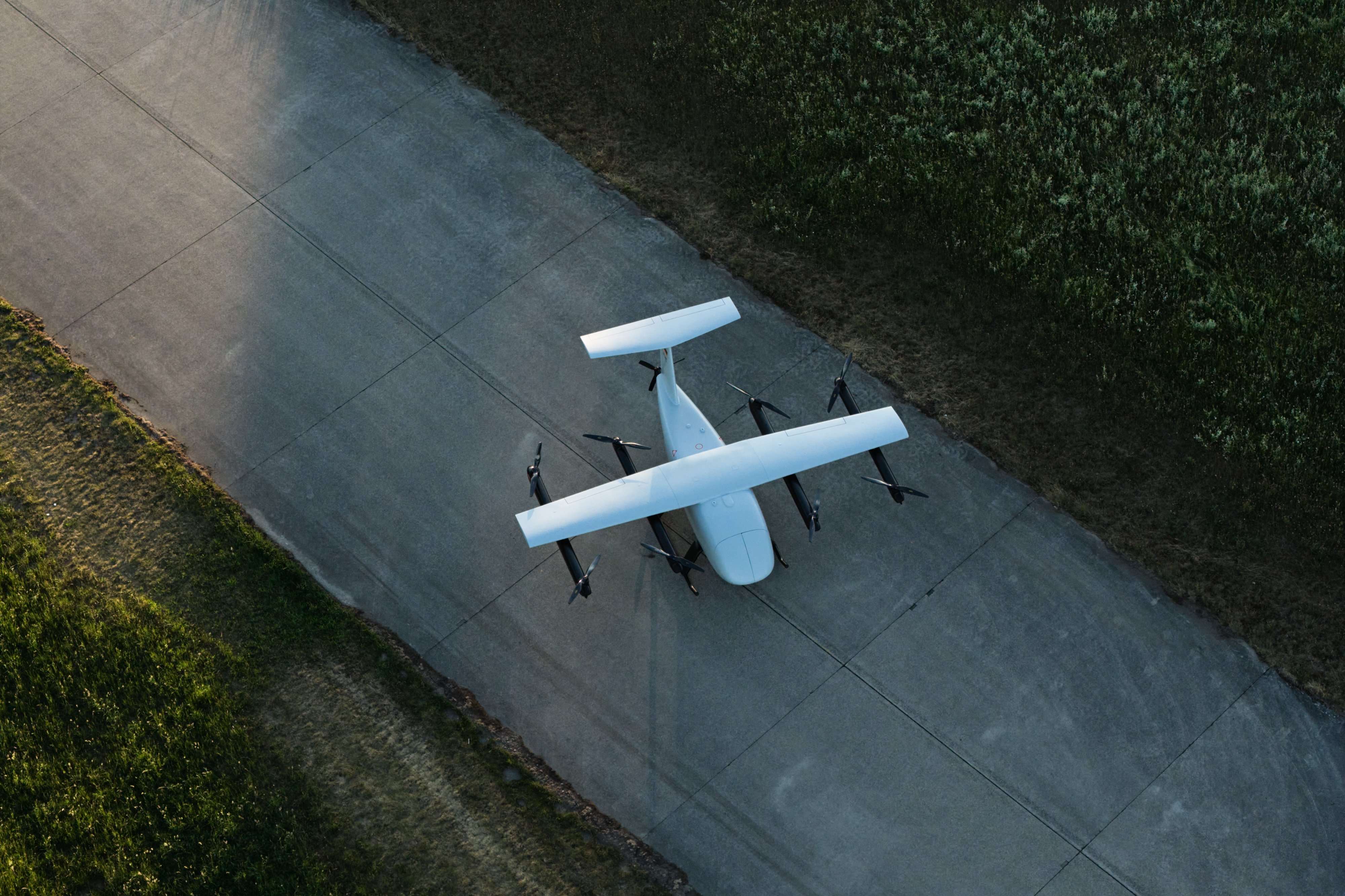
- The hybrid-electric design pairs an electric powertrain with a piston engine that works as a range extender, using eight propellers for vertical takeoff and a pusher propeller for forward flight.
- ERC says operating costs run about 70 percent lower than comparable small helicopters, making frequent cargo missions more affordable.
- A production deal signed at ILA Berlin with Rheinmetall and North Rhine-Westphalia aims to set up domestic manufacturing and is expected to create hundreds of jobs by 2029.
- First customer deliveries are targeted for 2028, with a larger Romeo prototype already flight testing since November 2025.
Stats & Key Facts
- #Payload capacity of up to 250 kilograms, enough to carry two pallets at once.
- #Range of up to 300 kilometers on a single mission.
- #Cruise speed of 250 kilometers per hour.
- #Operating costs roughly 70 percent lower than comparable small helicopters, per the company.
- #Romeo prototype take-off weight of about 2.7 tonnes, flight testing since November 2025.
- #IABG has invested a significant double-digit-million-euro sum as ERC's sole institutional backer.
What Victor is and the logistics gap it targets
ERC System built Victor to move cargo into places where ground transport and traditional aircraft fall short.
Victor is an uncrewed aircraft system, meaning it flies without a pilot on board. ERC System, founded in Munich in 2020, designed it to fly supplies into spots where roads, ports, and runways are missing or damaged. The company calls it a dual-use platform, suited to both defence and civilian work.
The aircraft was presented at the ILA Berlin air show in June 2026. ERC frames Victor as part of a wider European effort to close gaps in heavy-lift logistics, where demand spans defence supply, emergency response, and critical infrastructure work.
Payload, range, and the hybrid-electric powertrain
Victor pairs an electric lift system with a combustion engine to stretch its reach.
- ›Carries up to 250 kilograms, enough for two pallets, over a range of up to 300 kilometers.
- ›Cruises at 250 kilometers per hour.
- ›Uses a lift-and-cruise layout: eight propellers handle vertical takeoff and landing, while a pusher propeller drives forward flight.
- ›A piston engine acts as a range extender on top of the electric powertrain, adding reach beyond battery-only limits.
- ›Includes a modular payload system, so operators swap cargo configurations to fit different missions.
Defence, disaster relief, and offshore supply missions
ERC is aiming Victor at a broad set of jobs where speed and runway independence matter.
- ›Defence logistics and resupply for military operators.
- ›Disaster and emergency response when ground routes are cut off.
- ›Offshore and coastal supply runs to ships, platforms, and remote sites.
- ›Remote industrial operations and critical infrastructure maintenance.
- ›Future potential for casualty evacuation and cargo drops that do not require landing.
Lower operating costs than small helicopters
Cost is central to ERC's pitch for frequent cargo flights.
ERC says Victor runs at operating costs about 70 percent lower than comparable small helicopters, and that both acquisition and running costs come in well below those of similar rotorcraft. The argument is that cheaper flights make routine cargo missions practical for operators who would otherwise find helicopter trips too expensive.
Maximilian Oligschlaeger, the company's chief commercial officer, said customers are approaching ERC to ask when the aircraft will be ready rather than needing convincing about why they need it. That suggests demand is already forming ahead of deliveries.
IABG backing and the development roadmap
A single institutional investor funds the program, which moves through staged prototypes.
ERC System emerged from stealth in July 2024 and counts German aerospace testing and certification specialist IABG as its sole institutional backer. IABG has put in a significant double-digit-million-euro sum and supports the company with both capital and engineering know-how. ERC is a wholly owned subsidiary of IABG, based in Ottobrunn near Munich.
The company validated core capabilities with an Echo demonstrator, then moved to a full-size Romeo prototype with a take-off weight near 2.7 tonnes, which began flight testing in November 2025. First customer deliveries of Victor are targeted for 2028, and ERC is working on a crewed eVTOL called Charlie aimed at 2030.
Rheinmetall and North Rhine-Westphalia production deal
A partnership signed at ILA Berlin aims to build Victor inside Germany.
ERC signed a memorandum of understanding with Rheinmetall, one of Europe's largest defence firms, and the German state of North Rhine-Westphalia to set up domestic production of the Victor U250 in the region. The deal was announced in June 2026 at the ILA Berlin air show.
The partners plan to establish local production and supply chains, which they say would secure high-tech industry in North Rhine-Westphalia and Germany over the long term. The initiative is expected to create hundreds of jobs by 2029.
Certification path that works for civil and military users
ERC is pursuing one approval route that serves both markets.
The company is following a civil certification pathway that military operators also recognise. That approach lets one airframe serve defence and commercial customers without separate approval tracks, which fits Victor's dual-use design. For a non-technical reader, certification is the formal safety sign-off an aircraft needs before it flies paying missions.
Frequently Asked Questions
What is the Victor aircraft and who makes it?
Victor is an uncrewed, hybrid-electric heavy-lift cargo drone made by ERC System, a Munich startup founded in 2020. It is designed to fly supplies into places without roads, ports, or runways.
How much can Victor carry and how far?
Victor lifts up to 250 kilograms, about two pallets, over a range of up to 300 kilometers. It cruises at 250 kilometers per hour.
When will Victor be available to customers?
ERC System is targeting first customer deliveries in 2028. A larger Romeo prototype has been flight testing since November 2025.
Who is funding and partnering with ERC System?
Aerospace testing specialist IABG is ERC's sole institutional backer and parent company, having invested a significant double-digit-million-euro sum. ERC also signed a production agreement with Rheinmetall and the state of North Rhine-Westphalia at ILA Berlin 2026.
What makes Victor cheaper than a helicopter?
ERC says Victor's operating costs run about 70 percent lower than comparable small helicopters. Its hybrid-electric design and uncrewed operation reduce both acquisition and running costs.
ERC System is positioning Victor as a lower-cost way to move heavy cargo where conventional transport fails, backed by IABG funding and a German production deal with Rheinmetall. With deliveries targeted for 2028, the next test is moving from prototype flights to fielded aircraft.
Continue Learning
Comments
Sign in to join the conversation