Fast token generation emerges as the key differentiator as heterogeneous inference takes hold
The race for fast token generation has moved from benchmark sheets into production data centers, and the hardware blueprint for winning it is no longer a GPU-only story. As agentic AI use cases multiply and users demand real-time interactivity, inference infrastructure is being redesigned from the rack up. The divide between compute-heavy prefill and latency-sensitive [...
Key Takeaways
- Discover how heterogeneous compute templates optimize fast token generation and lower total cost of ownership for enterprise AI workloads.
- , spoke with theCUBE's John Furrier at RAISE Summit , during an exclusive broadcast on theCUBE, SiliconANGLE Media's livestreaming studio.
They discussed d-Matrix's Corsair production launch, the Parasail-NVIDIA partnership, and the company's next-generation 3D memory architecture.
- You have Anthropic Claude Code today - they have something called Fast Mode, and in that mode you essentially have much higher levels of interactivity with the application.
The application developers are charging more for those fast tokens.
- "It's all about memory bandwidth - having enough memory capacity and then getting the bandwidth out of the memory," Bhoja said.
"If you can combine this into a single substrate, either in three dimensions or on a single piece of chip, you can make memory bandwidth much faster because the distances that we're moving are much closer.
- " Here's the complete video interview, part of SiliconANGLE's and theCUBE's coverage of RAISE Summit : (* Disclosure: TheCUBE is a paid media partner for the RAISE Summit event.
Stats & Key Facts
- #UPDATED 15:14 EDT / JULY 09 2026 AI Fast token generation emerges as the key differentiator as heterogeneous inference takes hold by Kelly Knight The race for fast token generation has moved from benchmark sheets into production data centers, and the hardware blueprint for winning it is no longer a GPU-only story.
- #The economics behind it are straightforward: premium fast tokens are currently priced as much as 10x higher than standard throughput tokens, creating a new revenue tier that inference providers are racing to capture, Sheth noted.
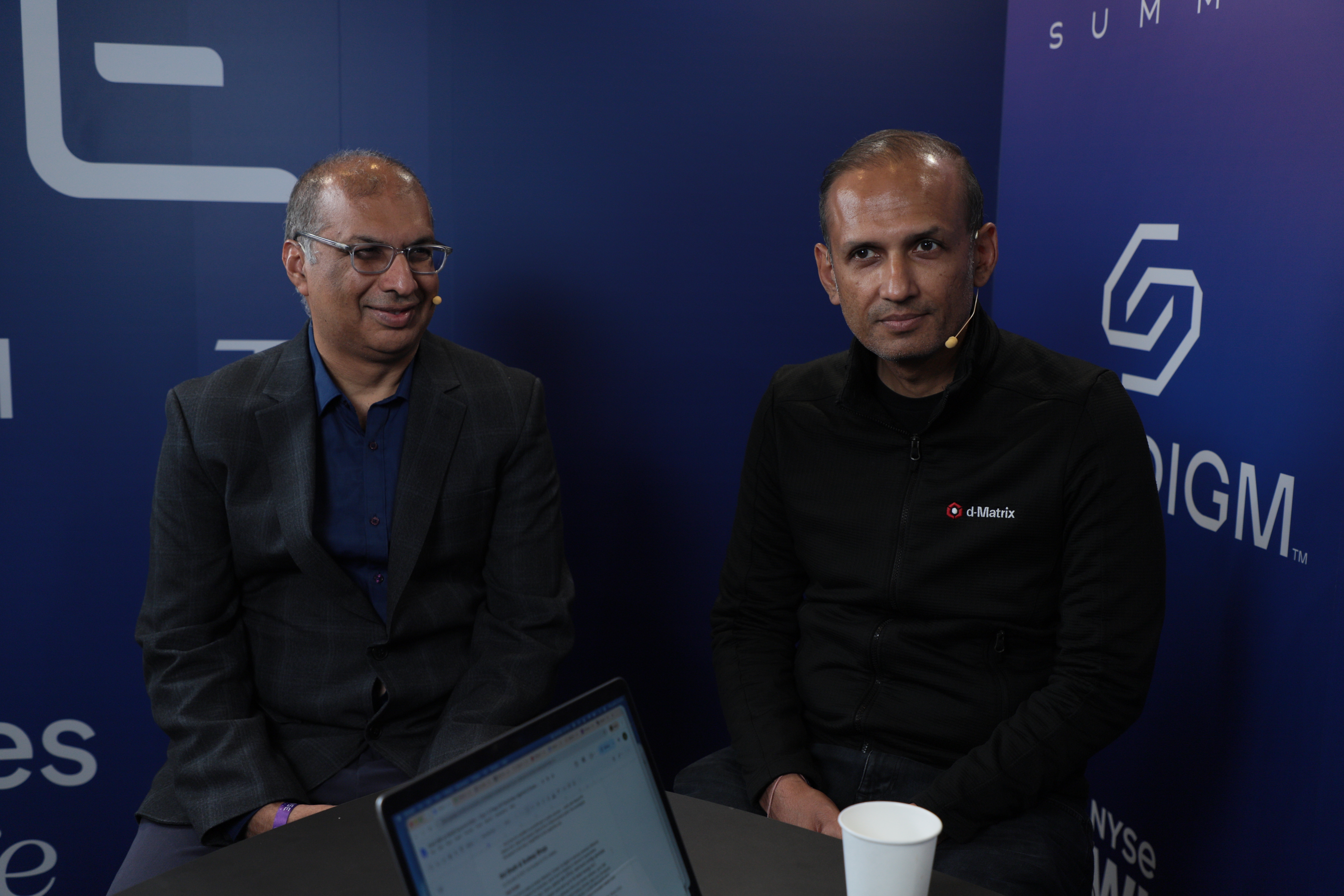
Discover how heterogeneous compute templates optimize fast token generation and lower total cost of ownership for enterprise AI workloads. UPDATED 15:14 EDT / JULY 09 2026 AI Fast token generation emerges as the key differentiator as heterogeneous inference takes hold by Kelly Knight The race for fast token generation has moved from benchmark sheets into production data centers, and the hardware blueprint for winning it is no longer a GPU-only story. As agentic AI use cases multiply and users demand real-time interactivity, inference infrastructure is being redesigned from the rack up.
The divide between compute-heavy prefill and latency-sensitive decode is forcing a new class of purpose-built accelerators into the picture, according to Sid Sheth (pictured, right), co-founder, president and chief executive officer of d-Matrix Corp. "We have a lot of inference clouds coming to us and saying - more low latency, deploying that in a GPUs-only infrastructure just doesn't get us there.
" Sheth and Sudeep Bhoja (left), co-founder and chief technology officer of d-Matrix Corp. , spoke with theCUBE's John Furrier at RAISE Summit , during an exclusive broadcast on theCUBE, SiliconANGLE Media's livestreaming studio. They discussed d-Matrix's Corsair production launch, the Parasail-NVIDIA partnership, and the company's next-generation 3D memory architecture.
For more details please read the original article at SiliconANGLE AI.
Continue Learning
Comments
Sign in to join the conversation