Google DeepMind debuts Gemini Robotics 2 model series for humanoid robots
Google DeepMind has introduced the Gemini Robotics 2 model series designed to power humanoid machines. The line includes an embodied reasoning model named Gemini Robotics ER 2 along with two vision-language-action models for turning plans into physical commands. Together, these systems allow multiple robots to collaborate, monitor their own progress through camera feeds, and run directly on onboard hardware.
Key Takeaways
- Google DeepMind announced its new Gemini Robotics 2 model series, built to enhance the software driving humanoid robots.
The core reasoning model, designated Gemini Robotics ER 2, translates natural language instructions into high-level action plans that can span hundreds of individual steps.
- It allows multiple autonomous machines to divide complex chores among themselves and utilizes tool calling to check online resources like Google Search when clarifying unclear prompts.
Furthermore, camera feeds allow the system to assess progress and resume operations from the last correct step if a mistake occurs.
- The series features Gemini Robotics 2, which manages all body components to balance the center of gravity and reduce falls, as well as Gemini Robotics On-Device 2, which executes locally on a robot's onboard processor after a few hours of specialized training.
Google DeepMind also released the ASIMOV-Agentic Benchmark to evaluate safety risks like collision avoidance.
- Google DeepMind released the Gemini Robotics 2 family of artificial intelligence models tailored for humanoid robotics.
The Gemini Robotics ER 2 model uses natural language prompts to coordinate tasks involving hundreds of steps across multiple machines.
- The release includes the ASIMOV-Agentic Benchmark to assess how well humanoid robots can avoid collisions and navigate physical risks.
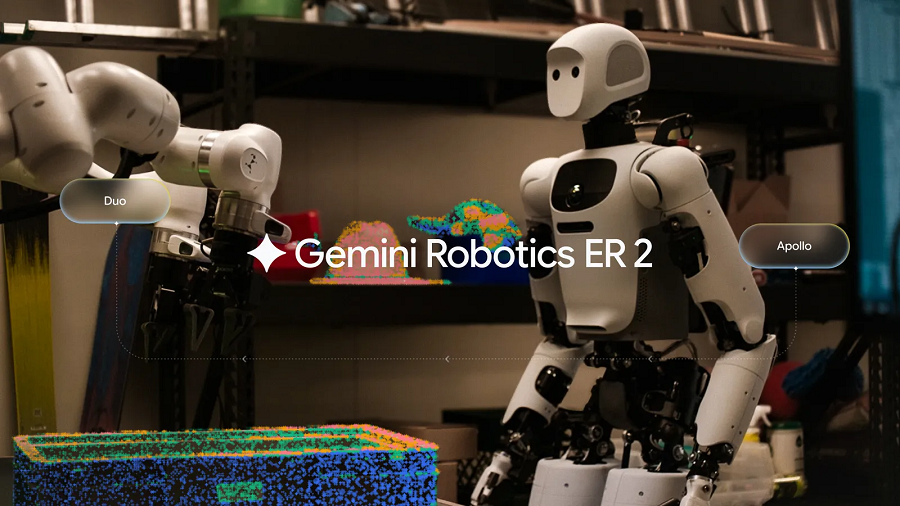
Google DeepMind announced its new Gemini Robotics 2 model series, built to enhance the software driving humanoid robots. The core reasoning model, designated Gemini Robotics ER 2, translates natural language instructions into high-level action plans that can span hundreds of individual steps. It allows multiple autonomous machines to divide complex chores among themselves and utilizes tool calling to check online resources like Google Search when clarifying unclear prompts.
Furthermore, camera feeds allow the system to assess progress and resume operations from the last correct step if a mistake occurs. Once an overarching strategy is generated, it is passed to vision-language-action algorithms that control motor movements. The series features Gemini Robotics 2, which manages all body components to balance the center of gravity and reduce falls, as well as Gemini Robotics On-Device 2, which executes locally on a robot's onboard processor after a few hours of specialized training.
Google DeepMind also released the ASIMOV-Agentic Benchmark to evaluate safety risks like collision avoidance. For AI developers, these tools show how combining high-level planning models with localized execution networks can expand the capabilities of physical autonomous agents. Google DeepMind released the Gemini Robotics 2 family of artificial intelligence models tailored for humanoid robotics.
For more details please read the original article at SiliconANGLE AI.
Continue Learning
Comments
Comments appear only after moderation. Your email identifies your submission to the moderator and is never displayed here.
No approved comments yet.