How WPP operationalizes platform and data engineering for AI marketing
WPP collaborated with Google Cloud to build a centralized data platform for its agentic marketing system, WPP Open. By consolidating fragmented data from hundreds of global agencies into a shared Google Cloud architecture, WPP transformed raw information into standardized cohort definitions to feed its AI models. This platform engineering approach enables the company to launch targeted marketing campaigns in days rather than months.
Key Takeaways
- Marketing agency network WPP partnered with Google Cloud to solve data fragmentation across hundreds of global agencies and power its agentic marketing system, WPP Open.
The company centralized its data assets by storing raw and processed information within Google Cloud Storage and BigQuery while segregating processing tasks into separate project environments.
- Granular identity and access management controls at the bucket and dataset levels ensure that teams only view authorized information.
Data processing relies on Managed Service for Apache Spark and a type-safe Scala engine to transform raw inputs into standardized cohort definitions.
- By orchestrating serverless pipelines with Kubeflow, data engineers focus on transformation logic to feed downstream audience and performance AI models without managing cluster infrastructure.
This operational shift enables WPP to securely launch targeted campaigns in days instead of months.
- WPP partnered with Google Cloud to build a centralized data foundation for its AI marketing platform, WPP Open.
The company unified fragmented agency data using Google Cloud Storage and BigQuery while separating compute workloads into distinct projects.
- Using serverless compute and Kubeflow for pipeline orchestration allows WPP to deploy targeted campaigns in days instead of months.
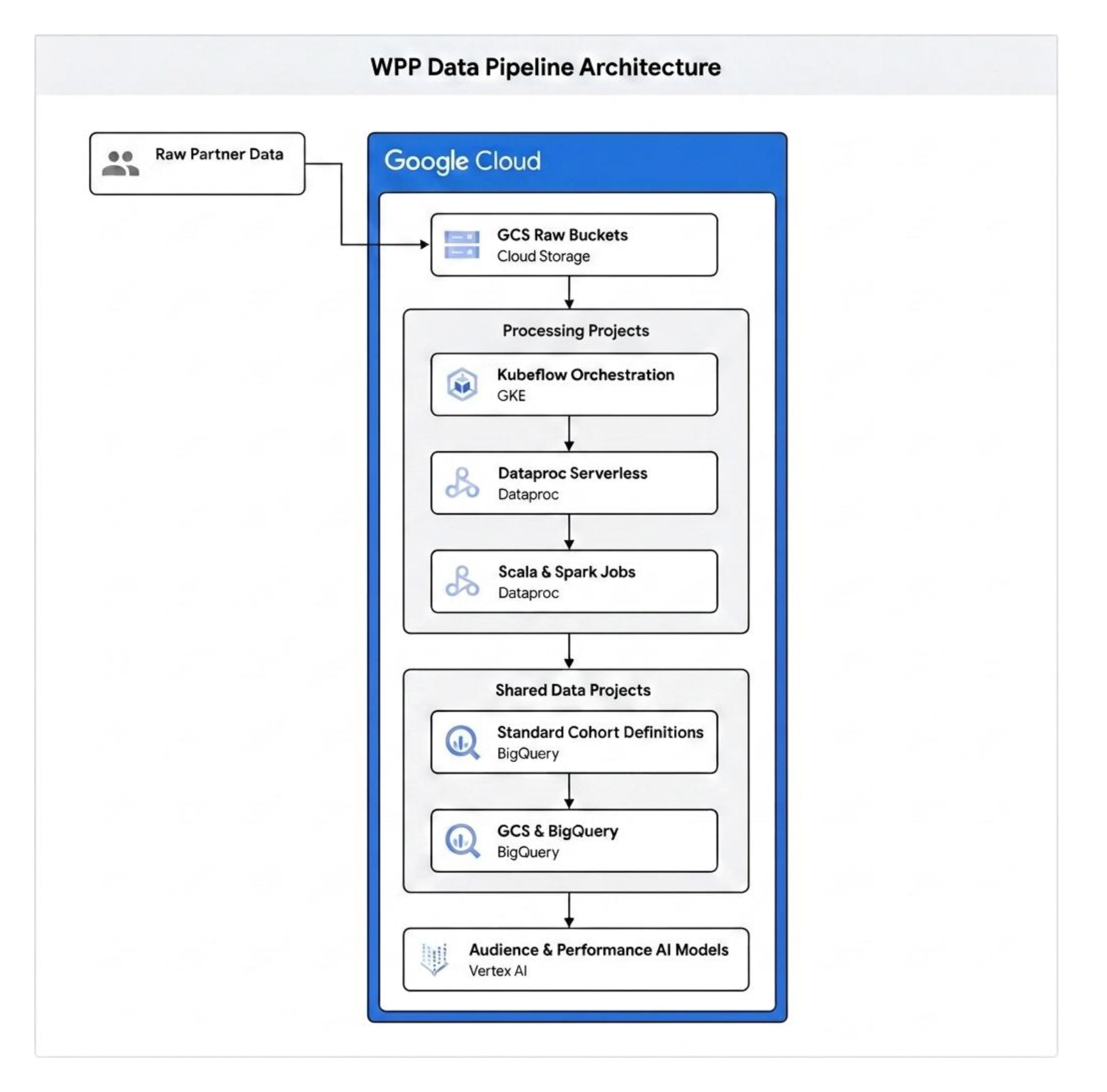
Marketing agency network WPP partnered with Google Cloud to solve data fragmentation across hundreds of global agencies and power its agentic marketing system, WPP Open. The company centralized its data assets by storing raw and processed information within Google Cloud Storage and BigQuery while segregating processing tasks into separate project environments. Granular identity and access management controls at the bucket and dataset levels ensure that teams only view authorized information.
Data processing relies on Managed Service for Apache Spark and a type-safe Scala engine to transform raw inputs into standardized cohort definitions. These definitions organize data around five primary keys: age, gender, geo, product, and interest. By orchestrating serverless pipelines with Kubeflow, data engineers focus on transformation logic to feed downstream audience and performance AI models without managing cluster infrastructure.
This operational shift enables WPP to securely launch targeted campaigns in days instead of months. WPP partnered with Google Cloud to build a centralized data foundation for its AI marketing platform, WPP Open. The company unified fragmented agency data using Google Cloud Storage and BigQuery while separating compute workloads into distinct projects.
Automated processing jobs normalize raw data into standardized cohort definitions structured around age, gender, geo, product, and interest. Using serverless compute and Kubeflow for pipeline orchestration allows WPP to deploy targeted campaigns in days instead of months.
For more details please read the original article at Google Cloud AI.
Continue Learning
Comments
Comments appear only after moderation. Your email identifies your submission to the moderator and is never displayed here.
No approved comments yet.