HPE expands self-driving networking strategy as AI moves into production
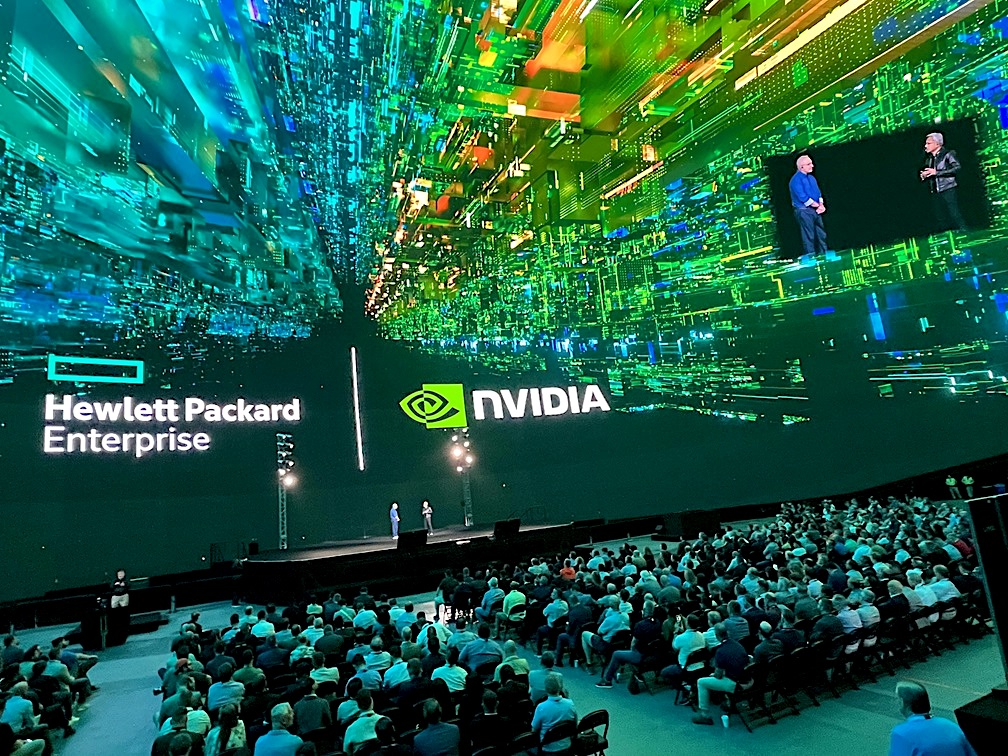
Hewlett Packard Enterprise announced new networking and AI infrastructure capabilities at its Discover conference aimed at helping enterprises deploy AI agents at scale. The company is promoting self-driving networks and AI factories as foundational technologies for what it calls the 'agentic enterprise,' marking HPE's strategic push into production-grade AI infrastructure.
Key Takeaways
- HPE is expanding self-driving networking capabilities to support large-scale AI agent deployment in enterprise environments
- The company introduced the concept of 'AI factories' as a foundation for building agentic enterprises
- Self-driving networks are positioned as critical infrastructure for managing the complexity of production AI workloads
- HPE's announcements reflect the industry shift from AI experimentation to operationalized, production-ready AI systems
- The strategy combines networking automation with AI infrastructure to create an integrated platform for enterprise AI deployment
HPE's Self-Driving Networking Vision
HPE's self-driving networks represent an evolution in how enterprises manage connectivity and data flow.
- ›Self-driving networks automate complex networking tasks traditionally requiring manual configuration and management
- ›These systems use AI to optimize routing, security, and performance in real-time
- ›HPE positions self-driving networks as essential infrastructure for managing AI workload demands at scale
- ›The technology reduces operational overhead and human error in network management
HPE's expansion of self-driving networking reflects growing recognition that traditional network management approaches cannot keep pace with AI infrastructure demands. As enterprises move AI from pilot programs to production deployments, networks must become more intelligent and adaptive. Self-driving networks anticipate and respond to traffic patterns, security threats, and resource constraints without requiring constant human intervention.
The self-driving approach is particularly valuable for enterprises deploying multiple AI agents simultaneously. These agents generate unpredictable traffic patterns and data flows that would overwhelm traditional network management tools. By automating network optimization, HPE enables IT teams to focus on higher-level strategic tasks rather than routine maintenance and troubleshooting.
AI Factories as Infrastructure Foundation
HPE introduced AI factories as a structured approach to building and scaling AI capabilities within enterprises.
- ›AI factories combine compute, storage, networking, and software to create an integrated AI deployment platform
- ›The concept moves beyond point solutions toward comprehensive AI infrastructure ecosystems
- ›AI factories are designed to support continuous training, deployment, and optimization of AI models
- ›HPE emphasizes the factory model as a way to standardize and accelerate AI adoption across organizations
The AI factory concept reflects HPE's strategic understanding that successful enterprise AI requires more than just purchasing hardware and software components. Instead, companies need integrated platforms that combine infrastructure, orchestration, and operational best practices. HPE's AI factories are designed to provide this comprehensive approach, reducing the complexity and risk associated with AI infrastructure buildout.
By framing AI infrastructure as a factory rather than a collection of separate systems, HPE signals that enterprises should treat AI deployment with the same rigor and standardization they apply to manufacturing operations. This includes consistent processes, quality controls, and scalability mechanisms. The factory model also enables faster iteration and improvement as AI technologies evolve.
The Rise of the Agentic Enterprise
HPE's 'agentic enterprise' concept describes organizations built around autonomous AI agents managing key business processes.
- ›Agentic enterprises deploy multiple AI agents to handle routine and complex tasks autonomously
- ›These agents operate with varying degrees of autonomy, from fully automated to human-supervised
- ›The model requires robust underlying infrastructure to manage agent coordination and security
- ›HPE positions its technology stack as enabling organizations to transition toward agentic business models
The agentic enterprise represents a maturation of AI adoption where AI systems move beyond support roles into autonomous decision-making and execution. Rather than using AI to augment human capabilities, agentic enterprises rely on AI agents to independently manage workflows, customer interactions, supply chain optimization, and other business-critical functions. This shift requires infrastructure that can reliably support hundreds or thousands of autonomous agents operating simultaneously.
HPE's infrastructure announcements are explicitly designed to address the demands of agentic enterprises. Self-driving networks ensure that agent-to-agent communication and data flows remain optimized and secure. AI factories provide the foundation for training, deploying, and managing agent populations at scale. Together, these capabilities enable enterprises to unlock the full potential of autonomous AI systems while maintaining control and compliance.
Production AI Transitions from Experimental Phase
The announcements signal that enterprise AI is moving from experimental pilots into sustained production operations.
- ›Production AI requires different infrastructure, security, and management approaches than experimental deployments
- ›Enterprises are moving beyond proof-of-concept projects to long-term AI-driven business models
- ›Production readiness includes reliability, scalability, monitoring, and governance capabilities
- ›HPE's infrastructure investments reflect the maturation of the enterprise AI market
HPE's timing of these announcements reflects a critical inflection point in the enterprise AI market. After years of pilots and experimentation, organizations are now committing to production AI deployments that drive business operations and revenue. This transition requires fundamentally different infrastructure and operational practices than experimental systems. Production AI systems must deliver consistent performance, maintain high availability, and provide comprehensive audit trails for compliance.
The shift to production also creates new complexity around managing multiple concurrent AI workloads while ensuring they don't interfere with traditional IT operations. HPE's self-driving networks and AI factories directly address these challenges, providing enterprises with the infrastructure maturity needed to run AI-dependent businesses reliably. Companies that build out these capabilities now will have significant competitive advantages in AI-driven markets.
Integration of Networking and AI Infrastructure
HPE's announcements emphasize the tight integration between networking and AI infrastructure as a key strategic advantage.
- ›Networking and AI infrastructure are increasingly inseparable in production environments
- ›Self-driving networks must understand and respond to AI workload characteristics
- ›AI systems generate network demands that traditional infrastructure cannot optimize
- ›HPE's integrated approach aims to eliminate friction between compute and connectivity layers
Historically, enterprise IT has treated networking and compute infrastructure as separate domains managed by different teams. HPE's announcements reflect recognition that AI infrastructure requires tighter integration between these domains. AI workloads have specific network requirements that vary dynamically, making intelligent, automated networking essential rather than optional.
Self-driving networks enable the kind of coordination between compute and network resources that production AI demands. When an AI system scales up to use additional compute resources, the self-driving network automatically adjusts bandwidth allocation, routing, and quality-of-service settings. This integration eliminates bottlenecks and inefficiencies that would otherwise emerge when AI and network teams operate independently.
Enterprise Readiness and Operational Maturity
HPE's emphasis on self-driving networks and AI factories reflects enterprises' demand for operationally mature AI infrastructure.
- ›Enterprises prioritize operational maturity and reduced manual management overhead
- ›Automation and self-service capabilities are critical for scaling AI across organizations
- ›HPE's solutions aim to lower the barrier to entry for enterprises scaling AI operations
- ›The approach addresses skills shortages in AI infrastructure management
As AI infrastructure becomes more critical to business operations, enterprises face acute challenges around operational complexity and skilled personnel availability. HPE's self-driving networks and AI factories aim to reduce the manual expertise required to manage production AI systems. By automating routine optimization and management tasks, these solutions enable organizations to deploy AI at scale without proportionally increasing their IT operations teams.
This focus on operational maturity and automation reflects market feedback from enterprises struggling with AI infrastructure complexity. Many organizations have advanced AI capabilities but struggle to operationalize them reliably. HPE's infrastructure strategy directly addresses these pain points, positioning the company as a provider of enterprise-grade AI infrastructure rather than experimental tools.
Frequently Asked Questions
What are self-driving networks and how do they support AI infrastructure?
Self-driving networks use AI to automatically optimize routing, security, performance, and resource allocation in real-time without requiring manual configuration. They are essential for managing the complex and dynamic network demands created by production AI workloads, particularly when enterprises deploy multiple AI agents simultaneously.
What does HPE mean by 'AI factories'?
AI factories are integrated infrastructure platforms combining compute, storage, networking, and software to create a standardized foundation for deploying, training, and managing AI systems at scale. They move beyond point solutions toward comprehensive ecosystems that enable organizations to treat AI infrastructure with the same rigor as manufacturing operations.
What is an 'agentic enterprise' and why does it matter?
An agentic enterprise is an organization built around autonomous AI agents that independently manage business processes, workflows, and decision-making without constant human intervention. This model represents the maturation of enterprise AI adoption and requires robust infrastructure to support agent coordination, security, and reliability.
How do these announcements reflect the shift from experimental AI to production AI?
Enterprises are moving beyond pilots toward sustained production deployments where AI drives core business operations. Production AI requires different infrastructure approaches including reliability, scalability, monitoring, and governance - areas where HPE's self-driving networks and AI factories directly add value.
Why is integration between networking and AI infrastructure important?
AI workloads have dynamic network demands that traditional infrastructure cannot optimize. Integrated solutions enable self-driving networks to automatically adjust bandwidth, routing, and performance based on AI system requirements, eliminating bottlenecks that would otherwise emerge from separate management of compute and network resources.
HPE's infrastructure announcements position the company at the center of enterprise AI's transition from experimentation to production-scale operations.
Continue Learning
Comments
Sign in to join the conversation