Limitless Labs lands $20M to build AI agents for precision manufacturing
Limitless Labs, a precision manufacturing AI platform, has secured $20 million in Series A funding led by Dell Technologies Capital and Square Peg to expand its agentic AI technology. The company uses specialized large language models trained on metal-cutting physics and CAD geometry to automate and optimize computer-aided manufacturing processes, potentially reducing programming time by up to 50% and capturing expertise from experienced machinists.
Key Takeaways
- Limitless Labs raised $20M in Series A funding to develop AI agents that automate computer-aided design and manufacturing (CAD/CAM) workflows
- The company's physical AI models are trained on metal-cutting physics, CAD geometry, and machine constraints to generate shop-floor-ready manufacturing programs
- AI agents can reduce CAM programming time by up to 50% and help standardize best practices across manufacturing operations
- The funding follows a $4.1M seed round in March 2025 and addresses growing demand from aerospace, automotive, medical devices, and electronics industries
- Limitless Labs aims to capture and scale the expertise of experienced machinists through AI, addressing a critical bottleneck in precision manufacturing
Stats & Key Facts
- #$20 million raised in Series A funding
- #$4.1 million raised in seed funding (March 2025)
- #Up to 50% reduction in CAM programming time
- #$3.38 billion manufacturing market size
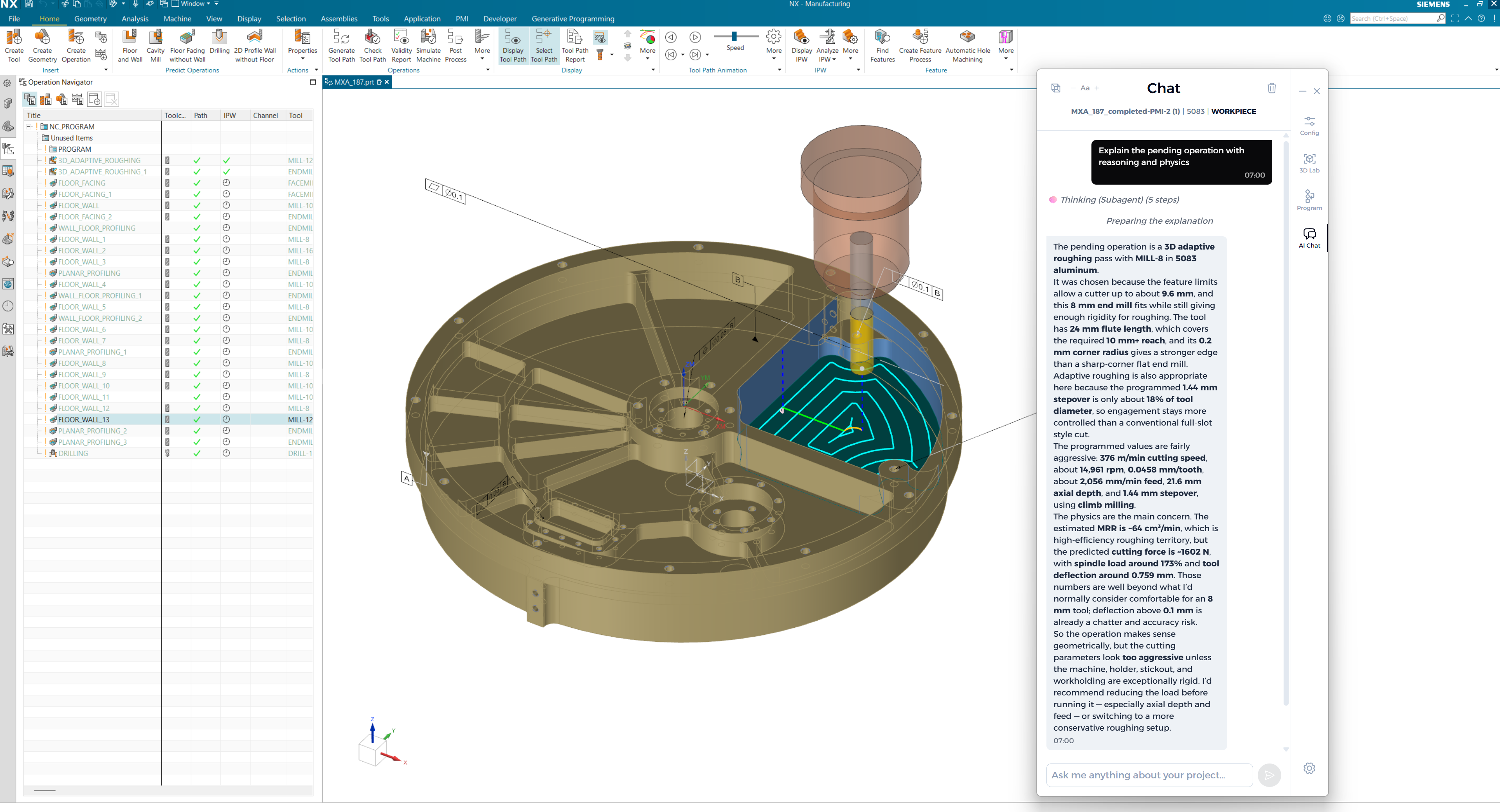
What Limitless Labs Does
Limitless Labs operates as LimitlessCNC Ltd. and provides a platform that transforms traditional manufacturing workflows through artificial intelligence.
- ›Assists with development, design, and production of high-precision machine parts
- ›Bridges the gap between CAD design and manufacturing execution by automating CAM programming
- ›Uses physical AI to connect digital models with real-world manufacturing constraints and machine capabilities
- ›Leverages AI agents trained specifically on the physics and mechanics of precision machining
Computer-aided design and manufacturing (CAD/CAM) traditionally involves a two-step human-intensive process: designers create 2D and 3D digital models, and then programmers translate those designs into machine code for automated equipment. Limitless Labs automates and optimizes the second phase, where the most bottlenecks and expertise gaps exist. The company's AI agents can identify features in CAD files, recommend appropriate tools, sequence operations logically, generate machine instructions, and produce complete shop-floor-ready programs in a fraction of the time traditional programming requires.
The underlying technology represents a specialized class of large language models and instruction-understanding systems. Unlike general-purpose AI, Limitless Labs' models are trained on the physics of metal cutting, CAD geometry specifications, and the operational constraints of real manufacturing machines. This domain-specific training allows the AI agents to make intelligent decisions that account for the physical realities of precision machining, not just abstract pattern matching.
The Manufacturing Challenge
Precision manufacturing faces a critical expertise and capacity crunch that Limitless Labs aims to address.
- ›Skilled machinist expertise remains concentrated in a relatively small population of experienced professionals
- ›Rising demand from aerospace, automotive, medical device, electronics, and consumer goods sectors is straining manufacturing capacity
- ›Traditional CAM programming is time-consuming and creates a bottleneck between design and production
- ›On-demand manufacturing and online retail have transformed production from batch-based to highly variable workloads
As e-commerce transformed retail and consumer expectations shifted toward rapid fulfillment, manufacturing itself became an on-demand service. Companies needed to scale production quickly while maintaining precision and reducing waste. However, the machining industry has not kept pace with this transformation. 'The manufacturing world doesn't just need more automation, it needs a better way to capture and scale the expertise that still lives inside the heads of a relatively small number of experienced machinists,' said Limitless Labs co-founder and CEO David Priev.
The demand drivers are diverse and simultaneous. Aerospace and defense sectors continue to require advanced precision parts. The automotive industry, especially with the shift to electric vehicles, demands new manufacturing capabilities. Medical device manufacturing requires extremely tight tolerances. Electronics and consumer goods manufacturing continues to grow. All these sectors are competing for limited machining capacity, creating scheduling bottlenecks and pricing pressures. Standardizing best practices and reducing tedium through AI agents helps manufacturers handle this explosion of scale and complexity.
How Physical AI Transforms Manufacturing
Limitless Labs employs a specialized form of artificial intelligence that understands both the digital design world and the physical constraints of real machines.
- ›Physical AI connects digital CAD models with real-world manufacturing equipment and physics
- ›AI agents use sensor data and operational knowledge to make intelligent manufacturing decisions
- ›Models are trained on metal-cutting physics, geometry, and machine operational constraints
- ›The system translates real-world manufacturing foundations into functional understanding for tool selection and sequencing
Physical AI represents an evolution beyond traditional large language models. While general-purpose LLMs understand language patterns and concepts, physical AI systems are designed to bridge the gap between digital representations and physical reality. In manufacturing, this means understanding not just CAD geometry but also the actual physics of metal cutting, tool performance characteristics, machine acceleration limits, spindle speeds, and feed rates. The AI can reason about these physical constraints when generating manufacturing programs.
When given a CAD file, Limitless Labs' CAM agent performs multiple integrated tasks. It analyzes the geometry to identify features that require machining. It recommends appropriate cutting tools based on material properties and feature types. It sequences operations in the most efficient order to minimize tool changes and reduce cycle time. It generates the specific machine instructions (G-code) that automated CNC machines understand and execute. This entire workflow, which traditionally required experienced programmers to handle step-by-step, can now be completed with AI assistance while significantly reducing the time required.
Funding and Investor Confidence
The $20 million Series A round demonstrates strong investor confidence in the manufacturing AI market.
- ›Dell Technologies Capital and Square Peg co-led the Series A round
- ›Grove Ventures, Meron Capital, and Kinetica also participated in the funding
- ›Grove Ventures had previously led the company's $4.1 million seed round in March 2025
- ›Investors are betting on agentic AI's ability to transform factory-floor operations and machining workflows
The participation of Dell Technologies Capital is particularly significant given Dell's deep involvement in manufacturing technology and supply chains. Square Peg's co-leadership suggests strong conviction from a firm with experience backing transformative software platforms. Grove Ventures' continued investment after leading the seed round indicates confidence that the company is executing against its vision and delivering results.
Lior Handelsman, general partner at Grove Ventures and co-founder of solar power system manufacturing company SolarEdge Technologies, provided validation: 'Eighteen months ago, we backed Limitless Labs' vision that agentic AI could transform the factory floor. What the team has achieved since then has exceeded expectations.' This statement suggests the company has already demonstrated significant product-market fit and operational progress beyond typical early-stage startups.
Broader Applications Across Industries
CAD/CAM technology enabled by platforms like Limitless Labs serves a diverse range of industries beyond traditional metalworking.
- ›Aerospace and automotive industries use CAD/CAM for prototyping and manufacturing precision components and engine parts
- ›Dental and medical industries employ CAD/CAM to mill custom crowns, veneers, dental implants, and specialized surgical components
- ›Electronics and consumer goods manufacturing uses CAD/CAM for injection mold design and production
- ›Custom jewelry manufacturing benefits from precision CAD/CAM workflows
The integration of CAD/CAM technology has revolutionized multiple industries by greatly accelerating precision manufacturing, lowering material waste, and increasing production speed. Each industry brings unique requirements and constraints. In aerospace, tolerances must be extremely tight and materials often require specialized handling. In dentistry, individual customization is the standard, making rapid CAM programming crucial for economic viability. In electronics manufacturing, the ability to rapidly iterate injection molds for new products directly impacts time-to-market. Limitless Labs' AI agents, trained on the physics of metal cutting and machine constraints, apply across these diverse use cases because the underlying physics of precision machining remains consistent.
Market Opportunity and Growth Drivers
The precision manufacturing market is experiencing significant growth driven by multiple converging trends.
- ›Market size reached $3.38 billion, with continued expansion expected
- ›Simultaneous growth drivers across aerospace, defense, automotive (especially electric vehicles), medical devices, electronics, and consumer goods
- ›On-demand manufacturing models and e-commerce create new scheduling and production demands
- ›All sectors compete for limited machining capacity, creating pricing pressure and delivery delays
The precision manufacturing market is not experiencing growth in just one sector. Instead, multiple large industries are simultaneously expanding their demand for high-precision components. Aerospace continues to grow despite cyclical challenges. The automotive industry is undergoing transformation with electric vehicles requiring entirely new component designs and manufacturing processes. Medical device manufacturing is expanding due to aging populations and advancing surgical techniques. Electronics manufacturing continues to grow with new consumer products. Consumer goods manufacturing increasingly requires precision customization. This convergence of growth drivers across unrelated sectors means that machining capacity constraints will likely persist for years.
The Path Forward for Limitless Labs
With $20 million in funding and demonstrated product-market fit, Limitless Labs is positioned to scale its AI manufacturing platform.
- ›Funds will support expansion of agentic AI capabilities and platform development
- ›The company aims to standardize best practices across the manufacturing industry
- ›By reducing programming time up to 50%, the platform frees skilled workers for higher-value tasks
- ›Future growth likely includes expanded integrations with CAD software and CNC machine types
The infusion of capital from experienced manufacturing and technology investors provides Limitless Labs with resources to accelerate product development and market penetration. The company's focus on capturing and scaling the expertise of experienced machinists addresses a fundamental limitation in manufacturing: the relatively small population of highly skilled workers who understand both precision machining and CAM programming. By automating routine programming tasks while preserving the expertise in decision-making, Limitless Labs enables manufacturers to achieve greater output with existing human resources.
Frequently Asked Questions
What is physical AI and how does it apply to manufacturing?
Physical AI is artificial intelligence that connects digital models with the real world by understanding physical constraints and using sensors to reason about the environment. In manufacturing, Limitless Labs' physical AI understands metal-cutting physics, CAD geometry, and machine operational constraints to make intelligent decisions about tool selection, operation sequencing, and machine instructions.
How much time can Limitless Labs' platform save in manufacturing programming?
The company states that its AI agents can reduce CAM programming time by up to 50%, automatically identifying features in CAD files, recommending tools, sequencing operations, and generating shop-floor-ready machine code that would traditionally require manual programmer effort.
Who are the investors in Limitless Labs?
Dell Technologies Capital and Square Peg co-led the $20 million Series A round, with participation from Grove Ventures (which also led the previous $4.1M seed round), Meron Capital, and Kinetica.
Which industries benefit from Limitless Labs' manufacturing platform?
The platform serves aerospace, automotive, medical device, electronics, consumer goods, jewelry, and dental industries. Any sector that uses CAD/CAM for precision machining can benefit from automated programming and standardized best practices.
What problem does Limitless Labs solve in the manufacturing industry?
The company addresses the bottleneck of expert machinist knowledge and capacity constraints by automating CAM programming and standardizing best practices. It captures the expertise of experienced machinists and scales it across the industry through AI agents, helping manufacturers handle growing demand without proportionally increasing their skilled workforce.
Limitless Labs represents a significant step toward making precision manufacturing more efficient, scalable, and accessible to companies across multiple industries.
Continue Learning
Comments
Sign in to join the conversation