Meet the startup digitising battlefield medicine
The AO is combining wearable sensors, digital patient records and frontline data to improve casualty evacuation in Ukraine and beyond. Medtech Meet the startup digitising battlefield medicine The AO is combining wearable sensors, digital patient records and frontline data to improve casualty evacuation in Ukraine and beyond. Cate Lawrence 1 hour ago Share Share Send email Copy link Meet the startup digitising battlefield medicine The AO is combining wearable sensors, digital patient records and frontline data to improve casualty evacuation in Ukraine and beyond.
Key Takeaways
- Drone warfare has fundamentally changed battlefield medicine.
During four medical rotations with the Hospitallers Medical Battalion in Ukraine's Donetsk Oblast, startup founder and volunteer medic Howard Hunt (callsign Hunter) saw firsthand how the proliferation of drones has pushed casualty evacuation further from the frontline.
- This shift has exposed the limitations of a medical evacuation system that still relies heavily on manual processes.
Inside moving ambulances, medics caring for several critically injured soldiers must measure blood pressure with a cuff, count respirations manually and complete paper-based Tactical Combat Casualty Care (TCCC) cards while travelling over damaged roads.
- "Battlefield medicine is the complete opposite of a hospital environment," Hunter explains.
"You're working in moving vehicles, under extreme time pressure, often treating multiple casualties with limited equipment.
- From casualty evacuations to company formation Hunter has a rather unique founding story.
He joined emergency evaluation services without military or medical experience.
- He wanted to help, so he travelled to Ukraine and joined Hospitallers, the volunteer medical battalion.
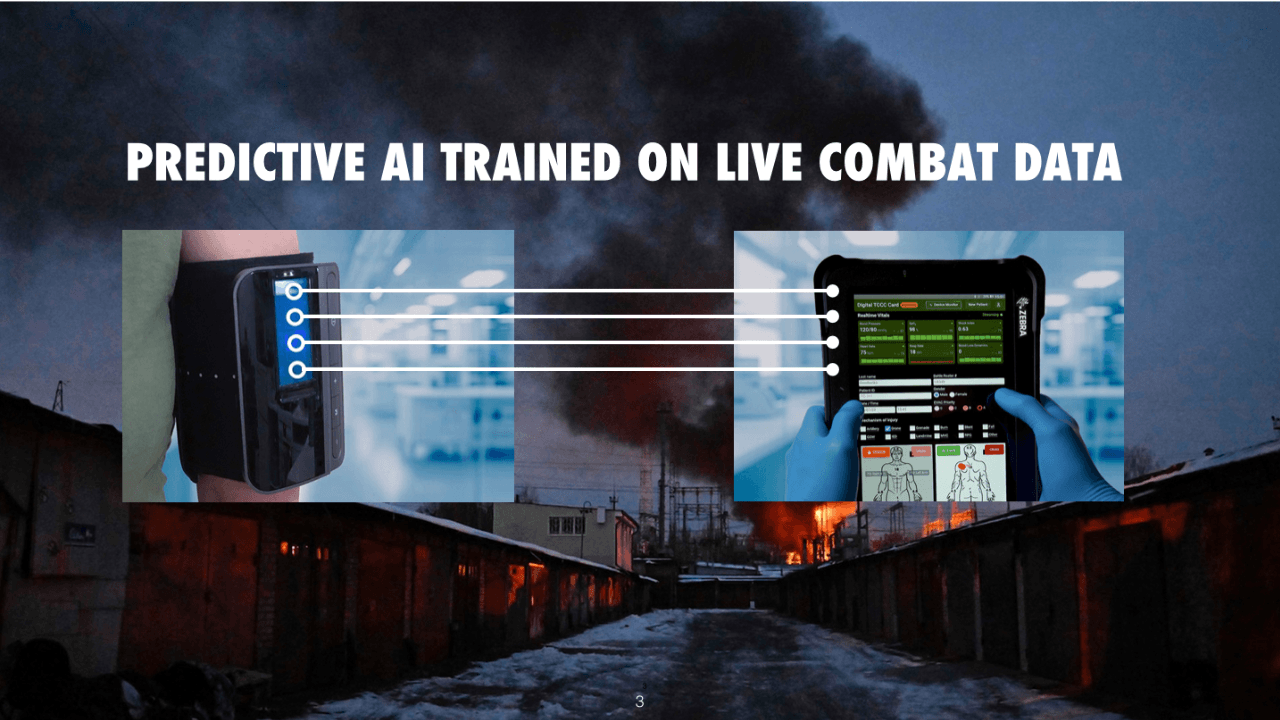
Drone warfare has fundamentally changed battlefield medicine. During four medical rotations with the Hospitallers Medical Battalion in Ukraine's Donetsk Oblast, startup founder and volunteer medic Howard Hunt (callsign Hunter) saw firsthand how the proliferation of drones has pushed casualty evacuation further from the frontline. Medical teams can no longer safely drive directly to wounded soldiers during daylight hours.
Instead, casualties are stabilised by combat medics before being transported after dark to Casualty Collection Points, where evacuation crews collect multiple patients simultaneously. This shift has exposed the limitations of a medical evacuation system that still relies heavily on manual processes. Inside moving ambulances, medics caring for several critically injured soldiers must measure blood pressure with a cuff, count respirations manually and complete paper-based Tactical Combat Casualty Care (TCCC) cards while travelling over damaged roads.
Those handwritten records accompany the patient through successive stages of care before eventually being entered into hospital systems, introducing delays, transcription errors and gaps in patient data. As casualty numbers increase, these analogue workflows become increasingly difficult to manage. Medics spend valuable time recording observations rather than treating patients, while subtle physiological changes that could indicate a patient is deteriorating can easily go unnoticed.
For more details please read the original article at Tech.eu.
Continue Learning
Comments
Sign in to join the conversation