NVIDIA Partners With Microsoft on Unified Stack for Agentic AI Deployment, From Windows Devices to Cloud to Local
At Microsoft Build, NVIDIA and Microsoft announced an expanded partnership to deliver a unified stack for deploying agentic AI across Windows devices, Azure cloud, and local deployments. NVIDIA CEO Jensen Huang joined Microsoft CEO Satya Nadella's keynote via livestream from Taipei. The announcements span new Windows AI hardware, NVIDIA open models on Microsoft Foundry, and a secure runtime for autonomous agents.
Key Takeaways
- At Microsoft Build, NVIDIA founder and CEO Jensen Huang joined Microsoft chairman and CEO Satya Nadella's keynote via livestream from Taipei to discuss the expanded partnership.
The agentic AI moment has arrived, but delivering on its promise requires more than good models.
- With RTX Spark laptops and small desktops, and DGX Station for Windows deskside AI supercomputers, developers can build, tune and run agents natively on Windows.
RTX Spark is a new beginning, powering the world's first Windows PCs purpose-built for personal agents, with 1 petaflop of AI performance, up to 128GB of unified memory, all-day battery life, and full AI and graphics performance unplugged.
- Both products run NVIDIA OpenShell, a secure-by-design runtime for autonomous agents.
Read more in this Microsoft blog: " Introducing a powerful new chapter for Windows PCs, accelerated by NVIDIA RTX Spark " Powering Agentic Workflows at Enterprise Scale With NVIDIA Open Models on Microsoft Foundry Agentic AI runs on a system of models.
- Developers can compose Nemotron alongside frontier and local models, optimizing cost and quality for each workflow.
NVIDIA's open model portfolio on Foundry now spans agentic, physical and scientific AI.
- Learn more in this Build breakout session: " Orchestrate Special Agents with NVIDIA Nemotron Models on Microsoft Foundry ."
Stats & Key Facts
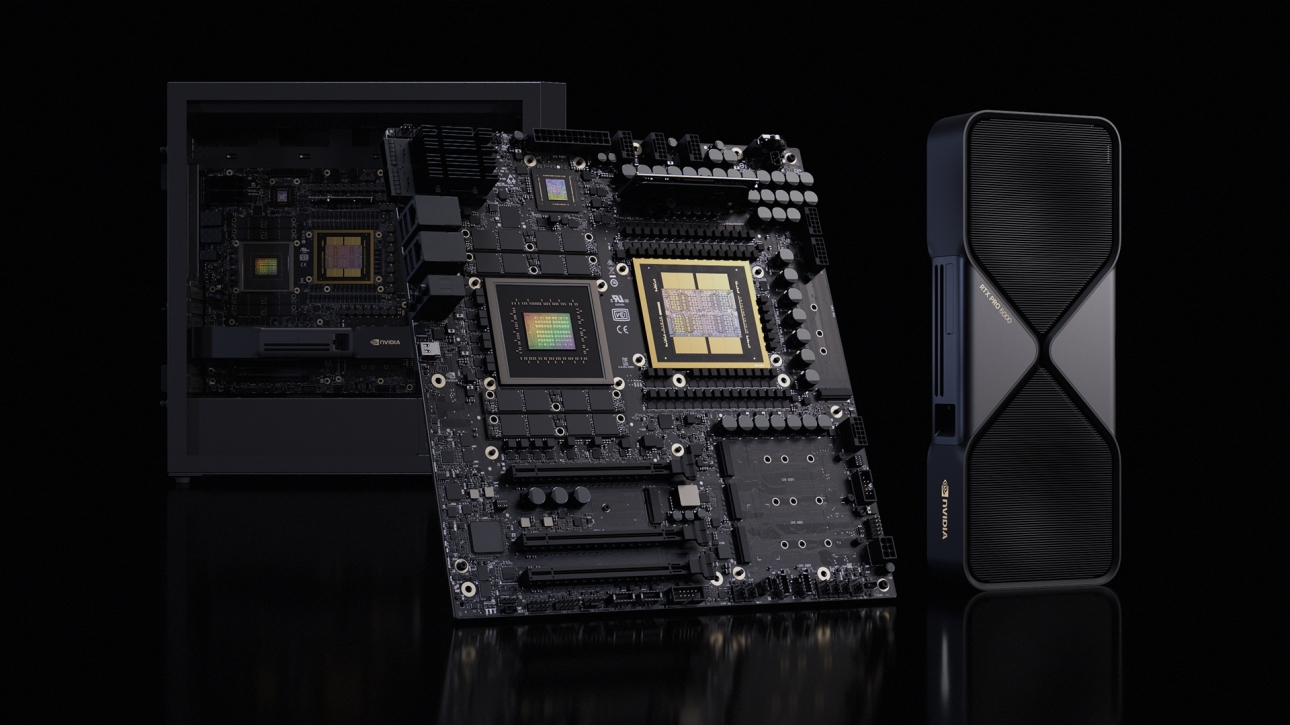
- #Powered by the NVIDIA GB300 Grace Blackwell Ultra Desktop Superchip with up to 748GB of coherent memory and 20 petaflops of FP4 performance, it runs frontier models of up to 1 trillion parameters for always-on enterprise agents.
At Microsoft Build, NVIDIA founder and CEO Jensen Huang joined Microsoft chairman and CEO Satya Nadella's keynote via livestream from Taipei to discuss the expanded partnership. The agentic AI moment has arrived, but delivering on its promise requires more than good models. It also takes fast hardware, secure runtimes, a responsive data layer and models tuned for long-running reasoning.
NVIDIA and Microsoft are bringing that full stack to developers across Windows devices, Azure cloud and local deployments. Reinventing Windows for Agents: From RTX Spark to DGX Station for Windows NVIDIA and Microsoft are reimagining Windows PCs for the age of AI agents. With RTX Spark laptops and small desktops, and DGX Station for Windows deskside AI supercomputers, developers can build, tune and run agents natively on Windows.
RTX Spark is a new beginning, powering the world's first Windows PCs purpose-built for personal agents, with 1 petaflop of AI performance, up to 128GB of unified memory, all-day battery life, and full AI and graphics performance unplugged. Bringing over 30 years of NVIDIA innovation, including CUDA, RTX, DLSS and TensorRT, systems arrive this fall from Microsoft Surface, ASUS, Dell, HP, Lenovo and MSI. DGX Station for Windows is the most powerful deskside AI supercomputer for building and running agents on Windows enterprise applications and workflows.
Powered by the NVIDIA GB300 Grace Blackwell Ultra Desktop Superchip with up to 748GB of coherent memory and 20 petaflops of FP4 performance, it runs frontier models of up to 1 trillion parameters for always-on enterprise agents. Systems are expected from ASUS, Dell, GIGABYTE, HP, MSI and Supermicro in Q4. Both products run NVIDIA OpenShell, a secure-by-design runtime for autonomous agents.
Read more in this Microsoft blog: " Introducing a powerful new chapter for Windows PCs, accelerated by NVIDIA RTX Spark " Powering Agentic Workflows at Enterprise Scale With NVIDIA Open Models on Microsoft Foundry Agentic AI runs on a system of models. With NVIDIA, Anthropic and OpenAI models - plus Hermes special agents - now on the hosted agents in Foundry Agent Service, enterprises can bring agentic systems to life on Azure with built-in identity and governance. Anthropic's Claude models now run natively on NVIDIA GB300 Blackwell Ultra systems on Azure, with customer availability in the weeks ahead.
NVIDIA Nemotron 3 Ultra, a new open frontier reasoning model for long-running agents across coding, research and enterprise workflows, is available this month on Foundry managed compute, alongside Nemotron 3.5 ASR for speech recognition and Nemotron 3.5 Content Safety. Developers can compose Nemotron alongside frontier and local models, optimizing cost and quality for each workflow. NVIDIA's open model portfolio on Foundry now spans agentic, physical and scientific AI.
NVIDIA Cosmos 3 , the first fully open omnimodel for physical AI, brings vision reasoning, world simulation and action generation. NVIDIA Earth-2 AI weather models are available through Microsoft Planetary Computer Pro and Foundry for enterprise forecasting and risk analysis. NVIDIA Agent Toolkit and NVIDIA NemoClaw blueprints give developers an open source platform to build production agents on Foundry.
For more details please read the original article at NVIDIA Blog.
Continue Learning
Comments
Comments appear only after moderation. Your email identifies your submission to the moderator and is never displayed here.
No approved comments yet.