Radical Numerics launches with $50M to build general biological intelligence
Radical Numerics, a new AI research lab founded by the team behind generative genomics pioneer Evo, launched today with $50 million in funding to develop multimodal biological intelligence models. The company aims to build AI systems that learn simultaneously from DNA, RNA, proteins and other biological data to advance applications in cancer diagnostics, drug discovery, and biosecurity. Alongside the launch, Radical Numerics previewed Omnii, a next-generation genomic language model showing breakthrough capabilities in identifying genetic variants and detecting AI-manipulated pathogens.
Key Takeaways
- Radical Numerics secured $50 million in seed funding to scale multimodal biological AI models that process DNA, RNA, proteins and other biological data simultaneously rather than separately.
- The company's flagship Evo model previously made the cover of Science and Nature for being the first large-scale AI system able to read and write DNA; scientists later used it to design the first complete AI-generated genome.
- Omnii, the company's new genomic language model, achieves state-of-the-art performance in identifying causal genetic variants linked to diseases like Alzheimer's and can detect AI-generated or manipulated pathogens without specific training.
- Radical Numerics is pursuing dual-track applications: enabling biological design for human health through cancer diagnostics and drug discovery while simultaneously building defenses against engineered biological threats.
- The founding team includes Michael Poli (Chief AI Scientist), Eric Nguyen (CEO), Stefano Massaroli (President), and Armin Thomas (CTO), with scientific advisers from Microsoft, Stanford, Harvard, and the U.S. Department of Defense.
Stats & Key Facts
- #$50 million in seed funding raised
- #Evo model featured on covers of Science and Nature journals
- #First complete AI-designed genome created using Evo technology (a bacteriophage)
Company Background and Mission
Radical Numerics represents the latest evolution of work that began with generative genomics and the groundbreaking Evo model.
- ›Founded by the team behind Evo, the first AI model capable of reading and writing DNA at large scale
- ›Evo and successor Evo 2 made the cover of Science and Nature, establishing the company's scientific credibility
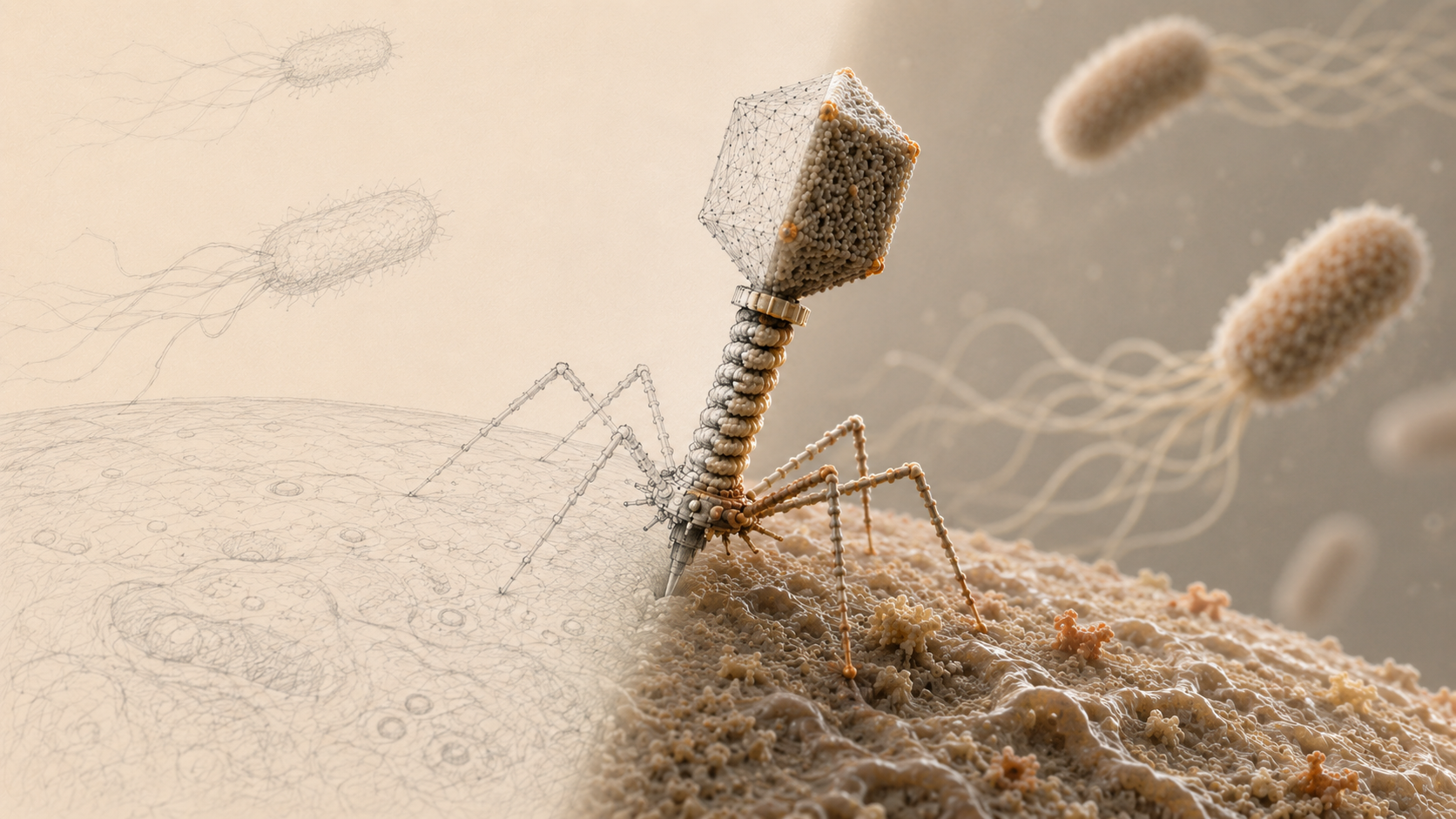
- ›External researchers used Evo to generate the first complete AI-designed genome, a bacteriophage harmless to humans
- ›The company is building what it calls 'general biological intelligence' by integrating separate strands of biology into unified models
Multimodal Approach to Biological AI
Unlike traditional AI models that process single types of biological data, Radical Numerics is developing systems that reason across multiple biological dimensions simultaneously.
- ›Models learn directly from DNA, RNA, proteins, and other biological data within a single integrated framework
- ›Multimodal reasoning across all biological dimensions enables capabilities that single-modality models cannot achieve
- ›The approach mirrors successful multimodal AI in other domains like vision and language, but applied to fundamental biology
- ›Company argues this architecture is essential for solving complex problems in disease and biological design
The shift from single-modality to multimodal biological AI represents a fundamental change in how the field approaches genome understanding. Rather than treating DNA, RNA, and protein information as separate problems, Radical Numerics folds them into one coherent system that can discover relationships and patterns invisible to narrower models. This holistic approach enables the system to learn richer representations of how biological systems actually function in nature.
Omnii: Next-Generation Genomic Language Model
Radical Numerics previewed Omnii alongside its launch, demonstrating significant advances in genomic AI capabilities.
- ›Omnii sets new state-of-the-art performance in identifying causal regulatory variants that influence gene expression
- ›Model achieves zero-shot transfer to experimental settings without requiring specific training on target tasks
- ›Successfully recovers experimentally validated functional variants at genetic locations associated with Alzheimer's disease
- ›Leads on detecting AI-generated or AI-manipulated pathogens, addressing biosecurity concerns
The zero-shot transfer capability of Omnii represents a major breakthrough in biological AI. The model can identify disease-relevant genetic variants with experimental validation without ever being trained on Alzheimer's-specific data, suggesting it has learned generalizable principles of how genetic variation affects biological function. This capability could accelerate drug discovery by reducing the need for extensive model retraining for each new disease target.
Dual-Track Applications: Health and Biosecurity
Radical Numerics is pursuing both beneficial applications and defenses against potential misuse of biological AI.
- ›Cancer diagnostics work includes partnerships on pancreatic cancer and multi-cancer detection capabilities
- ›Collaborations with a national laboratory on detecting and characterizing pathogens, whether natural or AI-engineered
- ›CEO Eric Nguyen states the company recognizes that 'the same models that can help cure disease may also lower the barrier to designing harmful biology'
- ›Company emphasizes that advancing biological design and building defenses against engineered threats are inseparable mandates
The dual mandate reflects a mature approach to powerful biotechnology. While Radical Numerics focuses on positive applications like cancer detection and drug discovery, leadership acknowledges that any AI system capable of designing beneficial biology could potentially be misused. By embedding biosecurity capabilities directly into Omnii, including the ability to detect AI-manipulated pathogens, the company aims to stay ahead of potential threats. This defensive capability could prove critical as biological AI becomes more powerful and accessible.
Founding Team and Scientific Leadership
Radical Numerics assembled a team combining AI expertise and domain authority in biology and defense.
- ›CEO Eric Nguyen leads the company with Chief AI Scientist Michael Poli, President Stefano Massaroli, and CTO Armin Thomas
- ›Three of four founders previously worked on model design at Liquid AI Inc., bringing deep AI expertise
- ›Scientific advisers include Microsoft Chief Scientific Officer Eric Horvitz, Stanford's Chris Ré, and Harvard geneticist George Church
- ›Andrew Weber, former U.S. assistant secretary of defense for nuclear, chemical and biological defense programs, provides biosecurity perspective
The advisory board brings together leaders from academia, industry, and national security. Eric Horvitz's involvement from Microsoft suggests enterprise-scale deployment considerations, while Chris Ré's Stanford background indicates focus on rigorous machine learning fundamentals. George Church's participation signals credibility within the genetics research community. Andrew Weber's defense background ensures the company considers biosecurity implications from inception rather than as an afterthought, reflecting genuine commitment to responsible development of biological AI.
Funding and Investor Backing
Radical Numerics secured $50 million in seed funding from prominent venture and strategic investors.
- ›Emergence Capital led the seed round investment
- ›Additional investors include Obvious Ventures, Triatomic Capital Private LP, Factory, and First Spark Ventures
- ›Patrick Collison, Stripe co-founder, backed the earlier pre-seed funding round
- ›Strong investor roster reflects confidence in the team's track record and the biological AI market opportunity
The funding composition reveals investor conviction in multiple dimensions. Emergence Capital's leadership suggests confidence in the company's AI model capabilities and market potential. Triatomic Capital's involvement indicates investors focused specifically on biological risk and opportunity. The combination of traditional venture capital with specialized life sciences and deep tech investors suggests the round was designed to support both technological advancement and responsible deployment of increasingly powerful biological AI systems.
The Broader Context of Biological AI
Radical Numerics enters a critical moment as AI capabilities in genomics rapidly advance.
- ›Evo demonstrated AI can generate complete DNA sequences and functional genomes at scale
- ›Next generation models like Omnii aim to control biological function with precision, moving beyond simple sequence generation
- ›CEO predicts eventual capability to 'create entirely new forms of life' through AI-designed biology
- ›The company positions biology as 'the most consequential application of AI' given its potential to reshape medicine and biosecurity
The trajectory from Evo's breakthrough in reading and writing DNA to Omnii's functional control represents rapid acceleration in biological AI capabilities. The company's leadership believes that functional biological design, combined with other advancing technologies, could eventually enable creation of organisms with no natural precedent. This vision motivates both the aggressive funding and the parallel emphasis on biosecurity capabilities. As biological AI matures, Radical Numerics' early commitment to dual-track development of beneficial applications and threat detection mechanisms may establish a crucial precedent for responsible development in this domain.
Frequently Asked Questions
What is general biological intelligence and how does it differ from previous AI approaches to biology?
General biological intelligence refers to AI systems that learn simultaneously from multiple types of biological data (DNA, RNA, proteins) within a single integrated model, rather than treating each biological modality separately. This multimodal approach enables the AI to discover relationships and patterns across different biological dimensions that single-modality models cannot detect, leading to more powerful capabilities for disease diagnosis, drug discovery, and biological design.
What are the key capabilities of Omnii, and why is the zero-shot transfer feature significant?
Omnii sets new records in identifying causal genetic variants, detects AI-manipulated pathogens, and recovers experimentally validated disease-related variants without specific training on those diseases. Zero-shot transfer means the model can apply its learning to new biological problems it has never encountered, which could dramatically accelerate drug discovery by reducing the need to retrain models for each new disease target.
How is Radical Numerics addressing biosecurity concerns with powerful biological AI?
The company has built detection capabilities directly into Omnii to identify AI-generated or AI-manipulated pathogens, and is collaborating with a national laboratory on pathogen detection and characterization. Leadership explicitly acknowledges that biological design capabilities could be misused, framing biosecurity and beneficial applications as inseparable mandates that must be developed together from the start.
What was the significance of Evo and the AI-designed bacteriophage genome?
Evo was the first AI model to read and write DNA at large scale; its work was featured on the covers of Science and Nature. External scientists used Evo to generate the first complete AI-designed genome, a bacteriophage, demonstrating that AI could move beyond theoretical sequence generation to creating functional biological systems.
Who are the founders and what relevant experience do they bring?
The founding team includes CEO Eric Nguyen, Chief AI Scientist Michael Poli, President Stefano Massaroli, and CTO Armin Thomas. Three of the four previously worked on model design at Liquid AI, and they are supported by advisers including Microsoft's Eric Horvitz, Stanford's Chris Ré, Harvard geneticist George Church, and former U.S. defense official Andrew Weber.
Radical Numerics represents a critical juncture where biological AI transitions from research milestone to practical application, with the potential to reshape medicine and biosecurity for generations to come.
Continue Learning
Comments
Sign in to join the conversation