Red Hat and Intel spotlight scalable AI inference as enterprises move beyond the GPU gold rush
Speaking at Red Hat Summit 2026, leaders from Red Hat and Intel argued that the next phase of AI will be decided by scalable, cost-efficient inference rather than raw power. As enterprises move from testing AI to broader adoption, they are balancing CPUs and GPUs rather than relying on GPU-heavy clusters. The two companies are collaborating to bring full vLLM support for Intel Xeon to Red Hat AI 3.4.
Key Takeaways
- Red Hat and Intel say scalable, cost-efficient AI inference is the next competitive battleground.
- Enterprises moving from testing to adoption need inference systems that perform without breaking the budget.
- CPUs are taking a bigger role as agentic AI reshapes infrastructure demands.
- Many agentic tasks like tool calling and data orchestration do not require GPUs at all.
- Red Hat and Intel are bringing full vLLM support for Intel Xeon to Red Hat AI 3.4.
The Inference Challenge
Scaling inference affordably is the key hurdle.
- ›The biggest challenge is building scalable AI inference systems that perform without breaking the budget.
- ›The next wave will be decided by who can do more with less.
- ›Early inference focused on deploying the largest models across massive GPU clusters.
According to Taneem Ibrahim, director of engineering for AI inference at Red Hat, customers turned to Red Hat to scale models across platforms like Red Hat Enterprise Linux and OpenShift without sacrificing control or cost efficiency. The focus shifted to driving down the cost per token so AI could be operationalized, governed and deployed at scale.
vLLM and llm-d
Open-source projects underpin Red Hat's approach.
- ›Red Hat is the largest commercial contributor to the vLLM project.
- ›The friction moment came in scaling vLLM with a project like llm-d.
- ›The goal is to drive the cost per token down.
Ibrahim framed the core question as how to take vLLM and work it at scale with llm-d so that AI workloads can be operationalized, governed and deployed at scale.
The Speakers and Setting
The discussion took place at Red Hat Summit 2026.
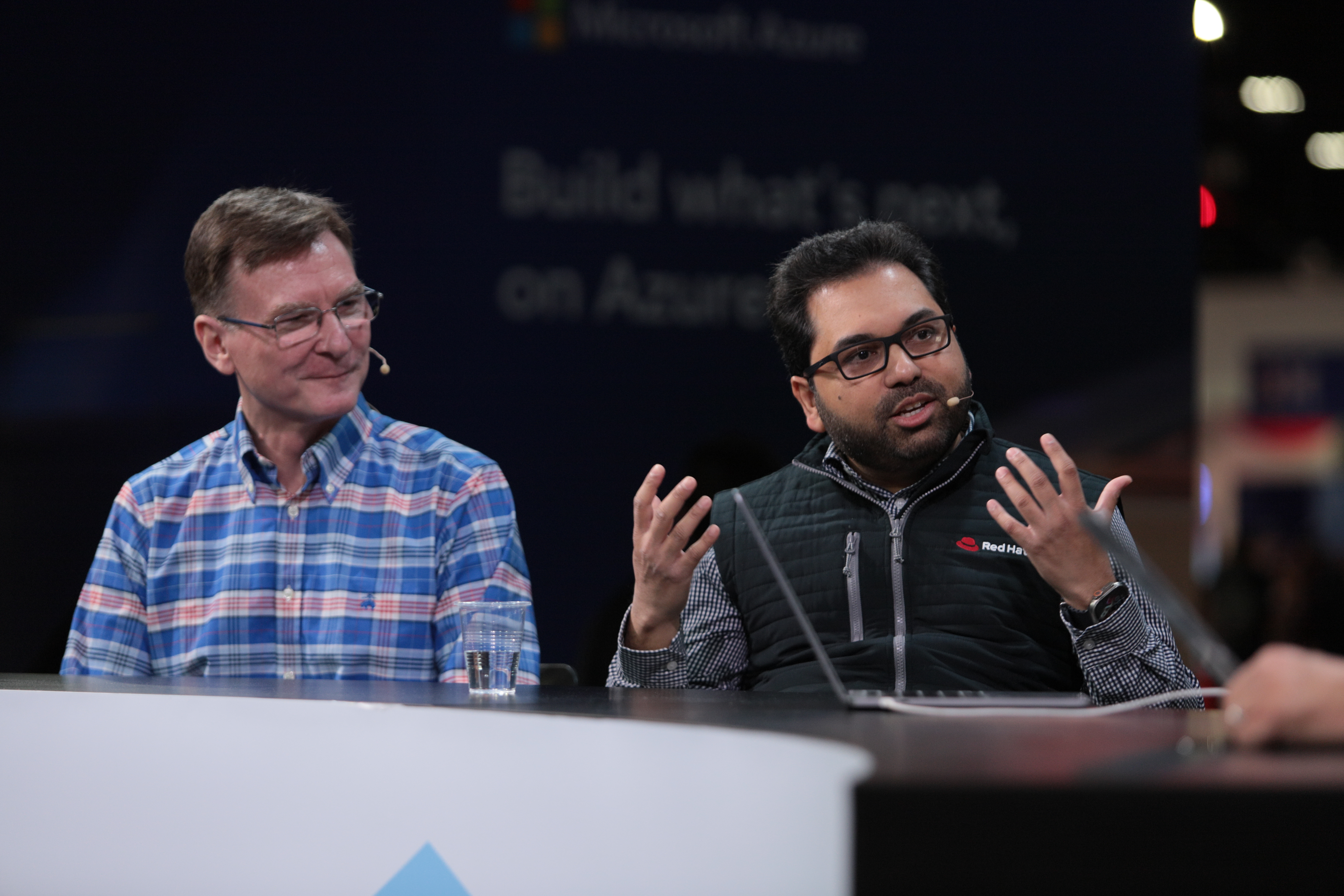
- ›Taneem Ibrahim is director of engineering for AI inference at Red Hat.
- ›Bill Pearson is vice president of data center and AI at Intel.
- ›They spoke with theCUBE's Rob Strechay and Rebecca Knight.
The conversation aired during an exclusive broadcast on theCUBE, SiliconANGLE Media's livestreaming studio, and covered scalable AI inference and the growing role of open-source, CPU-driven AI deployments. Red Hat sponsored the segment.
CPUs Take a Bigger Role
Agentic AI shifts the hardware balance.
- ›CPUs are playing a bigger role than during the earlier GPU-heavy phase.
- ›Companies are finding the right balance of CPUs and GPUs to meet performance needs efficiently.
- ›CPUs are already deployed across most data centers.
Bill Pearson said it is not a one-size-fits-all approach but a question of the workload and the outcome being sought, and putting together the right combination of hardware and software to deliver it. A growing share of inference workloads, particularly agentic tasks like tool calling and data orchestration, do not require GPUs, which frees GPU capacity for heavy lifting.
Using Existing Hardware
Pearson pointed to hardware companies already own.
- ›Customers often assume they need GPUs for every workload.
- ›Recognizing existing CPUs can change the calculus.
- ›Balancing CPUs and GPUs can deliver lower-cost tokens.
Pearson described customers who assumed they had a hammer and needed a nail to hit, then realized they already had CPUs in their data centers. Balancing the right number of CPUs and GPUs, he argued, gives better results at a better price point for delivering lower-cost tokens.
The Red Hat and Intel Collaboration
The two companies tied their work together.
- ›The collaboration brings full vLLM support for Intel Xeon to Red Hat AI 3.4.
- ›It underpins the shift toward balanced CPU-GPU deployments.
- ›It supports open-source, CPU-driven AI deployments.
The partnership is positioned to help enterprises match hardware and software to specific workloads as agentic AI reshapes infrastructure priorities.
Frequently Asked Questions
What is the main challenge Red Hat and Intel describe?
Building scalable AI inference systems that perform without breaking the budget as enterprises move from testing AI to broader adoption.
Why are CPUs taking a bigger role?
As agentic AI reshapes infrastructure, many tasks like tool calling and data orchestration do not require GPUs, and CPUs are already deployed across most data centers.
What is the Red Hat and Intel collaboration?
They are bringing full vLLM support for Intel Xeon to Red Hat AI 3.4, supporting balanced CPU-GPU and CPU-driven deployments.
What role does vLLM play?
Red Hat is the largest commercial contributor to the vLLM project and is working to scale it with llm-d to drive down the cost per token.
Who spoke in the interview?
Taneem Ibrahim of Red Hat and Bill Pearson of Intel spoke with theCUBE's Rob Strechay and Rebecca Knight at Red Hat Summit 2026.
Red Hat and Intel argue the next phase of AI will be won by efficient, balanced inference rather than raw GPU power.
Continue Learning
Comments
Sign in to join the conversation