Taxonomy of multi-agent design patterns, anti-patterns, and lessons from manufacturing
The piece frames multi-agent coordination as a distributed systems challenge rather than an issue with the underlying model. It also provides a practical framework for determining when multiple agents are necessary to build reliable, cost-efficient architectures on AWS.
Key Takeaways
- AWS Machine Learning shared a field-tested taxonomy detailing multi-agent design patterns and anti-patterns, incorporating lessons from manufacturing in a post published on November 16, 2026.
The post emphasizes that coordinating multiple AI agents is fundamentally a "distributed systems problem, not a model problem."
- This perspective shifts the design focus from isolated prompt engineering toward overall system integration.
The publication introduces a clear framework for deciding when using multiple agents is warranted for a specific workload.
- It further outlines strategies to construct cost-efficient, dependable architectures on AWS.
For developers, this underscores that creating effective agentic applications depends on treating agent interactions as distributed components within a structured engineering framework.
- Multi-agent coordination should be approached as a distributed systems challenge rather than a model issue.
AWS Machine Learning shared a field-tested taxonomy covering multi-agent design patterns and anti-patterns on November 16, 2026.
- It outlines methods for building reliable and cost-efficient agent infrastructure on AWS.
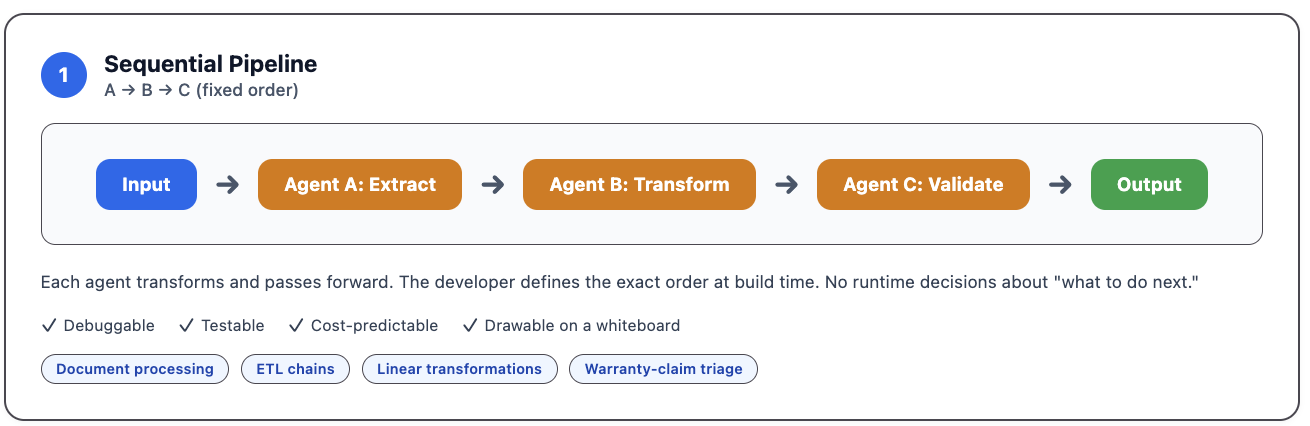
AWS Machine Learning shared a field-tested taxonomy detailing multi-agent design patterns and anti-patterns, incorporating lessons from manufacturing in a post published on November 16, 2026. The post emphasizes that coordinating multiple AI agents is fundamentally a "distributed systems problem, not a model problem." This perspective shifts the design focus from isolated prompt engineering toward overall system integration.
The publication introduces a clear framework for deciding when using multiple agents is warranted for a specific workload. It further outlines strategies to construct cost-efficient, dependable architectures on AWS. For developers, this underscores that creating effective agentic applications depends on treating agent interactions as distributed components within a structured engineering framework.
Multi-agent coordination should be approached as a distributed systems challenge rather than a model issue. AWS Machine Learning shared a field-tested taxonomy covering multi-agent design patterns and anti-patterns on November 16, 2026. The publication offers a framework to evaluate when deploying multiple agents is genuinely warranted.
For more details please read the original article at AWS Machine Learning.
Continue Learning
Comments
Comments appear only after moderation. Your email identifies your submission to the moderator and is never displayed here.
No approved comments yet.