Teaching models to forget: Selective unlearning with Amazon Nova
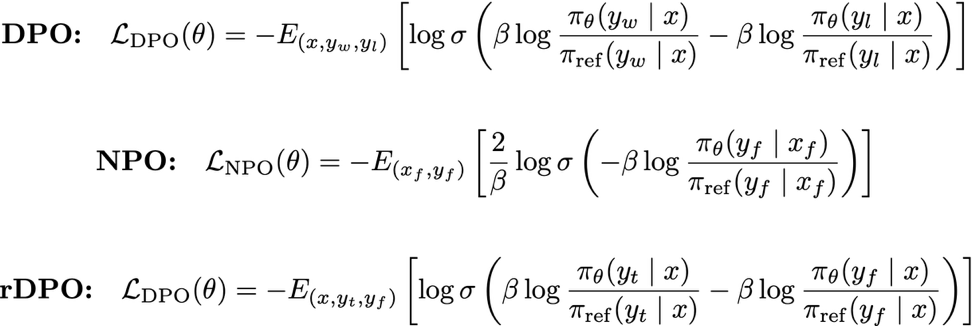
Amazon has developed Reverse Direct Preference Optimization (rDPO), a new unlearning technique that allows AI models to selectively forget or modify their responses without degrading overall performance. This innovation powers Amazon Nova's Customizable Content Moderation Settings, enabling customers to fine-tune how models handle sensitive content while maintaining quality and reducing unnecessary filtering.
Key Takeaways
- Reverse Direct Preference Optimization (rDPO) is a novel unlearning technique that enables selective forgetting in AI models without compromising general performance quality.
- Amazon Nova's Customizable Content Moderation Settings leverage rDPO to let users adjust content filtering thresholds to match their specific needs and use cases.
- The technique reduces over-deflection-excessive refusals to answer harmless queries-while preserving the model's ability to refuse genuinely harmful requests.
- rDPO is based on preference optimization methods and can be adapted by customers for their own model fine-tuning and customization experiments.

Understanding Reverse Direct Preference Optimization
Reverse Direct Preference Optimization represents a significant advancement in how AI models can be trained to unlearn or modify specific behaviors.
- ›rDPO extends preference optimization techniques to enable selective unlearning rather than just learning new behaviors.
- ›The technique allows models to reduce responses to certain types of prompts while maintaining performance on other tasks.
- ›Unlike traditional fine-tuning approaches, rDPO operates at the preference level, making surgical adjustments to model outputs.
Preference optimization has proven effective for aligning AI models with human values and expectations. Reverse Direct Preference Optimization takes this concept further by working backward-teaching models what not to do while preserving what they do well. This approach is fundamentally different from retraining or catastrophic forgetting, where models lose important capabilities when adapting to new constraints. Instead, rDPO selectively adjusts model preferences in targeted ways, maintaining the model's core competencies.
The Challenge of Content Moderation
Traditional content moderation approaches in AI models often struggle to balance safety with usability.
- ›Over-deflection occurs when models refuse to answer legitimate, harmless questions due to overly aggressive safety filters.
- ›One-size-fits-all moderation policies do not account for different use cases, industries, or user preferences.
- ›Content moderation settings must distinguish between truly harmful requests and benign queries that trigger false positives.
Many AI models employ broad safety measures that err on the side of caution, sometimes refusing to engage with entirely reasonable requests. This creates friction for users and limits the practical utility of the models. A healthcare chatbot might need different moderation settings than a general-purpose assistant. Educational applications may require different thresholds than customer service tools. Amazon Nova's approach recognizes that moderation is not universal and that giving customers control over their safety parameters improves usability without sacrificing security.
Amazon Nova Customizable Content Moderation Settings
Amazon Nova's implementation puts unlearning capability directly in users' hands through adjustable moderation controls.
- ›CCMS allows customers to customize how strictly the model enforces content policies specific to their application.
- ›The system preserves model quality while reducing over-deflection, enabling better performance on legitimate requests.
- ›Users can tune moderation thresholds without retraining the entire model from scratch.
The Customizable Content Moderation Settings represent a shift toward user-centric AI deployment. Rather than imposing a fixed moderation policy, Amazon Nova gives organizations the flexibility to define what appropriate content filtering looks like for their specific context. This could mean a stricter filter for applications serving younger audiences and a more permissive approach for adult professional environments. The implementation leverages rDPO to make these adjustments efficiently, without the computational overhead of full retraining or the performance degradation of naive approaches.
Reducing Over-Deflection While Preserving Safety
A key advantage of rDPO is its ability to fine-tune model behavior in sophisticated ways.
- ›The technique enables models to accept requests they previously rejected without becoming less safe overall.
- ›Safety against genuinely harmful requests remains intact while harmless queries receive appropriate responses.
- ›rDPO's preference-based approach allows granular control that other unlearning methods cannot easily achieve.
The distinction between over-deflection and legitimate refusal is critical. A model should absolutely decline requests to help with illegal activities or violence. However, refusing to discuss historical atrocities for educational purposes, or declining to answer technical questions about encryption for legitimate security research, represents problematic over-deflection. rDPO enables this nuance by learning which types of refusals serve genuine safety goals and which are unnecessary friction. By adjusting the preference signals during training, the technique teaches the model to be more discerning about when to refuse versus when to engage helpfully.
Applying rDPO to Your Own Models
Amazon is providing guidance for customers interested in implementing preference optimization techniques for their own customization work.
- ›Organizations can leverage preference optimization frameworks to fine-tune their models for specific use cases and safety policies.
- ›The approach requires curating preference pairs that reflect desired model behavior-examples of better and worse responses.
- ›Implementation can be adapted for different domains, safety requirements, and performance objectives.
Amazon has documented technical pointers and best practices for customers who want to experiment with rDPO and related preference optimization methods. This democratization of the technique means that organizations beyond Amazon can build customizable moderation into their own AI systems. The process involves identifying scenarios where current model behavior needs adjustment, creating training data that expresses preferences for the desired behavior, and then applying preference optimization algorithms to update the model's decision-making patterns. This is more accessible than full retraining while offering more sophisticated control than simple prompt engineering.
Broader Implications for AI Customization
The ability to selectively unlearn capabilities or modify safety constraints opens new possibilities for AI deployment.
- ›Unlearning techniques enable models to be adapted post-deployment without major computational or performance costs.
- ›Different organizations and regions have different regulatory and cultural norms around content-customization addresses this diversity.
- ›Selective unlearning could eventually support removing specific capabilities, outdated information, or problematic behaviors as needs evolve.
rDPO and similar unlearning techniques represent a maturation of the AI field toward more flexible, controllable systems. As large language models become integral to business operations, the ability to adjust their behavior without full retraining is invaluable. This approach also addresses privacy and compliance concerns-organizations can update their models to respect new regulations or customer preferences without expensive model reengineering. Looking forward, unlearning may enable models to adapt dynamically to changing requirements, remove outdated training data effects, or shift behavior in response to societal feedback in ways that are both efficient and safe.
Frequently Asked Questions
What is Reverse Direct Preference Optimization and how does it differ from standard fine-tuning?
rDPO is an unlearning technique that selectively modifies model behavior by using preference signals rather than retraining from scratch. Unlike standard fine-tuning which adds new knowledge, rDPO teaches models to reduce or eliminate specific responses while preserving overall performance, making it more efficient and targeted.
What is over-deflection and why is it a problem?
Over-deflection occurs when AI models refuse to answer legitimate, harmless questions due to overly aggressive safety filters. It creates friction for users and limits practical usability without improving actual safety, since the refusals are often triggered by false positives rather than genuinely harmful requests.
How do Customizable Content Moderation Settings work in Amazon Nova?
CCMS allows users to adjust how strictly the model enforces content policies to match their specific application and context. Powered by rDPO, this means organizations can tune moderation thresholds without retraining the model, enabling better balance between safety and usability for their particular use case.
Can I use rDPO techniques for my own AI models?
Yes, Amazon is providing guidance and pointers for customers interested in applying preference optimization techniques to their own models. The approach involves creating preference training data that reflects desired behavior, then using preference optimization algorithms to update the model's decision-making patterns.
Does using rDPO to reduce refusals compromise model safety?
No, rDPO preserves safety against genuinely harmful requests while specifically reducing unnecessary refusals to harmless queries. The technique's preference-based approach allows granular control that distinguishes between legitimate safety needs and over-cautious filtering.
Reverse Direct Preference Optimization represents a practical pathway toward more customizable, efficient AI systems that balance safety with usability in ways tailored to diverse organizational needs.
Continue Learning
Comments
Sign in to join the conversation