When agents move at machine speed, security teams lose their lag time
As autonomous AI agents execute tasks at machine speed, corporate security teams are forced to eliminate response lag times. Companies such as CrowdStrike Holdings Inc. and Box Inc. are updating their visibility and governance tools to track software agents across endpoints and cloud environments. Industry leaders predict that establishing standardized AI security frameworks will take two or three years.
Key Takeaways
- The rapid deployment of autonomous software agents is transforming enterprise cybersecurity by accelerating operations beyond human speed.
According to Cristian Rodriguez, field chief technology officer of the Americas at CrowdStrike, artificial intelligence automates system processes from start to finish, which can cause significant operational damage without proper guardrails.
- Data management platforms are also adapting to control autonomous software interactions with sensitive content.
Box Inc. introduced controls in July to oversee AI agents processing enterprise files, utilizing device posture ratings from CrowdStrike to evaluate access requests.
- Many early enterprise adopters now struggle with AI sprawl across cloud environments and software applications, frequently returning to security providers six months to a year after initial deployment to request visibility and control tools.
Ceylan indicated that an established security architecture or shared responsibility model for artificial intelligence does not yet exist.
- Autonomous software agents increase cybersecurity risks by accessing and transferring corporate data at machine speed.
CrowdStrike Holdings Inc. updated its Falcon platform to identify AI agents at endpoints as distinct assets with identities and data footprints.
- Early adopters report widespread AI sprawl across cloud instances, endpoints, and software-as-a-service applications.
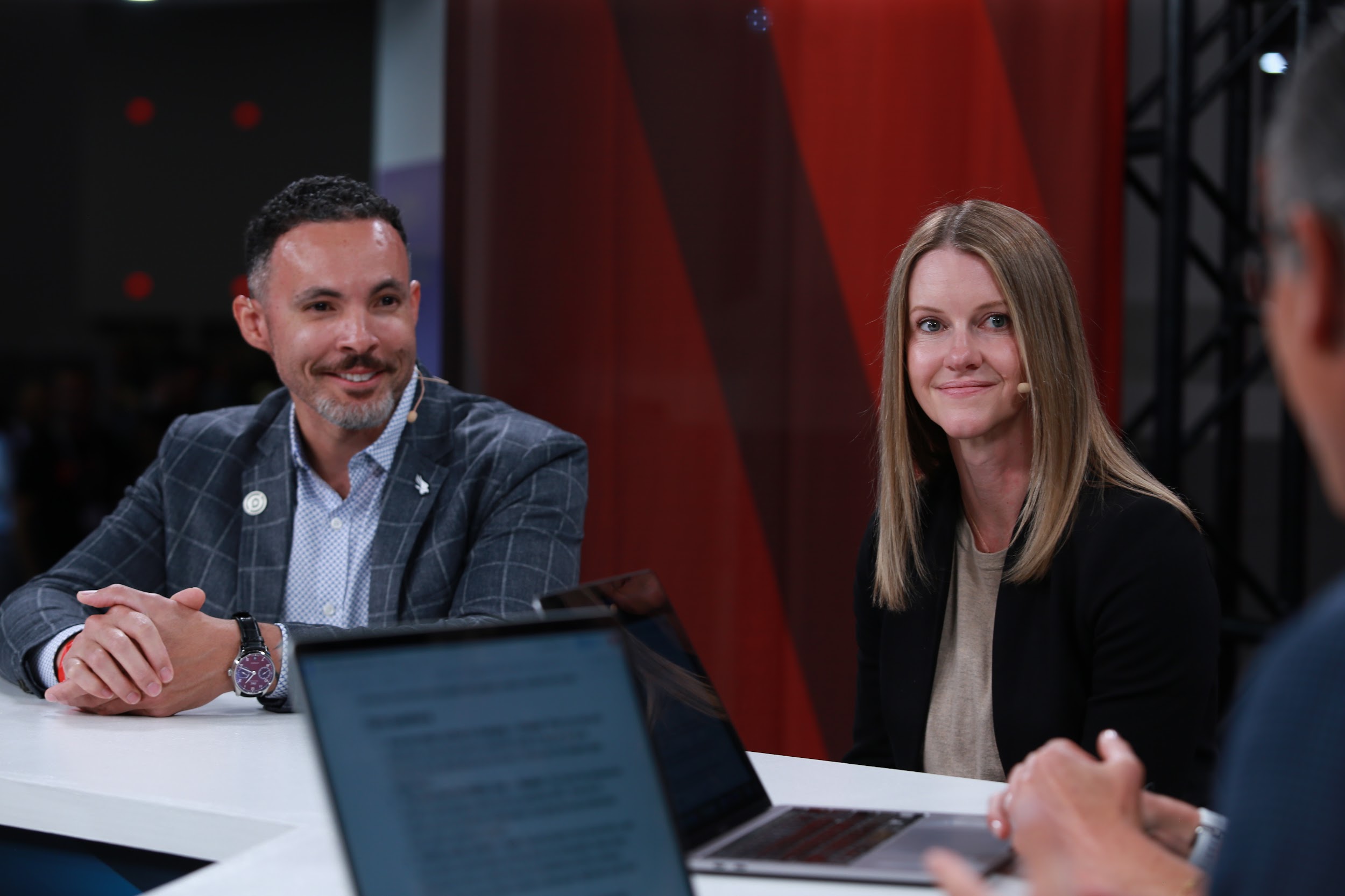
The rapid deployment of autonomous software agents is transforming enterprise cybersecurity by accelerating operations beyond human speed. According to Cristian Rodriguez, field chief technology officer of the Americas at CrowdStrike, artificial intelligence automates system processes from start to finish, which can cause significant operational damage without proper guardrails. To address these threats at the endpoint level, CrowdStrike Holdings Inc. extended its Falcon platform to monitor tool calls and treat each agent as an asset possessing its own identity and data footprint.
Data management platforms are also adapting to control autonomous software interactions with sensitive content. Box Inc. introduced controls in July to oversee AI agents processing enterprise files, utilizing device posture ratings from CrowdStrike to evaluate access requests. Heather Ceylan, chief information security officer of Box Inc., noted that security teams must achieve real-time visibility because autonomous agents execute actions much faster than human adversaries.
Many early enterprise adopters now struggle with AI sprawl across cloud environments and software applications, frequently returning to security providers six months to a year after initial deployment to request visibility and control tools. Ceylan indicated that an established security architecture or shared responsibility model for artificial intelligence does not yet exist. She projects that security leaders will face two or three uncomfortable years of ongoing adjustment before industry practices settle on standard defensive frameworks.
For more details please read the original article at SiliconANGLE AI.
Continue Learning
Comments
Comments appear only after moderation. Your email identifies your submission to the moderator and is never displayed here.
No approved comments yet.