AI News and Blog Articles
Curated updates from the most trusted sources in artificial intelligence. Stay ahead without the noise.
Top AI News
Hand-picked stories worth reading right now87 articles found

European tech weekly recap: €2.8B in deals and May's highlights
Last week, we tracked more than 65 tech funding deals worth over €2.8 billion and over 10 exits, M&A transactions, rumours, and related news stories across Europe. 📊 In May, European tech startups...
Italian Bestie Bite raises €1.5M to accelerate US expansion
Bestie Bite, the Italian app dedicated toauthentic video reviews in the hospitality sector, has closed a €1.5 millionfresh-money funding round through a SAFE instrument. The investment was led bythe G...
Qorelo raises $3.5M to streamline SAP migrations
Qorelo,an AI startup focused on enterprise resource planning (ERP) transformations,has raised $3.5 million in seed funding just five months after launching. Theround was co-led by HPI Ventures and Cae...
As AI companies race to go public, who else is along for the ride?
On TechCrunch's Equity podcast, hosts discuss what looks like a hot IPO summer driven by AI companies racing to go public. SpaceX went public this week in the largest IPO ever, making CEO Elon Musk the world's first trillionaire, and competitors OpenAI and Anthropic may soon follow with their own public debuts. The hosts argue that public market capital is shifting away from consumer and social networks toward AI labs and deeptech, with other startups trying to ride the SpaceX IPO wave.
SpaceX IPO: Live updates on everything you need to know
TechCrunch's live coverage tracks SpaceX's initial public offering, the largest in history. The company priced 555.6 million shares at 135 dollars each to raise 75 billion dollars, a deal set to make CEO Elon Musk the world's first trillionaire. Shares opened at 150 dollars on the Nasdaq, soared as much as 30% in midday trading and closed at 160.95 dollars, up 19%. The piece also covers winners such as the underwriting banks, a notable comment from COO Gwynne Shotwell, and figures from the company's S-1 filing.

The Week's 10 Biggest Funding Rounds: NinjaOne Leads With $400M As Large Deals Also Go To Blockchain, Cloud Infrastructure, Biotech And Robotics
Crunchbase News's weekly roundup lists the 10 biggest US startup funding rounds, led by enterprise software company NinjaOne with over $400 million. The week's largest deals overall went to European companies: Germany's Neura Robotics raised $1.4 billion and Finland's Iceye landed $520 million. The US list spans enterprise software, blockchain, AI cloud infrastructure, biotech, robotics, and assistive technology. The roundup is a recurring feature tracking $100 million-plus venture deals.
Mistral is rumored to be raising €3B at €20B valuation
Bloomberg reported, citing anonymous sources, that French AI lab Mistral AI is in early discussions to raise about 3 billion euros (roughly 3.5 billion dollars). The round would value Mistral at around 20 billion euros (about 23.15 billion dollars), nearly double the 11.7 billion euro valuation from its Series C last September. Mistral has positioned itself as an open, sovereign European alternative to American AI labs, though it has raised far less capital than rivals OpenAI and Anthropic.

Elon Musk is the world's first trillionaire
Elon Musk's net worth has passed the trillion-dollar mark after SpaceX's IPO, making him the world's first trillionaire. His wealth, around $800 billion before the IPO, now includes the value of his 4.8 billion shares in SpaceX plus holdings in other companies like Tesla, with SPCX shares trading well above the $138 benchmark needed for a 13-figure net worth. Musk reached the milestone 110 years after John D. Rockefeller became the world's first billionaire in 1916.
SpaceX, Anthropic, and OpenAI's hot IPO summer
On an episode of TechCrunch's Equity podcast, hosts break down a hot IPO summer led by a new set of companies. The piece frames a new acronym, MANGOS, standing for Meta or Microsoft, Anthropic, Nvidia, Google, OpenAI, and SpaceX, with half of that group heading to public markets in the same window. The hosts discuss what the moment means for investors and valuations and what it says about the AI infrastructure race, including Google's reported $920 million compute deal with SpaceX.
olmo-eval: An evaluation workbench for the model development loop
Ai2 released olmo-eval, an open evaluation workbench built for the day-to-day loop of developing a language model rather than just scoring finished ones. It builds on Ai2's earlier OLMES standard from 2024 and aims to cut the work of adding new evaluations, run benchmarks flexibly across model checkpoints, and analyze results prompt by prompt. The tool treats agentic and multi-turn evaluation as a first-class use case and adds analysis tools to judge whether an intervention actually beat the baseline or the difference is just noise.
It's hot IPO summer, and the MANGOS are ripe
On this episode of TechCrunch's Equity podcast, hosts Kirsten Korosec, Anthony Ha, and Sean O'Kane discuss a revived IPO market led by a new group of companies they call MANGOS, replacing the older FAANG acronym. MANGOS stands for Meta (or Microsoft, depending on who you ask), Anthropic, Nvidia, Google, OpenAI, and SpaceX, with several of them heading to public markets in the same window. The episode also covers Apple's WWDC, Waymo, and a large compute deal between Google and SpaceX.

ChatSee raises $6.5M to build 'failure memory' for enterprise AI agents
ChatSee.AI, a company building a failure intelligence layer for autonomous AI systems, raised 6.5 million dollars in seed funding led by True Ventures. The company aims to close the 'confidence gap' enterprises face as AI agents move from pilots into production, where they cannot be tested out of failures because the infrastructure is nondeterministic. ChatSee's approach observes when agents fail, preserves the surrounding context, captures fixes and feeds that knowledge back so future agent actions can avoid the same failures. Its system is built on a taxonomy of more than 10,000 grounded examples of enterprise agent failures classified into 157 categories.
NEURA Robotics secures up to $1.4B, Bending Spoons files for US IPO, and UK PM unveils £400M chip plan
This Tech.eu weekly roundup tracks European tech activity, covering more than 65 funding deals worth over 2.8 billion euros plus over 10 exits, M&A transactions and related stories. Headline items include NEURA Robotics securing up to 1.4 billion dollars to scale its physical AI and cognitive robotics platform, Bending Spoons filing for a US IPO, and the UK Prime Minister unveiling a 400 million pound chip plan. The piece also lists notable acquisitions, investor moves and early-stage startups to watch across Europe.

SpaceX's massive IPO: all the latest news
The Verge is tracking SpaceX's initial public offering, which let the public buy shares of the combined rocket, AI, and social media company for the first time. The offering raised enough money to make Elon Musk the first trillionaire on paper, with his wealth tied to a business that includes launching AI data centers into space. The stock, trading as SPCX, opened at $150 per share.
SpaceX IPO: Everything you need to know
TechCrunch's continually updated guide covers the SpaceX IPO, which it calls the largest in history. The company priced 555.6 million shares at $135 each to raise $75 billion, and shares opened at $150 on the Nasdaq, an 11% pop. The deal looks set to make Elon Musk the world's first trillionaire, even as the company's S-1 shows it lost $4.9 billion on more than $18 billion in revenue in 2025.

Jeff Bezos' AI startup aims to build an 'artificial general engineer'
Amazon founder Jeff Bezos says his new AI startup, Prometheus, aims to build an artificial general engineer, according to reports from The New York Times and CNBC. The startup is developing AI-powered tools to help design physical products across industries such as robotics, drug design, and manufacturing. The disclosures follow a $12 billion funding round that values Prometheus at $41 billion.

SpaceX's record IPO, Bezos' Prometheus rising and Anthropic's controversial call for AI limits
SiliconANGLE's weekly enterprise roundup covers SpaceX's record-setting IPO, fresh moves by other AI leaders toward public markets, and Anthropic's controversial push for limits on powerful AI. SpaceX went public and raised about $75 billion, an all-time record, with shares rising and valuing the company near $2.1 trillion. OpenAI confidentially filed for its own IPO, Apple unveiled Siri AI partly powered by Google's Gemini, and Jeff Bezos' Prometheus raised $12 billion for industrial engineering. The column also previews upcoming data and AI industry events.

SpaceX Launches Largest IPO Of All Time
SpaceX made its market debut on the Nasdaq in what Crunchbase News calls the largest IPO in history, with shares closing up 19 percent and trading up as much as 22 percent in early trading Friday. The offering is slated to raise about $75 billion and values the company at nearly $1.8 trillion. The IPO turns Elon Musk into the world's first trillionaire and delivers a major exit for early investors.
You Probably Won't Get Rich Off the SpaceX IPO
The company has set aside an unusually high number of shares for retail investors. Still, experts say, you're just getting the crumbs.
Theker just raised $85M to build the factory robot that doesn't specialize in anything
Theker, a robotics startup based in Barcelona, raised $85 million in a Series A round led by the American venture firm CRV, with backing from Samsung and Aglae Ventures, the investment vehicle tied to LVMH chairman Bernard Arnault. The company says it is Europe's largest robotics Series A on record. Unlike humanoid robots built around one fixed shape, Theker's machines swap hands, arms, and overall form so a single system handles many factory and warehouse jobs instead of specializing in one. The round arrived less than a year after the company's seed funding and came in at roughly double its original target.
Jeff Bezos's Prometheus raises $12B to build an 'artificial general engineer' for the physical world
Prometheus, a physical-AI startup co-founded and now co-led by Jeff Bezos, raised $12 billion in a Series B round at a $41 billion valuation. The company is building what it calls an "artificial general engineer," AI software meant to automate the design and manufacturing of complex physical products such as jet engines, chips, and drug compounds. The round marks Bezos's first operational chief executive role since he stepped down as Amazon CEO in 2021, and lifts the company's total funding past $18 billion.
Why You Might Already Own SpaceX Shares, Siri's AI Makeover, and Knicks Owner's Surveillance Machine
A Wired podcast episode breaks down the SpaceX initial public offering, which priced at $135 a share for a valuation near $1.75 trillion and raised about $75 billion, the largest stock-market debut on record. The bigger point for everyday savers is ownership by default: relaxed index rules mean broad index funds and typical 401(k) plans buy the stock automatically, without anyone choosing it. The same episode covers Apple's Google-powered Siri rebuild and a surveillance investigation tied to the owner of the New York Knicks.

Upriver raises $14M to automate enterprise data engineering for AI
Israeli startup Upriver Data Ltd. has raised $14 million to automate the enterprise data engineering work that AI projects depend on. Founded in 2024, the company built an AI-native platform that connects to an organization's full data stack, resolves data quality issues, and maintains pipelines automatically. The funding arrives as many AI deployments stall due to poor data rather than the models themselves.

Jeff Bezos' Prometheus raises $12B to accelerate industrial engineering projects
Prometheus Inc., an AI startup co-led by Amazon founder Jeff Bezos, has raised $12 billion in a Series B round that values the company at $41 billion, according to Axios. The company, previously known as Project Prometheus, is building AI tools to speed up hardware development across uses including robots, jet engines, drugs, and data centers. Bezos says the software could accelerate engineering workflows by a factor of 10 or more.
SpaceX officially prices shares at $135 in the largest IPO ever
SpaceX priced its initial public offering at $135 per share, selling 555.6 million shares to raise roughly $75 billion. That makes it the largest IPO in history, far surpassing the $24.9 billion Saudi Aramco raised in 2019. The space and AI company, formally Space Exploration Technologies Corp., trades on Nasdaq under the ticker SPCX at a valuation near $1.77 trillion, and the deal positions Elon Musk to become the world's first trillionaire.
SpaceX SPV investors won't know their true holdings until post-IPO lock-ups lift
Many people who bought into SpaceX through special purpose vehicles will not learn how many shares they actually own until well after the company's public debut, because those vehicles were stacked four or five layers deep. Each layer adds a 30-day window to pass shares down the chain, so the lowest-tier backers might wait eight to nine months after lock-ups lift before real shares reach their accounts. Manager fees shrink final holdings at every level, and a few vehicles could turn out to be fraudulent.
Barcelona-based AI robotics outfit Theker raises $85M
Theker, a Barcelona robotics startup, raised $85 million in a Series A round the company calls the largest robotics Series A ever in Europe. US venture firm CRV led the round, with first-time Spanish bets from Samsung and LVMH joining alongside returning backer Inditex, the parent of Zara. The funding brings Theker's total raised to about $106 million since the company started in 2022, and the cash will fund more industrial deployments and a hiring push toward 120 staff.

Base10 Partners Closes 2 Funds Totaling $850M To Invest In Real Economy Automation
San Francisco venture firm Base10 Partners closed two new funds totaling $850 million to back companies automating the real economy with AI, sectors like logistics, payroll, and construction. The raise lifts the firm's assets under management to $2.6 billion. Co-founder Adeyemi Ajao frames the strategy as using technology to give the other 99 percent of businesses the capabilities once reserved for the top 1 percent.

PhoenixAI raises $80M to drive the development of agentic AI-ready database technology
PhoenixAI, formerly known as CelerData, raised $80 million in Series B funding to develop its AI-native analytical database and expand governance for regulated industries. The round was led by Sky9 Capital with participation from Atypical Ventures, Olive Technology Ventures, and prior investors. The company says agentic AI has shifted from prototyping to production, with swarms of agents hitting databases with thousands or millions of queries per second, and it has rebuilt its analytical database to deliver subsecond latency and high concurrency on live data for that workload.

Evaluate AI agents systematically with Agent-EvalKit
AWS Labs released Agent-EvalKit, a free open-source toolkit under the Apache 2.0 license that tests AI agents by tracing their full execution path, not only their final answers. It plugs into AI coding assistants including Claude Code, Kiro CLI, and Kilo Code, running evaluation through six phases inside the developer's workspace. In a sample travel research agent, the toolkit caught the agent inventing exchange rates and temperatures when its web search came back empty, a failure that polished-looking output alone would hide.

European tech funding rebounds to €10.5B in May as mega-rounds power market recovery
European tech companies raised €10.5 billion across 258 deals in May 2026, more than double the €5.1 billion invested in April even though the number of deals fell. Large infrastructure and AI rounds drove the recovery, led by Pure Data Centres with more than €2.3 billion and Nscale with €675 million. UK companies accounted for €7.9 billion of the monthly total, and the cloud sector took the single largest share of capital.
Google DeepMind is worried about what happens when millions of agents start to interact
Google DeepMind, Schmidt Sciences, ARIA, the Cooperative AI Foundation, and Google.org have opened a $10 million funding call to study what happens when millions of AI agents start interacting with each other online. The worry, voiced by DeepMind's AGI safety lead Rohin Shah, is that mass-market agents now act without human oversight and follow instructions from other agents, creating risks like scaled fraud, prompt-injection attacks, and coordinated cyberattacks. The backers say a dedicated field of multi-agent safety research does not yet exist, and they want to build it before these systems become widespread.
Enera raises $2M to improve the EV charging experience
Enera, an AI-powered driver experience platform for electric vehicle charging, has raised $2 million in pre-seed funding led by Lakehouse Ventures. The London and Barcelona based startup builds software that helps charging operators find out why charging sessions fail and fix the problem in real time. The round marks Lakehouse Ventures' first investment outside the United States, with Divergent Capital, Masia, and several angel investors also taking part.
OurMind lands €2.1M to help reduce healthcare workloads
OurMind, an Amsterdam-based healthtech startup, raised 2.1 million euros to expand an AI platform built to cut the paperwork load on doctors. The round was led by 4impact capital, the venture fund's first HealthTech investment, with backing from practicing general practitioners and medical specialists. The company's tools are already in use at more than 300 general practices and 14 hospitals across the Netherlands.

Cloud: 10 companies that raised the most in 2025
The 10 European cloud companies that raised the most in 2025 were led by AI infrastructure firms, with UK-based Nscale on top after combined Series B and C rounds and Netherlands-based Nebius close behind. A small group of very large growth-stage deals accounted for most of the capital, while smaller seed and early-stage rounds spread across cloud optimization, sovereign cloud, and developer platforms. Funding concentrated in the Netherlands, Italy, Germany, Spain, and the UK, with Western Europe leading on both deal count and dollars raised.
TurnUp raises €2 million to help healthcare providers reduce no-shows
TurnUp, a health technology startup based in Ghent, Belgium, has raised 2 million euros in a seed funding round led by Newion, with participation from RDY Ventures. The company sells an AI platform that predicts which patients are likely to miss appointments and automates confirmations, rescheduling, and waiting list management for dental and medical practices. TurnUp already serves more than 250 practices across Belgium, the Netherlands, and the UK, and says its software has prevented over 500,000 no-shows.
Mendo secures €12M to scale enterprise AI adoption in Europe
Mendo, a Paris-based startup founded in 2021, raised 12 million euros in Series A funding to help large companies put generative and agentic AI to work for their employees. Ventech and Educapital led the round, with Tomcat and OVNI also taking part. The deal brings Mendo's total funding to 15.5 million euros and will fund European expansion and a doubling of staff from 50 to 100 people.

Neura Robotics to raise up to $1.4B from Nvidia-backed consortium
Automation startup Neura Robotics GmbH is raising a funding round worth up to $1.4 billion from a group of prominent investors. The company detailed today that the consortium includes Amazon.com Inc., Nvidia Corp., Qualcomm Technologies Inc. and cryptocurrency issuer Tether. The round is also expected to draw contributions from outside the tech sector. The European [...] The post Neura Robotics to raise up to $1.4B from Nvidia-backed consortium appeared first on SiliconANGLE.
xAI fired an engineer who raised alarms about Grok safety, new lawsuit claims
A former xAI engineer named Devin Kim has sued xAI and SpaceX in California state court, claiming he was fired in retaliation for repeatedly raising safety concerns about the Grok chatbot. The suit landed days before SpaceX's stock market debut, set to be the largest initial public offering on record at roughly $75 billion raised. Kim, who left xAI in September 2025, now serves as president of the nonprofit Center for AI Safety.
NEURA Robotics secures up to $1.4B Series C to scale physical AI and cognitive robotics platform
NEURA Robotics, a German maker of cognitive and humanoid robots, has secured up to $1.4 billion in Series C funding led by stablecoin issuer Tether, valuing the company at about $7 billion. Backers include Qualcomm, Amazon, NVIDIA, Bosch, Schaeffler, and the European Investment Bank. The company describes it as the largest funding round ever raised by a full-stack robotics firm and will use the money to scale mass production of robots that work alongside people in the physical world.
Datadog veterans launch AI coding startup Niteshift on a bet against Big AI lock-in
Niteshift, an AI coding startup founded by two early Datadog engineers, has raised a $7 million seed round led by Greylock partner Jerry Chen. The company runs a cloud platform that routes coding work across rival AI models such as GPT, Claude, and open source options, picking the best fit for each project. Its core pitch is freedom of choice, betting that businesses want control over their developer tools instead of being locked into a single model maker.
The three hard-tech moonshots fueling SpaceX's unbelievable IPO
SpaceX priced the largest IPO on record at $135 per share, valuing the rocket maker near $1.77 trillion and raising about $75 billion through the sale of roughly 555.6 million shares. Most of that price rests not on today's rocket and Starlink business but on three unproven hard-tech bets: fully reusable Starship rockets, mass-produced AI satellites, and a chip foundry. Independent analysts value the company far lower, with Morningstar at $825 billion, treating the gap as a wager on space-based data centers.
Jedify raises $24M to help companies arm AI agents with context on their business
Jedify, a New York startup, raised $24 million in a Series A round led by Norwest to help companies feed AI agents context about their own operations. The round lifted total funding to about $33 million and brought Snowflake Ventures in as a strategic investor that is integrating Jedify into its AI products. The pitch is that enterprise agents stay weak until they understand a company's data, permissions, workflows, and internal terminology.
Capsa AI raises $18M to expand its AI platform for private capital
Capsa AI, a startup with offices in London and New York, raised $18 million in a Series A round co-led by TX Ventures and Pivot Investment Partners. The financing lifts the company's total funding to $20 million since it was founded in 2024. Capsa AI builds an AI operating system for private capital firms, pulling scattered fund data into one searchable layer, and will use the money to expand in the United States and grow its teams.
Hamburg-based Generation Tech Partners launches €50M AI roll-up fund
Generation Tech Partners, a new Hamburg investment firm, has launched a fund of more than 50 million euros to buy established German mid-market service companies and rebuild them around artificial intelligence. The firm plans to acquire about 30 owner-managed B2B service businesses for a combined purchase volume of up to 120 million euros, then run them with a proprietary AI transformation playbook. The strategy targets firms whose founders face succession problems and aims to grow them without cost-cutting or layoffs.
Nanordica Medical raises €1.6M to bring antibiotic-free chronic wound treatment to market
Estonian medtech company Nanordica Medical raised 1.6 million euros to bring Premotiv, an antibiotic-free dressing for chronic wounds, to the European market. The dressing uses copper and silver nanoparticles to fight infection and speed healing without antibiotics, and it targets hard-to-heal cases such as diabetic foot ulcers. The round was led by Estonian fund 2C Ventures, and the money funds a large clinical study and the safety certification needed to sell across Europe.

Sector Snapshot: Semiconductor Startup Funding Still Running Hot
Investors have put roughly $10.7 billion into semiconductor startups during 2026 so far, a pace set to pass all of 2025. The standout event was the Cerebras Systems IPO in May, which raised about $5.5 billion. Three other chip startups, MatX, Ayar Labs, and Etched, each pulled in $500 million private rounds, with money concentrating on a small group of firms building hardware to challenge Nvidia in artificial intelligence.
Investing in multi-agent AI safety research
Google DeepMind and four partners opened a research funding call worth up to $10 million to study how AI agents behave when many of them interact at scale. The money targets safety risks that surface only when independent agents built by different organizations work together, a gap most current safety testing ignores. Academic and independent researchers worldwide can apply by August 8, 2026, with award decisions expected in autumn 2026.
Uncovr raises $7M to build AI infrastructure for surgery
Uncovr, a surgical AI startup based in New York and Paris, raised $7 million in seed funding led by Index Ventures to build software that documents what happens inside the operating room. The product reads surgical and endoscopic video in real time and turns it into structured clinical records, draft operative reports, and billing code suggestions before the surgeon leaves the room. Every output requires surgeon review and sign-off. The company already has a deployment pipeline of more than 400 operating rooms across the United States and Europe.
Rotomate raises €2.1M to automate industrial reliability analysis
01Health secures $15M to scale specialist healthcare platform
UK healthtech company 01Health has raised $15 million in Series A funding, equal to about £11.2 million, led by Gresham House Ventures. The money supports a wider rollout of its platform that lets local clinics deliver specialist care normally confined to large hospitals, plus a planned expansion into the United States. Founded in 2022 by former NHS doctor Dr Sonia Szamocki, the company has now raised $25 million in total and employs more than 100 people.
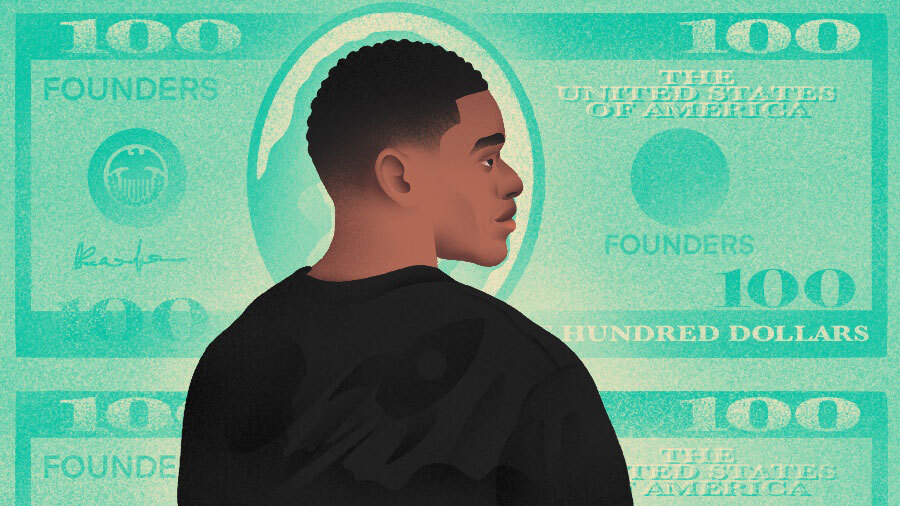
How Justin Ernest invested nearly $500M into hot startups without a traditional VC fund
Justin Ernest, founder of the firm Sabertooth, invested nearly $500 million into 10 late-stage startups over 12 months without raising a traditional venture fund. He instead used special purpose vehicles and a captive group of about 30 institutional investors, mostly family offices, to buy stakes in companies such as Anthropic, SpaceX, Databricks, PsiQuantum, and Base Power. Checks ran from $10 million to $275 million per deal, and the firm has already booked one exit through Groq's $20 billion sale to Nvidia.

How to unlock true ROI in software development - a deep dive into the latest DORA research
Google Cloud's DORA research team says the return on AI coding tools follows a J-curve: a short productivity dip during early adoption, then a climb to long-term gains. The report's central finding is that AI works as an amplifier, so the biggest returns come from strong engineering foundations and team workflows rather than the tools alone. Nearly all surveyed teams already use AI at work, yet financial results differ widely depending on how well an organization is set up to absorb the change.
Sandstone raises $30M to bring AI to in-house legal teams
Sandstone, a startup building AI tools for corporate legal departments, has raised a $30 million Series A led by Lightspeed Venture Partners. The round arrived six months after a $10 million seed led by Sequoia, bringing total funding to $40 million in under a year. The company says revenue grew more than 40x over the prior 90 days as it signed customers including Wayfair, Grindr, and ElevenLabs.
Finnish space safety startup Aavuus lands Pre-Seed funding to tackle space debris tracking
Aavuus, a Finnish space-safety startup spun out of the Finnish Geospatial Research Institute, has raised Pre-Seed funding from Helsinki investor Maki.vc to build a global network of ground-based laser stations. The system aims to track small orbital debris in low Earth orbit with more precision than today's commercial radar and telescope tools. The round amount was not disclosed.
Granarium raises €1M+ to commercialise renewable supercapacitors for grid stability
Granarium Technologies, a Finnish deeptech startup spun out of state research institute VTT, raised over €1 million in Pre-Seed funding to commercialise renewable supercapacitors for grid stability. The round was led by BSV Ventures and Beamline, with angel networks FiBAN, EstBAN, and LatBAN joining. The company builds 100% renewable supercapacitors from waste wood and biomass, cutting production capital costs by up to 80%, and plans pilot launches within six months.
ICEYE raises €450M at €10B+ valuation as demand for sovereign space intelligence accelerates
Finnish satellite company ICEYE raised €450 million in a primary Series F round led by US investment firm General Atlantic, pushing its valuation above €10 billion. Including a secondary share placement for existing investors, the full transaction reached about €1 billion. The valuation roughly quadrupled from €2.4 billion in December 2025, driven by national governments racing to own their own space-based intelligence rather than depend on allies or commercial suppliers.
How an e-scooter founder raised $5 million to build space data centers
Orbital, a Los Angeles startup founded by former Spin e-scooter CEO Euwyn Poon, raised a $5 million seed round to build AI data centers in space. The round was led by venture firm a16z through its Speedrun accelerator. Orbital wants to deploy 10,000 satellites that together deliver a gigawatt of computing power for AI inference, with each satellite supplying about 100 kW. The company aims to reach full scale once SpaceX Starship flies on a regular schedule.
Merchantee secures €1.8M for European marketplace expansion
Merchantee, a Prague-based startup building AI-driven marketplace intelligence software for online sellers, raised €1.8 million in a new funding round led by Reflex Capital. The money funds product development and a European expansion that starts in Poland and Germany. The platform automates the thousands of pricing, promotion, and campaign decisions sellers face when listing products across multiple online marketplaces at once.
Led by 20VC, fonio.ai raises $17M for omnichannel AI platform
fonio.ai, a Vienna-based maker of AI agents for customer communication, raised $17 million in seed funding at a $140 million valuation in a round led by 20VC. The deal ranks as one of the largest seed rounds in Austrian history and lifts the company's total funding past $20 million less than two years after it was founded. fonio.ai now serves more than 7,000 business customers and automates over 2 million calls each month, and it plans to expand from voice into a wider omnichannel platform.
Zaro lands $5.1M to build the next layer of enterprise AI
Zaro, a London startup, left stealth on June 9, 2026 with $5.1 million in pre-seed funding led by Cherry Ventures. The eight-person team, made up largely of engineers who built AI agents at Convergence and helped ship Salesforce's Agentforce, is building an AI-native workspace that ties a company's tools, workflows, and data together through a single shared context layer the business owns. Angel backers include Hugging Face co-founder Thomas Wolf and GitHub CEO Thomas Dohmke.
Cordon Technologies raises £1M to help farmers cut pesticide use through precision spraying
Cordon Technologies, a UK agritech startup based in Maidenhead, has secured the first close of a £1 million funding round led by British Design Fund. The capital will speed development and commercial rollout of its precision spraying system, which helps farmers apply less pesticide and fertiliser by tailoring treatments to what each part of a crop needs. The firm has early commercial traction in the UK vineyard sector and plans to grow across European vineyards and into other crops.
Pitchdrive raises €60M to back Europe's AI-native founders
Pitchdrive, an Antwerp-based pre-seed venture capital firm, closed its fourth fund at 60 million euros, topping its initial 50 million euro target. The fund is backed entirely by private investors, with no government or institutional money. Pitchdrive will use the capital to back roughly 25 to 30 early-stage European startups, with a thesis centered on AI-native companies and businesses being reshaped by AI.
Mercor's Brendan Foody calls out Sequoia, accusing it of 'dual-pricing' valuation tricks
Brendan Foody, co-founder of the $10 billion AI talent platform Mercor, publicly accused Sequoia of "dual-pricing," a tactic where a lead investor buys most of its equity at a low valuation while a tiny slice goes in at a far higher price to set the announced headline number. Foody said he has seen about a half dozen rounds in the past six months where Sequoia invested in two tranches at two different prices. Sequoia partner Shaun Maguire pushed back, calling the two-tranche structure a response to outside investors willing to overpay, not deception. The fight, played out on X, exposes how AI-era funding rounds report eye-catching numbers that sit well above what most invested capital paid.
As OpenAI files for IPO, Sam Altman's eye-scanning company is doing layoffs, report says
Tools for Humanity, the identity verification startup chaired by OpenAI CEO Sam Altman, is laying off staff as it struggles to generate steady revenue, according to a Business Insider report. The company runs World, formerly Worldcoin, and its iris-scanning Orb device, and raised funding at a valuation of roughly 2.5 billion dollars from backers including Andreessen Horowitz and Bain Capital. The cuts landed the same week OpenAI confidentially filed for its initial public offering, drawing a sharp contrast between two Altman ventures heading in opposite directions.

OpenAI files for IPO, following Anthropic
OpenAI told the public on Monday, June 9, 2026, that it confidentially submitted a draft Form S-1 to the U.S. Securities and Exchange Commission, the first formal step toward going public. The move came about one week after rival Anthropic filed the same paperwork on June 1, turning a year-long race between the two AI labs into a public-market contest. Because the filing is confidential, key numbers such as revenue, executive pay, and business risks stay private for now. OpenAI was last valued near 852 billion dollars and is reportedly targeting a public valuation approaching 1 trillion dollars.
OpenAI Confidentially Files for IPO on the Heels of SpaceX and Anthropic
OpenAI, the maker of ChatGPT, confirmed it confidentially filed a draft S-1 registration statement with the U.S. Securities and Exchange Commission on June 8, 2026, the standard first step toward a traditional stock market listing. The filing landed about one week after rival Anthropic took the same step and around the time SpaceX moved toward its own public offering. OpenAI was last valued at $852 billion in a March 2026 round, and several analysts expect an eventual IPO valuation above $1 trillion.
OpenAI files confidentially for IPO, following Anthropic
OpenAI confidentially filed a draft registration statement with the U.S. Securities and Exchange Commission on June 8, 2026, the first formal step toward a public stock listing. The move came a little more than a week after rival Anthropic made the same filing, lining up the two most-watched AI companies for Wall Street debuts at the same time. OpenAI was last valued at $852 billion and serves roughly 900 million weekly active users, though the company said it has not set a timeline and warned a listing might take a while.

Evaluate your Amazon Nova Sonic voice agent at scale, no microphone required
In this post, we walk you through the Nova Sonic Test Harness, an open source framework that we built to solve both problems. It serves as a rapid iteration tool for tuning system prompts and tool configurations (run a conversation, see results, adjust, repeat) and as a comprehensive evaluation framework for validating voice agent quality at scale. It runs complete multi-turn conversations with Amazon Nova Sonic automatically, evaluates them using LLM-as-judge techniques, and can even detect cases where the model's audio output doesn't match its text output (audio hallucinations). No microphon

5 Interesting Startup Deals You May Have Missed: On-Demand Custom Manufacturing, Underwater Geothermal Energy, And Adventure Group Travel
A grab bag of funded startups caught our attention this past month, from a previously bootstrapped custom metal manufacturer that got its first outside funding from big-name Silicon Valley backers, to a startup that aims to provide geothermal energy from underwater volcanoes to small island nations.
NVIDIA Enables the Next Era Of Physical AI Research With Agent Skills For Autonomous Vehicles, Robotics And Vision AI
At CVPR, NVIDIA is unveiling new physical AI agent skills that help researchers and developers speed the development of autonomous vehicles, robots and vision AI systems. The core challenge in physical AI research isn't simply developing stronger models. It's building a full workflow around them - reconstructing real-world scenes, generating edge-case scenarios, training policies, evaluating [...]
Why Aren't We Measuring How AI Affects Humans?
As AI systems become more capable, a lot of resources and effort are being put toward measuring their abilities. Researchers look at technical evaluation metrics, subject AIs to reasoning tests, track their throughput, and much more. But there's one key metric that often gets overlooked, and it's arguably the most important of all: What is AI doing to humans? Imran Khan leads psychosocial evaluation of AI at the nonprofit Center for Humane Technology. In a recent essay published on the organization's Substack, Khan points out that we're deploying AI tools capable of reshaping our cognition, re

AI with Model-Based Design: Virtual Sensor Modeling
This webinar presents a workflow offering end-to-end solutions for designing, training, validating and verifying, compressing, and deploying AI-based virtual sensor models to embedded processors within a single environment. Highlights Integrate AI models into Simulink for system-level simulation, verification, and simulation-based testing Apply formal verification techniques to assert neural network behavior Compress the AI model for memory footprint reduction and execution speedup Generate library-free C code from AI models and performing PIL tests Profile code performance and evaluate design

Vapi nabs $50M to make voice AI more human
Voice artificial intelligence startup Vapi Inc. said today it has raised $50 million in new funding to change the way people talk to computers, experience phone calls and interact with customer support. Vapi builds voice AI infrastructure, the middleware that connects AI models, such as OpenAI Group PBC's GPT and Anthropic PBC's Claude models to voice-to-text and text-to-voice engines. It allows low-delay [...] The post Vapi nabs $50M to make voice AI more human appeared first on SiliconANGLE.

White Circle raises $11M to help companies secure and monitor AI model behavior
Artificial intelligence guardrail and monitoring startup Pumpkin Intelligence Inc., which operates as White Circle, announced today it raised $11 million in seed funding from a who's who of AI leadership after its founder showed it was possible to break most models with a single prompt. Some of the biggest names in the industry joined the round, including OpenAI Group PBC Head of Developer Experience Romain Huet; Dirk [...] The post White Circle raises $11M to help companies secure and monitor AI model behavior appeared first on SiliconANGLE.

OpenAI launches professional services business with $4B investment
OpenAI Group PBC today unveiled a new business unit, The OpenAI Deployment Company, that will help companies adopt its artificial intelligence models. The subsidiary is launching with $4 billion in funding from the ChatGPT developer and more than a dozen other backers. The biggest external investor is asset manager TPG. SoftBank Group Corp., Bain Capital, [...] The post OpenAI launches professional services business with $4B investment appeared first on SiliconANGLE.

Cybersecurity Funding Holds Up At Robust Levels
This past quarter, funding to security- and privacy-focused startups dipped slightly on a sequential basis, but remained well above year-ago levels. Overall, investors put $4.9 billion into global companies in the space in Q1, per Crunchbase data, a comparatively solid performance relative to recent quarters.

Q1 2026 Shatters Venture Funding Records As AI Boom Pushes Startup Investment To $300B
The first quarter of 2026 was unlike any other for venture investment, driven by unprecedented spending on AI compute and frontier labs. Crunchbase data shows investors poured $300 billion into 6,000 startups globally in the quarter, up over 150% quarter over quarter and year over year, marking an all-time high for global venture investment not approached by any other quarter on record.

Railway secures $100 million to challenge AWS with AI-native cloud infrastructure
Railway, a San Francisco-based cloud platform that has quietly amassed two million developers without spending a dollar on marketing, announced Thursday that it raised $100 million in a Series B funding round, as surging demand for artificial intelligence applications exposes the limitations of legacy cloud infrastructure. TQ Ventures led the round, with participation from FPV Ventures, Redpoint, and Unusual Ventures. The investment values Railway as one of the most significant infrastructure startups to emerge during the AI boom, capitalizing on developer frustration with the complexity and c

Listen Labs raises $69M after viral billboard hiring stunt to scale AI customer interviews
Alfred Wahlforss was running out of options. His startup, Listen Labs, needed to hire over 100 engineers, but competing against Mark Zuckerberg's $100 million offers seemed impossible. So he spent $5,000 - a fifth of his marketing budget - on a billboard in San Francisco displaying what looked like gibberish: five strings of random numbers. The numbers were actually AI tokens. Decoded, they led to a coding challenge: build an algorithm to act as a digital bouncer at Berghain, the Berlin nightclub famous for rejecting nearly everyone at the door. Within days, thousands attempted the puzzle. 430
Evaluating chain-of-thought monitorability
OpenAI introduces a new framework and evaluation suite for chain-of-thought monitorability, covering 13 evaluations across 24 environments. Our findings show that monitoring a model's internal reasoning is far more effective than monitoring outputs alone, offering a promising path toward scalable control as AI systems grow more capable.
gpt-oss-safeguard technical report
gpt-oss-safeguard-120b and gpt-oss-safeguard-20b are two open-weight reasoning models post-trained from the gpt-oss models and trained to reason from a provided policy in order to label content under that policy. In this report, we describe gpt-oss-safeguard's capabilities and provide our baseline safety evaluations on the gpt-oss-safeguard models, using the underlying gpt-oss models as a baseline. For more information about the development and architecture of the underlying gpt-oss models, see the original gpt-oss model model card.
Operator System Card
Drawing from OpenAI's established safety frameworks, this document highlights our multi-layered approach, including model and product mitigations we've implemented to protect against prompt engineering and jailbreaks, protect privacy and security, as well as details our external red teaming efforts, safety evaluations, and ongoing work to further refine these safeguards.
Building an early warning system for LLM-aided biological threat creation
We're developing a blueprint for evaluating the risk that a large language model (LLM) could aid someone in creating a biological threat. In an evaluation involving both biology experts and students, we found that GPT-4 provides at most a mild uplift in biological threat creation accuracy. While this uplift is not large enough to be conclusive, our finding is a starting point for continued research and community deliberation.
AI-written critiques help humans notice flaws
We trained "critique-writing" models to describe flaws in summaries. Human evaluators find flaws in summaries much more often when shown our model's critiques. Larger models are better at self-critiquing, with scale improving critique-writing more than summary-writing. This shows promise for using AI systems to assist human supervision of AI systems on difficult tasks.
Improving verifiability in AI development
We've contributed to a multi-stakeholder report by 58 co-authors at 30 organizations, including the Centre for the Future of Intelligence, Mila, Schwartz Reisman Institute for Technology and Society, Center for Advanced Study in the Behavioral Sciences, and Center for Security and Emerging Technologies. This report describes 10 mechanisms to improve the verifiability of claims made about AI systems. Developers can use these tools to provide evidence that AI systems are safe, secure, fair, or privacy-preserving. Users, policymakers, and civil society can use these tools to evaluate AI developme
Testing robustness against unforeseen adversaries
We've developed a method to assess whether a neural network classifier can reliably defend against adversarial attacks not seen during training. Our method yields a new metric, UAR (Unforeseen Attack Robustness), which evaluates the robustness of a single model against an unanticipated attack, and highlights the need to measure performance across a more diverse range of unforeseen attacks.