AI News and Blog Articles
Curated updates from the most trusted sources in artificial intelligence. Stay ahead without the noise.
Top AI News
Hand-picked stories worth reading right now22 articles found

5 ways to host the ultimate dinner party with Google Search
These AI features can help you craft a menu, design a tablescape, and handle other party-planning tasks.

NVIDIA Harnesses Vera CPU to Speed Up Design of Next-Generation CPUs and GPUs
The complexity of modern chip design continues to grow as engineering teams work to develop increasingly sophisticated CPUs, GPUs and AI systems. To help meet that challenge, NVIDIA is collaborating with industry leaders Cadence and Synopsys to optimize critical electronic design automation (EDA) applications for the NVIDIA Vera CPU. NVIDIA is now deploying Vera across [...]
Zapier vs. Gumloop: Which is best? [2026]
AI agents are everywhere right now, and platforms like Gumloop are betting that enterprises want tools built specifically to design, launch, and manage agents. But here's the question: do you need a specialized app for agentic workflows, or a platform that integrates agents more broadly into your existing business processes? Most enterprises already use dozens of tools across departments, including CRMs, project management software, HR platforms, and communication apps. The real challenge isn't

Cadence extends its AI agents beyond chips with AuraStack for circuit boards and packaging
Integrated circuit and electronic hardware design company Cadence Design Systems Inc. today announced a new artificial intelligence agent that assists with packaging and system design, the step after silicon has been customized and produced, marking how chips and components get used in electronic devices. AuraStack, a super-agent within the company's Allegro AI studio, provides agentic [...] The post Cadence extends its AI agents beyond chips with AuraStack for circuit boards and packaging appeared first on SiliconANGLE.
3 Questions: Neural transparency and the future of AI design
Assistant Professor Pat Pataranutaporn describes a new interface that lets everyday users glimpse inside an AI's neural network before their chatbot ever says a word.
Helping AI models to meet the real world
Through research and entrepreneurship, Professor Devavrat Shah is helping to design methods that can handle constant decision-making using limited computational resources.

Solve harder problems with AlphaEvolve, now available to everyone on Google Cloud
Many of the most challenging and valuable problems in the world are related to optimization. Now, AI is making these problems tractable. If you've ever tried to design a microchip, plan a delivery network, or optimize a training architecture for a large AI model, you know how hard it is to find the most optimized code. Traditional coding methods often cannot explore all the possible algorithms and implementations because the search space is simply too vast. To help, we introduced AlphaEvolve last year in private preview - an agent to help you design better algorithms on Google Cloud. What's ne

Mindbeam sets generative AI models to task on drug design, hunting for better pain meds
Enterprise artificial intelligence infrastructure startup Mindbeam AI Inc. today published research showing how generative AI can aid in the discovery of safer pain-relief drugs. The company used acetaminophen, one of the most widely used over-the-counter pain relievers worldwide, as a starting point. Using a combination of generative AI, computational modeling and virtual screening, the Mindbeam [...] The post Mindbeam sets generative AI models to task on drug design, hunting for better pain meds appeared first on SiliconANGLE.

AMD targets system-level AI infrastructure optimization as agentic workloads reshape enterprise compute
Infrastructure design is being redefined by agentic AI, pushing the industry toward system-level AI infrastructure optimization, balancing performance and cost across diverse workloads rather than focusing on faster chips alone. As inference scales and AI moves closer to users, modular, heterogeneous computing architectures are becoming the foundation of the next wave of enterprise AI. Agentic [...] The post AMD targets system-level AI infrastructure optimization as agentic workloads reshape enterprise compute appeared first on SiliconANGLE.

Fix Agent Failures With Context Engineering for LLMs
Context engineering for LLMs goes beyond prompt design. Learn how to manage context rot, budget tokens, and build reliable production AI agents with n8n.

Architectural Guide To Error Handling for LLM Tool Calling
This guide to LLM tool calling error handling covers how to classify failures, implement smart retries, design fallbacks, and wire circuit breakers.
PM's Guide to AI Design with Codex | Meng To
Check out the conversation on Apple, Spotify and YouTube. Intro (0:00) Aakash: As product managers, we spend a lot of time thinking about strategy, our users, our business impact. Now more and more, we're starting to think about how we code, how we engineer things. We are getting more into coding, but the area that [...] The post PM's Guide to AI Design with Codex | Meng To appeared first on Product Growth.
3 Questions: Beyond data-driven aesthetics
In a new Keller Gallery exhibition, Alexandros Haridis SM '17, PhD '22 traces centuries of ideas about aesthetic judgment and explores how design can make complex computational systems visible.

OpenAI, Broadcom debut custom Jalapeño chip for AI inference
OpenAI Group PBC today revealed a custom chip called Jalapeño that it will use to power its large language models. The processor is the fruit of a collaboration with Broadcom Inc., which is no stranger to custom silicon design. The company helped Google LLC develop its TPU line of artificial intelligence accelerators. In April, the [...] The post OpenAI, Broadcom debut custom Jalapeño chip for AI inference appeared first on SiliconANGLE.

Siri won't be your AI girlfriend
In an interview with Mostly Human spotted by MacRumors, Apple software chief Craig Federighi said the company's new Siri AI is deliberately designed not to behave like sycophantic, engagement-focused chatbots from OpenAI, Google, and others. Federighi said Siri is built to help users get things done and learn about the world, and will not act as a romantic partner. The interview, which also included marketing chief Greg Joswiak, touched on privacy and Apple's new child safety protections.

Claude Fable won't answer basic biology questions
Anthropic's newest public model, Claude Fable 5, refuses to answer basic biology questions on purpose. It is the first publicly available member of the Mythos model family, a class so capable at cybersecurity and biology that Anthropic considers the full version too dangerous to release. When a user asks about biology, chemistry, cybersecurity, or model distillation, Fable 5 hands the request off to the older Claude Opus 4.8 instead of answering itself.

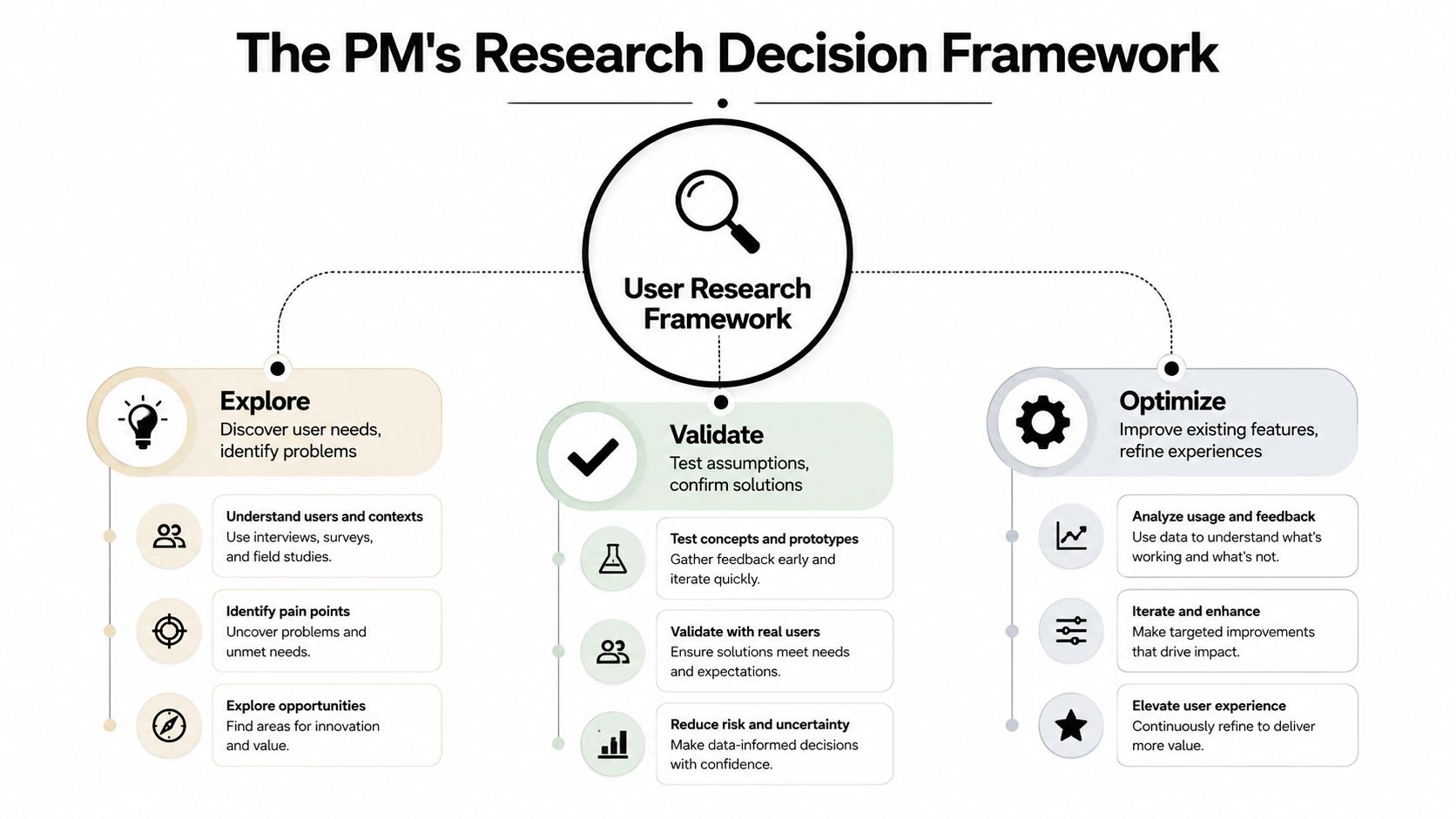
User Research Methodologies: PM's Guide to Actionable
A VP asks for a major feature on Monday. Design starts mocking it up by Tuesday. Engineering wants a decision by Thursday so they can protect the sprint. Sales says three prospects asked for it. Nobody can show whether the problem is real, whether the proposed solution is the right one, or whether the request [...] The post User Research Methodologies: PM's Guide to Actionable appeared first on Product Growth.
The best customer experience software in 2026
Zapier's 2026 guide to the best customer experience (CX) software names seven top platforms: HubSpot, Zendesk, Freshdesk, Salesforce, Qualtrics, Zoho, and Intercom. The common thread across every pick is built-in AI, including autonomous agents that resolve support tickets, copilots that draft replies for human staff, and analytics that flag customer frustration before people churn. The guide defines CX software as a way to understand the full customer journey, every touchpoint from first marketing contact through ongoing support, rather than a single moment of sale.

Industrial Software Leaders Build Secure, Autonomous AI Engineers With NVIDIA NemoClaw
At GTC Taipei at COMPUTEX, NVIDIA and more than a dozen engineering software providers showed autonomous AI agents that automate the full industrial engineering workflow around simulation, from computer-aided design and meshing to setup, debugging, post-processing and reporting. The agents are built on NVIDIA NemoClaw, an open blueprint for specialized, long-running agents with a secure runtime and frontier models. Industrial leaders including Cadence, Dassault Systemes, Siemens and Synopsys, along with startups, are applying NemoClaw to compress weeks of simulation work into hours.

NVIDIA Factory Operations Blueprint Gives Factories a New AI Brain
At GTC Taipei at COMPUTEX, NVIDIA announced the NVIDIA Factory Operations Blueprint, known as FOX, a reference design for building an autonomous factory manager agent. The agent continuously monitors and reasons across real-time data and orchestrates a fleet of specialty agents and machines to resolve issues at scale. Taiwan manufacturers Advantech, Foxconn, Pegatron, and Wistron are the first to deploy autonomous factory manager agents using the blueprint.
Rethinking organizational design in the age of agentic AI
Amid rapidly growing adoption of enterprise-level AI agents, there's a disconnect emerging between ambition and execution. Although 85% of organizations say they want to be agentic within the next three years, 76% say their current operations and infrastructure can't support that change. They cite a lack of readiness across people, processes, and workflows. The sticky...

AI Is Starting to Build Better AI
This IEEE Spectrum feature examines how far AI has come toward recursive self-improvement (RSI), the long-imagined idea of machines that design better machines. The article traces decades of stepping-stones, from machine learning and AutoML to today's large language models writing the code for their own successors. It argues that while many systems now help build better AI, they still rely on humans to set goals, define success and decide which changes to keep, so the question is how much of the self-improvement loop has actually been closed.