AI News and Blog Articles
Curated updates from the most trusted sources in artificial intelligence. Stay ahead without the noise.
Top AI News
Hand-picked stories worth reading right now51 articles found
What is Claude Mythos? And how to see it in action with Claude Fable 5
Anthropic announced Claude Mythos on April 7, 2026, then declined to release it to the public because the model found thousands of serious software security flaws on its own. Instead the company set up Project Glasswing, a limited program that gave roughly 50 partner organizations early access so they could fix bugs before bad actors found them. A near-identical version with safety limits, called Claude Fable 5, went to paying subscribers. Within the first weeks, partners reported finding and patching more than 10,000 high- or critical-severity vulnerabilities.
As Anthropic suspends access to new models, India debates its AI future
After Anthropic suspended access to its newest AI models following a U.S. government directive, the decision reignited a debate in India over whether the country can rely on AI technologies built and controlled abroad. Anthropic said it received a directive requiring it to suspend access to its Fable 5 and Mythos 5 models for all foreign nationals, including its own foreign national employees. Because India is described as a second-largest market for both Anthropic and OpenAI, Indian founders and investors are weighing whether to accelerate domestic and open-source AI development.
New OpenAI Academy courses for the next era of work
OpenAI introduces three Academy courses that help people build practical AI skills, create repeatable workflows, and apply agents in everyday work.
How Preply combines AI and human tutors to personalize learning
Preply uses OpenAI to launch AI-generated lesson summaries, providing personalised feedback and language learning exercises.
Deezer's new tool can identify AI music from Spotify, Apple Music, and others
Deezer has released a free web tool called the AI Music Detector that scans your playlists on Spotify, Apple Music, and roughly 20 other streaming services to flag songs made by artificial intelligence. The tool supports 27 languages and gives everyday listeners a way to see how much of what they stream was generated by a machine. It arrives as 44% of all new music uploaded to Deezer each day is AI-generated.

Pegasystems builds on its FinOps foundation to navigate the unpredictable economics of AI
As AI spending surges, organizations are moving beyond simple cost optimization toward measuring the value AI delivers, according to Pegasystems Inc. and its director of cloud FinOps, Hunter Harris. Harris told theCUBE at FinOps X 2026 that AI usage and costs are unpredictable and can scale far beyond traditional cloud patterns, forcing companies to rethink how they track spend. Pegasystems built on its FinOps foundation by connecting AI investment to revenue at the contract level and bringing operational, support, product, and revenue data into one model.
Deezer launches an AI music detector for other streaming services
Deezer has released a free online tool, the AI Music Detector, that scans your playlists on rival streaming services to flag AI-generated songs. The tool works with about 20 platforms, including Spotify, Apple Music, SoundCloud, and YouTube Music, and supports 27 languages. Deezer built the technology after finding that roughly 44 percent of tracks uploaded to its own platform each day are now fully AI-generated. The move is the French streamer's latest push to make AI music visible to listeners after rivals declined to adopt its detection system.

Google open-sources speedy DiffusionGemma text diffusion model
Google LLC today released DiffusionGemma, a large language model based on an emerging machine learning approach known as text diffusion. The company says the algorithm can generate text four times faster than traditional LLMs. Furthermore, DiffusionGemma does so using less RAM. The model's memory efficiency enables it to run on high-end consumer graphics cards that [...] The post Google open-sources speedy DiffusionGemma text diffusion model appeared first on SiliconANGLE.
Introducing Claude Corps
Anthropic is committing an initial $150 million to Claude Corps, a national fellowship that will train 1,000 early-career fellows to use Claude and place them full-time inside U.S. nonprofits for a year. Each fellow earns an $85,000 salary plus benefits, and at least 400 nonprofits will host fellows over the first 12 months. Anthropic frames the program as a way to share AI's benefits while workers absorb economic change, and announced it alongside a new policy framework on AI's impact on work.

What to expect during Pure Accelerate: Join theCUBE June 17
Enterprise storage is being repositioned for the artificial intelligence era, and one of the leading players in the field has actively pursued an agenda aimed at operationalizing data. Everpure Inc., which rebranded in February from Pure Storage, has unveiled a set of actions during the first half of this year designed to position storage as an [...] The post What to expect during Pure Accelerate: Join theCUBE June 17 appeared first on SiliconANGLE.

FinOps adapts to AI spend as token economics reshape enterprise budgets
As generative AI accelerates from a product experiment into a core enterprise operating cost, FinOps is evolving rapidly to manage AI spend, introducing a layer of complexity that traditional cloud budgets have never fully prepared practitioners to handle. Token economics are forcing organizations to rethink not just how they measure spend, but what costs even count [...] The post FinOps adapts to AI spend as token economics reshape enterprise budgets appeared first on SiliconANGLE.

Microsoft restricts Claude Fable for employees over data retention concerns
Microsoft restricted its own employees from using Anthropic's newly released Claude Fable 5 model inside its internal version of GitHub Copilot because the model requires data retention that breaks Microsoft's Zero Data Retention standard. The model retains prompts and outputs for 30 days, and flagged content for up to two years, which Microsoft legal teams are reviewing over concerns about customer data and confidential information. At the same time, Microsoft made Fable 5 available to outside GitHub Copilot and Azure Foundry customers, creating a gap between what it sells and what it lets staff use internally. Older Claude models that run under Zero Data Retention remain available to Microsoft employees.

NVIDIA Accelerates Google DeepMind's DiffusionGemma for Local AI
Google DeepMind released DiffusionGemma, an experimental open model that writes text by refining whole blocks at once instead of one word at a time, and NVIDIA has tuned it to run faster across its GeForce RTX, RTX PRO, and DGX hardware. The model reaches more than 1,000 tokens per second on a single NVIDIA H100 GPU and over 700 tokens per second on a consumer RTX 5090, roughly four times the speed of a comparable standard model. It targets fast, single-user work such as chat and on-device assistants where low delay matters most. The weights are open under the Apache 2.0 license and free to test through NVIDIA-hosted APIs.
Decart's new world model can simulate hours of photorealistic driving - with some caveats
Decart, a two-year-old AI startup, released Oasis 3, a real-time world model that builds photorealistic driving scenes for testing self-driving cars. The launch follows a $300 million funding round that values the company at close to $4 billion, with strategic money from Toyota, Adobe, eBay, and Nvidia. The model is open to developers through an API at $0.02 per second, though early hands-on testing by TechCrunch found the simulation still breaks down on physics and scene consistency.

GM thinks EVs can help offset AI's energy suck with vehicle-to-grid tech
General Motors is repositioning its electric vehicles and batteries as a grid resource to help absorb the surging electricity demand from AI data centers. At its Empower 2026 event in San Francisco on June 9, GM activated vehicle-to-grid capability for more than 250,000 existing EVs through software alone, announced a sodium-ion battery partnership with startup Peak Energy for grid-scale storage, and rolled out a universal public-charging feature. The strategy turns parked cars and retired battery packs into power that flows back to homes and the grid.
Claude Fable 5: Available on Google Cloud
Claude Fable 5, Anthropic's latest frontier model, is now generally available on Google Cloud's Agent Platform as of June 9, 2026. Google positions the release as part of an ongoing effort to bring the newest models to its platform with safeguards built in for general business use. The model targets demanding work such as advanced software development, long-running autonomous agents, and detailed document analysis. It joins Claude Opus 4.8 and Claude Sonnet 4.6, which are already available through the same platform.

Anthropic releases its first Mythos-class model Claude Fable
Anthropic released Claude Fable 5 on June 9, 2026, calling it the most capable model it has ever made widely available. Fable 5 is the first public release from the company's new Mythos class, a tier the company had held back over fears it was too dangerous to share. Anthropic says the public launch became possible because of new safeguards that block responses in cybersecurity, biology, chemistry, and a few other high-risk areas, sending those flagged queries to the older Opus 4.8 model instead. A restricted, less-guarded sibling called Mythos 5 is reserved for vetted cybersecurity and government partners.
It's not FAANG anymore. It's MANGOS.
A new nickname for the most influential public tech companies is spreading fast: MANGOS, standing for Meta, Anthropic, Nvidia, Google, OpenAI, and SpaceX. TechCrunch argues the label is taking over from FAANG as a wave of AI and autonomous-tech giants heads for the public markets. The shift follows planned listings from SpaceX, Anthropic, and OpenAI.

Detecting and containing AI-powered threats with Google Security Operations agents
Google has detailed how its Security Operations platform works with Google AI Threat Defense to detect, investigate, and contain attacks automatically, including threats from software a company does not control or cannot patch. The system relies on a set of AI agents that write detection rules, triage alerts, and hunt for hidden threats at machine speed. One agent has reduced a typical 30-minute alert review to 60 seconds and has worked through more than 5 million alerts.
Introducing North Mini Code: Cohere's First Model For Developers
Cohere released North Mini Code, its first model built specifically for software developers and agentic coding work. The open-weight model packs 30 billion total parameters but activates only 3 billion per query through a Mixture-of-Experts design, and it ships free under the permissive Apache 2.0 license. It scores 80.2% pass@10 on the SWE-Bench Verified benchmark, beating several models four times its size while running on a single H100 GPU.
Introducing Gemma 4 12B: a unified, encoder-free multimodal model
Google DeepMind released Gemma 4 12B, an open-weight model with 12 billion parameters that handles text, images, and audio in a single system and runs on a laptop with 16GB of memory. The big change is an encoder-free design that feeds raw image and audio inputs straight into the language model instead of routing them through separate encoder models. It ships under the permissive Apache 2.0 license, and the wider Gemma 4 family has passed 150 million downloads.

ERC System unveils Victor, a heavy-lift eVTOL designed to close Europe's logistics gap
Munich startup ERC System has introduced Victor, an uncrewed hybrid-electric cargo aircraft that lifts up to 250 kilograms across a range of up to 300 kilometers without needing roads, ports, or runways. The company presented it at the ILA Berlin air show in June 2026 and aims for first customer deliveries in 2028. ERC is backed by German aerospace testing specialist IABG and has signed a production agreement with defence firm Rheinmetall and the state of North Rhine-Westphalia.

Nvidia's AI Hardware Comes to Windows in RTX Spark PCs
At Computex 2026, an annual computer trade show held in Taipei, Taiwan, Nvidia made a long anticipated announcement-a version of the company's Blackwell GB10 superchip for Windows PCs, called RTX Spark. Originally rumored to launch in 2025, it was finally introduced at this year's show. It came with full support from Microsoft, which announced two new devices powered by RTX Spark: the Surface Laptop Ultra and the Surface RTX Spark Dev Box. Asus, Dell, Lenovo, HP, and MSI also announced Windows PCs with RTX Spark. If this is triggering déjà vu, that's for good reason. In June 2024, Qualcomm and

The Classical Advances Needed to Make Quantum Computers Tick
Quantum computers promise to one day solve problems beyond the most powerful supercomputers imaginable. But it's often underappreciated how much classical computing it takes just to operate these machines. As qubit counts rise, innovations in this supporting infrastructure will be essential if they're to live up to their promise. To prepare for the scale of quantum computers the industry is working toward, many companies are also gearing up the classical hardware, and software, required to support them. In April, Nvidia announced new AI-based software to accelerate the classical tasks that ena

Exclusive: AirOps targets emerging AI search market with autonomous content optimization agent
AirOps, the business name of Rivington Labs Inc., today introduced Quill, an artificial intelligence agent designed to help brands maintain visibility in generative AI search engines by continuously monitoring, updating and creating content. The San Francisco-based startup is building its business on the broader shift from traditional search engine optimization to what is increasingly being [...] The post Exclusive: AirOps targets emerging AI search market with autonomous content optimization agent appeared first on SiliconANGLE.

Google debuts Gemini Intelligence automation features, Googlebook laptop series
Google LLC is upgrading its consumer device portfolio with a set of Android features called Gemini Intelligence and a new laptop series. The company debuted the products today during a virtual event called The Android Show. It also introduced new mobile security capabilities designed to protect users from malicious apps, device theft and attempts to [...] The post Google debuts Gemini Intelligence automation features, Googlebook laptop series appeared first on SiliconANGLE.

New Signadot skill lets Claude Code, Codex and Cursor validate changes in live Kubernetes environments
Microservices testing company Signadot Inc. today launched /signadot-validate, a new skill that lets coding agents such as Anthropic PBC's Claude Code, OpenAI Group PBC's Codex and Cursor validate their own changes against production-like Kubernetes environments before handing code back to developers. The skill is designed to close what Signadot calls the "agent loop" in cloud-native [...] The post New Signadot skill lets Claude Code, Codex and Cursor validate changes in live Kubernetes environments appeared first on SiliconANGLE.

Thinking Machines drops a new, highly responsive model designed for humanlike interactions in real time
Thinking Machines Lab Inc., the artificial intelligence research startup founded by former OpenAI Group PBC Chief Technology Officer Mira Murati, wants to move beyond the era of "turn-based" AI interactions. The company has just announced a research preview of its first "interaction models," which are a new class of multimodal AI systems designed to avoid [...] The post Thinking Machines drops a new, highly responsive model designed for humanlike interactions in real time appeared first on SiliconANGLE.

Startup Wants to Run AI Inference From Space
The rapid advancement of large language models (LLMs) is fueling a global data center boom and driving a surge in energy demand. But the electricity required to power data centers is straining the grid, pushing infrastructure operators to search for alternative sources of power. Some are even looking beyond Earth. One company that's looking to the stars for energy is Orbital Inc. In mid-April, the Los Angeles-based startup emerged from stealth and announced plans to build space data centers. Backed by Andreessen Horowitz (A16z), Orbital is designing infrastructure for AI inference, where train
Copilot Tasks: From Answers to Actions
Conversational chatbots were the first chapter of AI. Today is the beginning of the second. We are excited to introduce Copilot Tasks - AI that doesn't just talk to you, but works for you. This is a moment we've been building toward since we first launched Copilot: the shift from chat to actions. From answers, thoughts, and drafts to completed tasks. From just talking to getting things done. The post Copilot Tasks: From Answers to Actions appeared first on Microsoft Copilot Blog.
Updating our Model Spec with teen protections
OpenAI is updating its Model Spec with new Under-18 Principles that define how ChatGPT should support teens with safe, age-appropriate guidance grounded in developmental science. The update strengthens guardrails, clarifies expected model behavior in higher-risk situations, and builds on our broader work to improve teen safety across ChatGPT.
Introducing OpenAI Academy for News Organizations
OpenAI is launching the OpenAI Academy for News Organizations, a new learning hub built with the American Journalism Project and The Lenfest Institute to help newsrooms use AI effectively. The Academy offers training, practical use cases, and responsible-use guidance to support journalists, editors, and publishers as they adopt AI in their reporting and operations.
Update to GPT-5 System Card: GPT-5.2
GPT-5.2 is the latest model family in the GPT-5 series. The comprehensive safety mitigation approach for these models is largely the same as that described in the GPT-5 System Card and GPT-5.1 System Card. Like OpenAI's other models, the GPT-5.2 models were trained on diverse datasets, including information that is publicly available on the internet, information that we partner with third parties to access, and information that our users or human trainers and researchers provide or generate.
Copilot is leaving WhatsApp and other messaging apps: What's next
Since launching in late 2024, Copilot on WhatsApp has helped millions of people connect with their AI companion in a familiar, everyday setting. We're incredibly proud of the impact it's had. But starting January 15, 2026, Copilot will no longer be available on WhatsApp. The post Copilot is leaving WhatsApp and other messaging apps: What's next appeared first on Microsoft Copilot Blog.

RL without TD learning
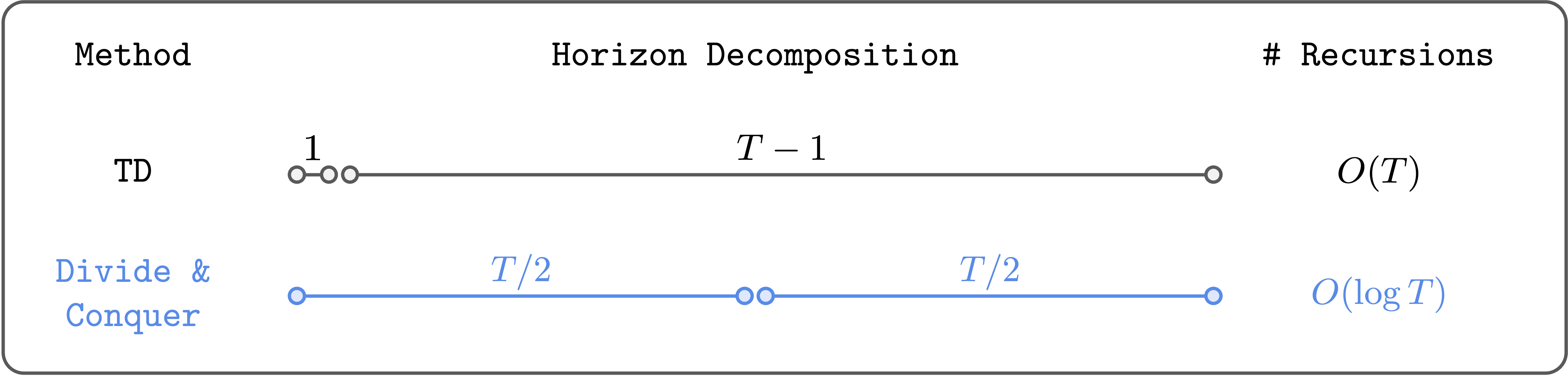
In this post, I'll introduce a reinforcement learning (RL) algorithm based on an "alternative" paradigm: divide and conquer. Unlike traditional methods, this algorithm is not based on temporal difference (TD) learning (which has scalability challenges), and scales well to long-horizon tasks. We can do Reinforcement Learning (RL) based on divide and conquer, instead of temporal difference (TD) learning. Problem setting: off-policy RL Our problem setting is off-policy RL. Let's briefly review what this means. There are two classes of algorithms in RL: on-policy RL and off-policy RL. On-policy RL
Sora 2 System Card
Sora 2 is our new state of the art video and audio generation model. Building on the foundation of Sora, this new model introduces capabilities that have been difficult for prior video models to achieve- such as more accurate physics, sharper realism, synchronized audio, enhanced steerability, and an expanded stylistic range.
Introducing a more immersive chat experience with Copilot Portraits
Voice remains a defining feature of Copilot, the interface of the future for AI companions. A question pops into your head, or you need to bounce an idea around-you invoke Copilot and begin a lively conversation that gets to the root of what you're looking for. The post Introducing a more immersive chat experience with Copilot Portraits appeared first on Microsoft Copilot Blog.

A smarter way to talk to your TV: Microsoft Copilot launches on Samsung TVs and monitors
Voice-powered AI meets a visual companion for entertainment, everyday help, and everything in between. Redmond, Wash., August 27-Today, we're announcing the launch of Copilot on select Samsung TVs and monitors, transforming the biggest screen in your home into your most personal and helpful companion-and it's free to use. The post A smarter way to talk to your TV: Microsoft Copilot launches on Samsung TVs and monitors appeared first on Microsoft Copilot Blog.

Release notes: August 7, 2025
For an optimal mobile viewing experience, use landscape mode. Welcome to Microsoft's Copilot Release Notes. Here we'll provide regular updates on what's happening with Copilot, from new features to firmware updates and more. GPT-5 now live in Microsoft Copilot We're excited to announce that GPT-5 is now available in Microsoft Copilot across all markets and platforms-including web, Windows, Mac, and mobile. The post Release notes: August 7, 2025 appeared first on Microsoft Copilot Blog.
Introducing gpt-oss
We're releasing gpt-oss-120b and gpt-oss-20b-two state-of-the-art open-weight language models that deliver strong real-world performance at low cost. Available under the flexible Apache 2.0 license, these models outperform similarly sized open models on reasoning tasks, demonstrate strong tool use capabilities, and are optimized for efficient deployment on consumer hardware.
Why Cloudflare wants AI companies to pay for content
Cloudflare wants AI companies to pay up. The cloud infrastructure provider, which powers around 20% of the web, is launching a new experiment that would let publishers charge AI firms every time their bots scrape a site. It's called Pay per Crawl, and it could reshape how content is accessed and monetized online. Today on [...]
Introducing AI stories: daily benefits shine a light on bigger opportunities
Sam Altman has written that we are entering the Intelligence Age, a time when AI will help people become dramatically more capable. The biggest problems of today-across science, medicine, education, national defense-will no longer seem intractable, but will in fact be solvable. New horizons of possibility and prosperity will open up.
Enhancing news in ChatGPT with The Atlantic
The Atlantic is announcing a strategic content and product partnership with OpenAI, which positions The Atlantic as a premium news source within OpenAI. The Atlantic's articles will be discoverable within OpenAI's products, including ChatGPT, and as a partner, The Atlantic will help to shape how news is surfaced and presented in future real-time discovery products.
CLIP: Connecting text and images
We're introducing a neural network called CLIP which efficiently learns visual concepts from natural language supervision. CLIP can be applied to any visual classification benchmark by simply providing the names of the visual categories to be recognized, similar to the "zero-shot" capabilities of GPT-2 and GPT-3.
OpenAI Microscope
We're introducing OpenAI Microscope, a collection of visualizations of every significant layer and neuron of eight vision "model organisms" which are often studied in interpretability. Microscope makes it easier to analyze the features that form inside these neural networks, and we hope it will help the research community as we move towards understanding these complicated systems.
GPT-2: 1.5B release
As the final model release of GPT-2's staged release, we're releasing the largest version (1.5B parameters) of GPT-2 along with code and model weights to facilitate detection of outputs of GPT-2 models. While there have been larger language models released since August, we've continued with our original staged release plan in order to provide the community with a test case of a full staged release process. We hope that this test case will be useful to developers of future powerful models, and we're actively continuing the conversation with the AI community on responsible publication.
Introducing Activation Atlases
We've created activation atlases (in collaboration with Google researchers), a new technique for visualizing what interactions between neurons can represent. As AI systems are deployed in increasingly sensitive contexts, having a better understanding of their internal decision-making processes will let us identify weaknesses and investigate failures.
Glow: Better reversible generative models
We introduce Glow, a reversible generative model which uses invertible 1x1 convolutions. It extends previous work on reversible generative models and simplifies the architecture. Our model can generate realistic high resolution images, supports efficient sampling, and discovers features that can be used to manipulate attributes of data. We're releasing code for the model and an online visualization tool so people can explore and build on these results.
Gym Retro
We're releasing the full version of Gym Retro, a platform for reinforcement learning research on games. This brings our publicly-released game count from around 70 Atari games and 30 Sega games to over 1,000 games across a variety of backing emulators. We're also releasing the tool we use to add new games to the platform.
OpenAI Baselines: ACKTR & A2C
We're releasing two new OpenAI Baselines implementations: ACKTR and A2C. A2C is a synchronous, deterministic variant of Asynchronous Advantage Actor Critic (A3C) which we've found gives equal performance. ACKTR is a more sample-efficient reinforcement learning algorithm than TRPO and A2C, and requires only slightly more computation than A2C per update.
Introducing OpenAI
OpenAI is a non-profit artificial intelligence research company. Our goal is to advance digital intelligence in the way that is most likely to benefit humanity as a whole, unconstrained by a need to generate financial return. Since our research is free from financial obligations, we can better focus on a positive human impact.