AI News and Blog Articles
Curated updates from the most trusted sources in artificial intelligence. Stay ahead without the noise.
Top AI News
Hand-picked stories worth reading right now183 articles found · page 1 of 2
92% of sales teams drop qualified leads every month-here's why follow-ups are breaking down
Zapier surveyed more than 400 B2B sales leaders and found that 92% say their teams lose qualified leads every month because follow-ups arrive late, happen inconsistently, or get forgotten entirely. The gap is not a lack of tools. Most teams already run a CRM, follow-up sequences, and sometimes AI agents, yet leads still slip through. The takeaway for owners is that the breakdown sits in the daily execution between a lead arriving and a rep responding, which is where timing and consistency matter most.
Introducing the OpenAI Partner Network
OpenAI launches the Partner Network, investing $150M to help global partners accelerate enterprise AI adoption, deployment, and transformation.
Claude 5: What you need to know about Anthropic's AI models and chatbot
Claude is a family of large language models built by Anthropic, a company founded in 2021 by former OpenAI researchers, and also the name of the AI chatbot built on top of those models. The lineup currently includes four variants, Fable (Mythos), Opus, Sonnet, and Haiku, each balancing speed, intelligence, and cost differently. Anthropic guides Claude's development with a constitution intended to keep interactions safe, ethical, and helpful, and the article explains the strengths and pricing of each model.
What is Claude Mythos? And how to see it in action with Claude Fable 5
Anthropic announced Claude Mythos on April 7, 2026, then declined to release it to the public because the model found thousands of serious software security flaws on its own. Instead the company set up Project Glasswing, a limited program that gave roughly 50 partner organizations early access so they could fix bugs before bad actors found them. A near-identical version with safety limits, called Claude Fable 5, went to paying subscribers. Within the first weeks, partners reported finding and patching more than 10,000 high- or critical-severity vulnerabilities.

Building Supercharger: How Rocket Close optimized title operations with agentic AI
Rocket Close, the title operations arm of the Rocket mortgage group, built an internal solution called Supercharger to optimize title operations using agentic AI. The system was built on Strands Agents, large language models, Amazon Bedrock, Amazon Bedrock Knowledge Bases, and Model Context Protocol (MCP) tools. The AWS Machine Learning Blog post walks through the solution's features, the reasoning behind the technology stack, lessons the team learned, and the business impact at Rocket Close.

Build a meeting prep and follow-up assistant with Amazon Quick and Cisco Webex MCP servers
This AWS Machine Learning post describes how to build a custom meeting prep and follow-up assistant using Amazon Quick and Cisco Webex MCP servers. From a single prompt, the agent finds an upcoming Webex meeting, reviews prior meeting summaries and transcripts, and pulls related Vidcast highlights and transcript context. It then searches Webex message threads for unresolved follow-ups and creates a concise prep brief. After the meeting, the same assistant can summarize the discussion, identify action items, find related Vidcast updates, and draft a follow-up message for the right Webex space.

From PDFs to insights: Architecting an intelligent document processing pipeline with AWS generative AI services
This AWS Machine Learning Blog post describes how to build a cost-effective and scalable intelligent document processing pipeline on AWS, powered by Amazon Bedrock. It shows how Amazon Bedrock Data Automation (BDA) extracts and analyzes document content, while a Strands Agent hosted on Amazon Bedrock AgentCore Runtime coordinates specialized processing tasks, and Amazon Bedrock Knowledge Bases provide contextual understanding across multiple documents. The post argues that combining these capabilities in one architecture lets organizations transform document workflows with minimal development effort.

Built from the inside out: How AWS Professional Services became a frontier team first
AWS Professional Services (AWS ProServe) says it compressed engagement timelines from months to days. According to the post, it achieved this not by adding AI tools to an existing process but by fundamentally rebuilding how it delivers work from the inside out. The post promises to share how AWS ProServe became what it calls a frontier team, the practices that enabled it, and what other engineering organizations can take from the experience.
Introducing the Open Knowledge Format
Google Cloud introduced the Open Knowledge Format (OKF), an open specification that turns the emerging LLM-wiki pattern into a portable, vendor-neutral standard. OKF v0.1 represents knowledge as a directory of markdown files with YAML frontmatter and a small set of shared conventions. The goal is to let knowledge written by one producer be consumed by different AI agents without translation, addressing the fragmented context landscape inside most organizations.
New OpenAI Academy courses for the next era of work
OpenAI introduces three Academy courses that help people build practical AI skills, create repeatable workflows, and apply agents in everyday work.
Calendly vs. Google Calendar: Which should you choose? [2026]
This Zapier comparison tests Calendly against Google Calendar's appointment scheduling feature to help readers choose between them. Calendly offers more customization, broader video conferencing support, richer payments, and more automation, while Google Calendar's appointment scheduling is free for anyone with a Google account and integrates tightly with Google Workspace. The author, an existing Calendly user and Google Workspace loyalist, tested both side by side and breaks down where each tool fits.
The 6 best AI governance tools in 2026
This Zapier article introduces a roundup of the best AI governance tools for 2026, explaining what AI governance is and how to think about choosing tools. It argues that AI governance is not a single product category but a discipline spanning the entire AI lifecycle, from the decision to build or buy a tool to its retirement. The author breaks the software into three areas and lists selection criteria used to build a well-rounded list.
What is generative AI?
Generative AI, also called GenAI, is a type of artificial intelligence that creates new content such as text, code, images, video, and audio based on patterns learned from training data. Unlike traditional AI that classifies or analyzes inputs, generative models respond to a prompt with computer-generated outputs. Familiar tools like ChatGPT, Microsoft Copilot, Nano Banana, and Grok are all examples of generative AI in everyday use.
The 4 best AI website builders
Zapier reviewed AI website builders, which promise to streamline designing a site, creating content, organizing pages, and getting the site online. After testing, the author's top four picks were Wix, Jimdo, Framer, and Chariot. The author, who has built websites for almost 20 years, notes that getting a site live has already become much simpler and was curious how AI generators would compare.
Results from the first Anthropic Public Record
Anthropic released results from the first wave of the Anthropic Public Record, a national survey of US attitudes toward AI. The survey was fielded in November and December of 2025 with nearly 52,000 Americans, sourced from YouGov and weighted to US Census benchmarks. The headline finding is that Americans are eager to realize AI's benefits but fear its disruption, and they want accountability from the companies building it. Notably, views did not split sharply along partisan, geographic, or educational lines.
Statement on the US government directive to suspend access to Fable 5 and Mythos 5
Anthropic issued a statement after the U.S. government, citing national security authorities, ordered it to suspend all access to its Fable 5 and Mythos 5 models by any foreign national, inside or outside the United States, including Anthropic's own foreign national employees. To comply, Anthropic had to abruptly disable both models for all customers, though access to other Anthropic models is unaffected. Anthropic says the government's concern appears to relate to a method of bypassing, or jailbreaking, Fable 5, and the company disputes that the action was warranted.
TCS and Anthropic partner to bring Claude to regulated industries
Anthropic announced a partnership with Tata Consultancy Services (TCS), one of the world's largest technology services companies, to bring its Claude AI to regulated industries. TCS will provide Claude to 50,000 of its own employees across 56 countries, build Claude-powered products for clients in financial services, healthcare, the public sector, and other regulated fields, and join the Claude Partner Network. As customer zero, TCS will use Claude across its own teams and package it into industry-specific offerings such as claims processing for insurers and lending advisory for banks.
How Preply combines AI and human tutors to personalize learning
Preply uses OpenAI to launch AI-generated lesson summaries, providing personalised feedback and language learning exercises.

Our new community investments in Virginia support local jobs and expand energy affordability.
Google announced a $15 million Energy Impact Fund to lower utility bills for Virginia households and tied the state to a $50 million national workforce program that will fund electrical apprenticeship training. The company set a goal of preparing an additional 2,741 apprentices in Virginia by 2030, a move state officials say will grow the local electrician pipeline by 135 percent. The investments extend a $9 billion cloud and AI infrastructure commitment Google made in 2025 and build on a presence the company has held in Virginia for more than a decade.

Extract Data with On-demand and Batch Pipelines Dynamically
AWS published an engineering guide for an intelligent document processing pipeline on Amazon Bedrock that lets a business choose speed or savings for each document. On-demand inference returns extracted fields within seconds for urgent work, while batch inference runs documents in bulk at a price 50% lower than the on-demand path. With parallelism turned on, the batch pipeline handles 1,000 documents within 15 minutes and uses Claude Sonnet 4 to read the pages.
Powering the next era of Confidential AI
Apple is running its Private Cloud Compute system on Google Cloud for the first time, the company confirmed at WWDC 2026 in June 2026. The two firms, working with Intel and NVIDIA, built a serving platform that keeps user data encrypted even while it is being processed, so Apple Intelligence requests too large for an iPhone or Mac get handled in a sealed cloud environment. It marks the first time Apple's privacy-focused AI infrastructure runs outside Apple's own data centers.

Evaluate AI agents systematically with Agent-EvalKit
AWS Labs released Agent-EvalKit, a free open-source toolkit under the Apache 2.0 license that tests AI agents by tracing their full execution path, not only their final answers. It plugs into AI coding assistants including Claude Code, Kiro CLI, and Kilo Code, running evaluation through six phases inside the developer's workspace. In a sample travel research agent, the toolkit caught the agent inventing exchange rates and temperatures when its web search came back empty, a failure that polished-looking output alone would hide.

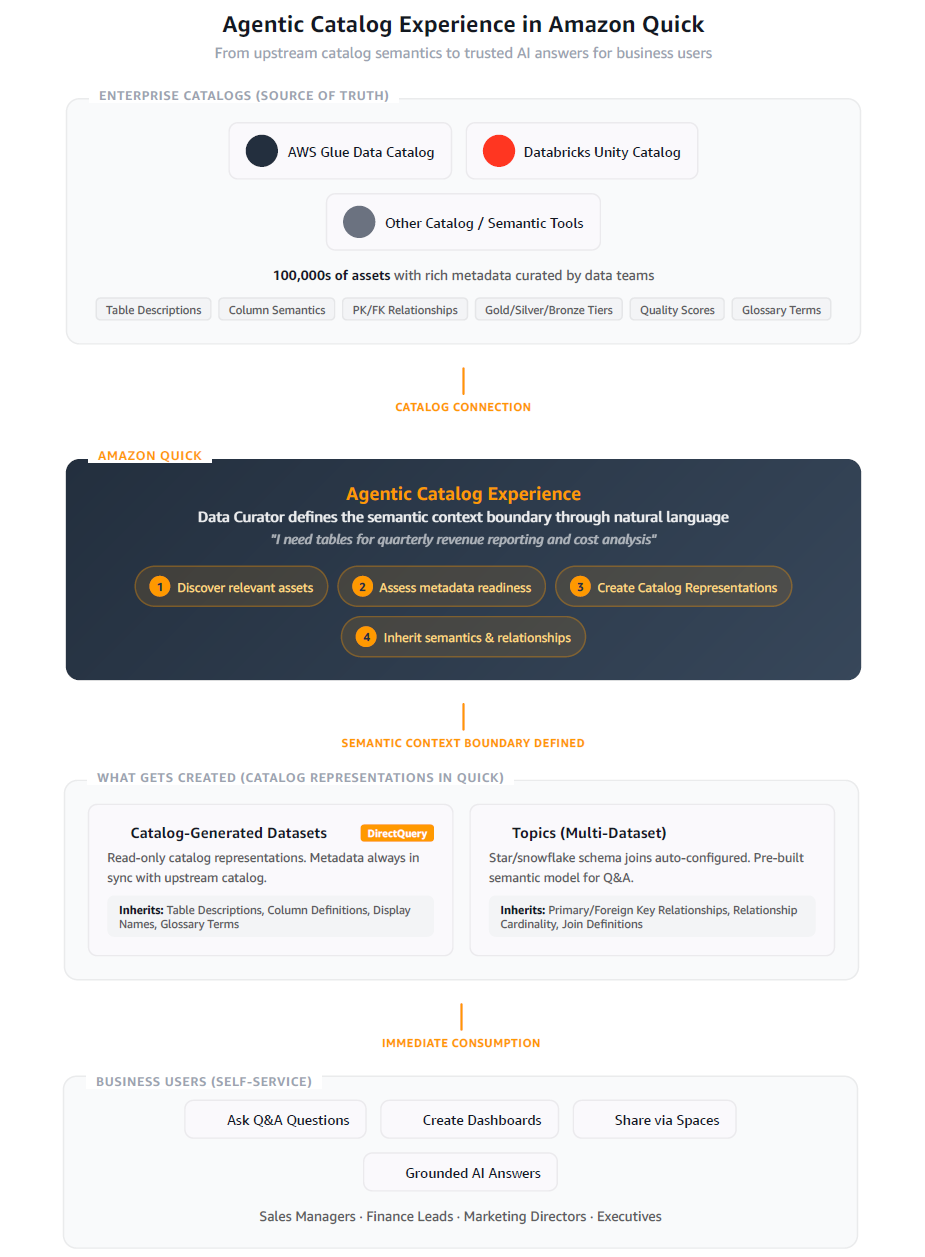
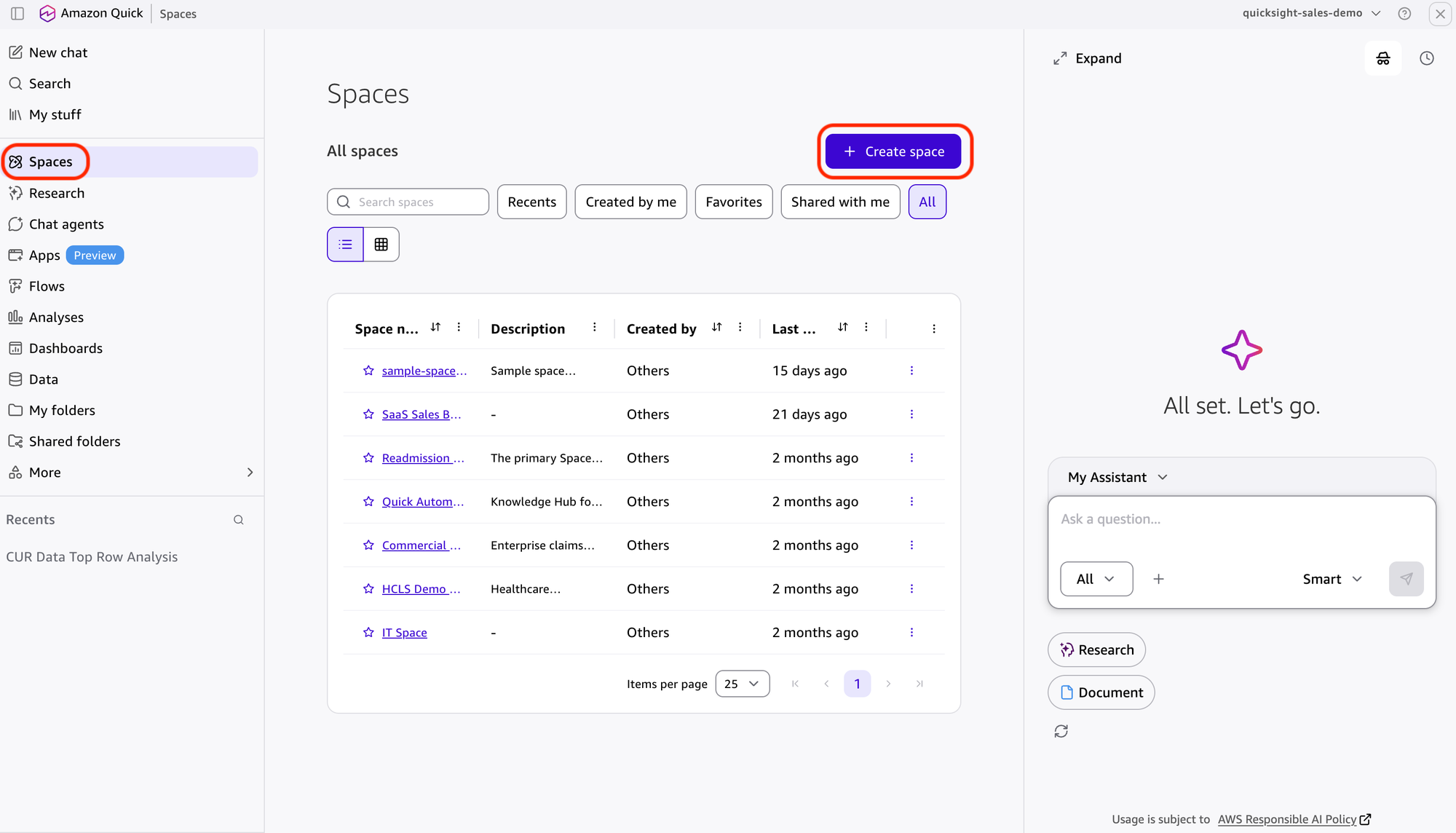
Spot trends faster, sort smarter: Unlocking Sparklines and Custom Sort in Amazon Quick
Amazon QuickSight, the AWS business intelligence tool, added two dashboard features aimed at non-technical decision makers: sparklines and custom sort for filter controls. Sparklines place a small inline trend line directly inside a table cell so a reader spots direction at a glance without opening a separate chart. Custom sort lets the person building a dashboard set the order of values inside dropdown and list filters instead of relying on default alphabetical order. Both features target teams that want dashboards to follow business logic rather than technical defaults.

Optimize blueprint extraction accuracy in Amazon Bedrock Data Automation
Amazon has added a feature to Bedrock Data Automation that automatically sharpens how its document extraction tool reads business paperwork. Called blueprint instruction optimization, it takes three to ten sample documents plus their correct answers and rewrites the extraction instructions to lift accuracy in minutes rather than weeks. No separate model training or fine-tuning is required, and the work runs through either the Amazon Bedrock console or an API.
Google Sheets pivot table: A step-by-step guide
A pivot table reorganizes a large flat spreadsheet into a compact summary so you can answer questions like how much each client was billed per project without writing formulas. You build one by selecting your data, opening the Insert menu, and choosing Pivot table, then placing fields into Rows, Columns, Values, and Filters. Google Sheets now lets Gemini, its built-in AI, create the table from a plain-language request, turning several manual steps into one sentence for non-technical users.

How frontier teams are reinventing AI-native development
AWS says the largest gains from AI in software development come from teams that redesign how they work around AI agents, not from teams that treat AI as a faster way to type. Across more than 50 internal teams studied, the 25 groups that adopted both new tools and new practices reached a 4.5x median productivity gain, and some passed 10x in deployment velocity. AWS calls these its frontier teams and lays out five habits behind the results.
DXC will integrate Claude into the systems banks, airlines, and other regulated industries rely on
DXC Technology and Anthropic announced a multi-year global alliance on June 11, 2026 to put Claude inside the core software that banks, airlines, insurers, manufacturers, and government agencies depend on. DXC will train tens of thousands of staff as Claude-certified engineers who embed the AI directly into customer systems. The deal reaches regulated sectors where security and compliance rules are strict, backed by DXC's 115,000 employees across 70 countries.
How an astrophysicist uses Codex to help simulate black holes
University of Arizona astrophysicist Chi-kwan Chan uses OpenAI's Codex to write, debug, and refine the scientific code behind black hole simulations. Chan works with the Event Horizon Telescope collaboration, the international team that produced the first image of a black hole in 2019 and is now gathering data to make the first time-lapse video of a supermassive black hole. The simulations model the superheated plasma swirling near black holes and let scientists test Einstein's general theory of relativity against real telescope observations.
OpenAI to acquire Ona
OpenAI plans to acquire Ona, the German cloud platform formerly known as Gitpod, to give its Codex coding agent secure environments where work keeps running for hours or days after a developer logs off. Ona has supported about 2 million developers in reproducible cloud sandboxes. Financial terms were not disclosed, and the deal is subject to regulatory approval.
Supporting Europe's work in ensuring a trustworthy AI ecosystem
OpenAI said it supports the European AI Office's Code of Practice on Transparency of AI-Generated Content, a voluntary framework released on June 10, 2026 that helps companies meet the EU AI Act's rules for labeling AI-made content. The Code points to two main methods, signed metadata and invisible watermarks, that let people and platforms trace whether an image, video, or audio clip was generated or edited by AI. OpenAI tied the move to provenance work it has run since 2024, including the C2PA metadata it adds to images from DALL-E 3 and Sora.
BBVA puts AI at the core of banking with OpenAI
BBVA, the Spanish multinational bank, is giving ChatGPT Enterprise to all of its roughly 120,000 employees across 25 countries under a multi-year strategic alliance with OpenAI. The expansion, announced on December 12, 2025, follows nearly two years of testing that grew from a 3,300-account pilot to 11,000 paid licenses, and it ranks among the largest enterprise deployments of generative AI in banking.
Introducing Claude Corps
Anthropic is committing an initial $150 million to Claude Corps, a national fellowship that will train 1,000 early-career fellows to use Claude and place them full-time inside U.S. nonprofits for a year. Each fellow earns an $85,000 salary plus benefits, and at least 400 nonprofits will host fellows over the first 12 months. Anthropic frames the program as a way to share AI's benefits while workers absorb economic change, and announced it alongside a new policy framework on AI's impact on work.
Access OpenAI models and Codex through your Oracle cloud commitment
OpenAI and Oracle announced on June 10, 2026 a deal that lets Oracle Cloud Infrastructure customers access OpenAI frontier models and the Codex coding tool through the OCI Marketplace. The defining detail is payment: businesses apply their existing Oracle Universal Credits toward OpenAI usage instead of setting up a separate contract. The offer is expected to go live in the coming weeks, handled through Oracle sales channels.
DiffusionGemma: 4x faster text generation
Google DeepMind released DiffusionGemma, an experimental open-weights model that writes text through a diffusion process instead of one word at a time, running up to 4x faster than standard models on GPUs. The model is a 26B Mixture of Experts design that activates only about 3.8B parameters per step and generates 256 tokens in parallel. It reaches more than 1,000 tokens per second on a single NVIDIA H100 and ships free to use under the Apache 2.0 license.

Stop hand-tuning kernels: How Neuron Agentic Development accelerates AWS Trainium optimizations
AWS released Neuron Agentic Development, an open-source set of AI agents and skills that lets developers write, debug, and profile high-performance kernels for AWS Trainium and Inferentia chips using plain language instead of deep hardware expertise. The tools plug into agentic coding environments such as Claude Code and Kiro and walk a developer through the full kernel workflow, from authoring code to finding performance bottlenecks. The aim is to close the long-standing gap between what the hardware promises and what most teams reach in practice.

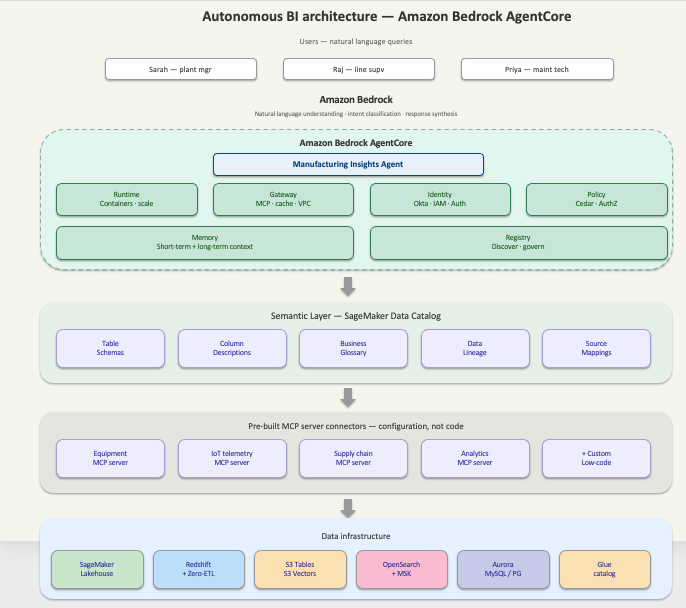
Build an AI-Powered Equipment Repair Assistant Using Amazon Bedrock AgentCore
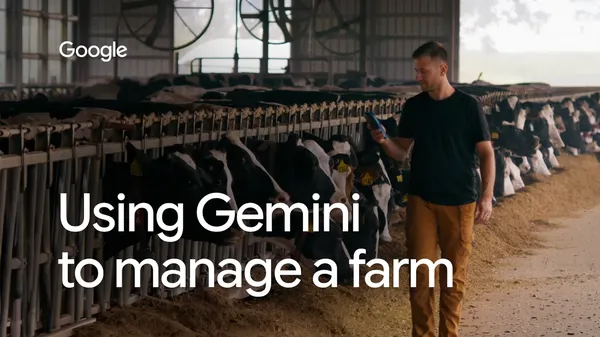
AWS published a step-by-step guide for building an AI-powered equipment repair assistant on Amazon Bedrock AgentCore, aimed at farmers and field technicians who need fast machinery diagnosis. The assistant lets users describe a problem in plain language, then pulls answers from manufacturer manuals, identifies the parts needed, and walks through approved repair steps. It runs on AgentCore Runtime with the Strands Agents SDK, uses Amazon Nova 2 Lite as the model, and adds a Bedrock Knowledge Base for document retrieval plus AgentCore Memory to remember past conversations.

LLM Routing: From Strategy Selection to Production Architecture
LLM routing is a design pattern where a control layer reads each incoming AI request and sends it to the best-fit model instead of pushing everything to one expensive default. A new guide from n8n explains how this trims cost and response time by matching simple questions to cheaper, faster models while reserving premium models for hard work. The guide cites Berkeley's RouteLLM, which holds 95% of GPT-4 quality while cutting cost by more than 85% on one benchmark, and FrugalGPT, which matched GPT-4 quality at up to 98% lower cost.

Best AI Governance Tools for Enterprise-Grade Compliance
The n8n Blog compares eight AI governance platforms that help large companies keep AI systems secure, transparent, and accountable as the technology moves from testing into live production. The lineup includes Credo AI, IBM watsonx.governance, Holistic AI, Collibra, OneTrust, Fiddler AI, Monitaur, and n8n itself for workflow controls. Each tool maps to rules such as the EU AI Act, NIST AI RMF, and NYC Local Law 144, and the guide explains how to pick one based on model inventory, audit evidence, and how deeply the tool plugs into a company's existing systems.

Top Process Orchestration Tools and Their Key Benefits
A guide from n8n reviews seven process orchestration platforms and the features that set them apart: n8n, Camunda, Appian, Microsoft Power Automate, Pega, Temporal, and Salesforce Flow. Process orchestration coordinates the steps, systems, and people inside a larger business workflow, going beyond the single isolated tasks that simple automation handles. The guide cites a 2025 Camunda survey of 800 IT leaders, in which 93 percent said AI must be fully integrated into orchestrated processes to maximize return. Because swapping an orchestration platform is hard once a team is trained on it, the guide urges consolidating on one tool rather than fragmenting governance across several.

Save time and grow your business with new Gemini tools
Google added two features to the Gemini app built for small business owners: a one-tap link to a company's Google Business Profile and a workspace called Business notebooks. Once connected, Gemini reads the reviews, customer questions, and performance data tied to the profile, then drafts review replies, updates hours, and answers questions about how the business is doing. Announced at Google for Brazil 2026 on June 10, both tools start rolling out globally during June, with the EEA and the UK excluded at launch.
PRC-linked influence operations are targeting AI debates in the US
OpenAI said it banned two China-linked covert influence operations that used ChatGPT to generate social media comments, images, and political cartoons aimed at inflaming US public debates over AI data centers and trade tariffs. Both campaigns scored Category One, the lowest tier on OpenAI's Breakout Scale, meaning they stayed on a single platform and reached no genuine audience. The findings, published June 10, 2026, show how state-linked actors are testing AI tools to manufacture political content cheaply, even when the real-world reach stays small.
Investing in multi-agent AI safety research
Google DeepMind and four partners opened a research funding call worth up to $10 million to study how AI agents behave when many of them interact at scale. The money targets safety risks that surface only when independent agents built by different organizations work together, a gap most current safety testing ignores. Academic and independent researchers worldwide can apply by August 8, 2026, with award decisions expected in autumn 2026.
5 ways to automate Meta's Conversions API tool with Zapier
Zapier published a guide showing five no-code ways to feed customer actions into Meta's Conversions API, the server-side tool that sends marketing signals straight to Meta without relying on a browser pixel. The workflows automatically pass events like purchases, form submissions, CRM stage changes, and new email subscribers from apps such as Stripe, Shopify, HubSpot, Salesforce, Typeform, and Klaviyo into Meta so ad targeting stays current. Setup runs through Meta's Events Manager, where Zapier is offered as a partner integration. For tools without a ready-made connection, Webhooks by Zapier sends custom data instead.
How to automate Claude with Zapier
You can connect Anthropic's Claude to the rest of your business tools through Zapier, the no-code automation platform that links more than 9,000 apps and supports over 30,000 actions. Instead of typing one prompt at a time, you set up automated workflows, called Zaps, where Claude reads, writes, summarizes, or analyzes content the moment something happens in another app. Zapier offers one-click templates for common jobs such as drafting replies, summarizing feedback, and routing approvals, so non-technical teams set them up without code. Claude Opus 4.8 is available inside Zapier today, alongside Anthropic's newer Mythos model class.
Which AI models can you automate on Zapier? (Opus 4.8, Gemini 3.5 Flash, and more)
Zapier now lets business teams plug a wide menu of AI models into their automated workflows, spanning OpenAI, Anthropic, Google, and specialty providers like Mistral and DeepSeek. To help users pick the right one, Zapier ranks each model with AutomationBench, its own test of how well models complete multi-step business tasks rather than one-off prompts. Anthropic's Claude Fable 5.0 leads the overall leaderboard, with Claude Opus 4.8 and Google's Gemini 3.5 Flash close behind.
How a two-person SEO shop is building an engine to run twelve clients in thirty minutes a month
Adrian Martinez, who runs the Toronto agency Hire Adrian with his wife, is building an AI delivery system to serve roughly twelve SEO and answer engine optimization clients while keeping the team at two people. The goal is to shrink hands-on work from 10 to 15 hours per client each month down to about 30 minutes, without hiring account managers. He pairs Claude for planning and decisions with Zapier MCP, which connects the agent to WordPress, reporting tools, and image generation so plans turn into real production work.
How Gourmet Ads uses Zapier MCP to turn Salesforce and Atlassian into a weekly growth report
Gourmet Ads, an 18-year-old digital advertising business, wired Salesforce and Atlassian Confluence together through Zapier MCP so an AI assistant produces a weekly growth report on its own. The report bundles six parts and five recommended actions, each scoped to take under 20 minutes, and it has already caught fake traffic, a broken link, and a sales pipeline gap. President Benjamin Christie says the setup lifted his personal output by 30 to 40 percent and turned a multi-day engineering job into something he tests from his desk.
The 17 best AI marketing tools in 2026
Zapier's 2026 roundup picks 17 AI marketing tools and sorts them by the job a marketer needs done, from making visuals to tracking whether a brand shows up in ChatGPT answers. The core message is that most marketers do not need every AI feature on the market. The author, who tested the tools, argues the bigger win comes from matching a few tools to real workflows and connecting them so they work together instead of in silos.
From data to decisions: how LSEG is scaling trusted AI
London Stock Exchange Group (LSEG), one of the world's largest financial markets infrastructure firms, deployed OpenAI's ChatGPT Enterprise and OpenAI APIs across its global business, giving an initial 4,000 employees access to AI tools inside a secure environment. The shift cut many product release cycles from three to six months down to two weeks, and trimmed some customer delivery from as long as nine months to roughly four weeks. LSEG built governance in from the start, including model evaluation, human review, and strict data controls.

Scale Robot Reinforcement Learning with NVIDIA Isaac Lab on Amazon SageMaker AI
Amazon Web Services published a technical walkthrough showing how robotics teams train robot control software on Amazon SageMaker AI using NVIDIA Isaac Lab, a GPU-accelerated simulation framework. The example teaches a Unitree H1 humanoid robot to walk across rough, computer-generated terrain by coordinating its 19 joints, running 4,096 simulated robots in parallel on 8 GPUs. AWS offers two ways to run the work, a persistent managed cluster called SageMaker HyperPod and on-demand SageMaker Training Jobs, both built from one shared container image.
Claude Fable 5: Available on Google Cloud
Claude Fable 5, Anthropic's latest frontier model, is now generally available on Google Cloud's Agent Platform as of June 9, 2026. Google positions the release as part of an ongoing effort to bring the newest models to its platform with safeguards built in for general business use. The model targets demanding work such as advanced software development, long-running autonomous agents, and detailed document analysis. It joins Claude Opus 4.8 and Claude Sonnet 4.6, which are already available through the same platform.

Hands-free first notice of loss: Using Strands Agents and Amazon Bedrock AgentCore Browser Tool for intelligent claims intake
AWS published a technical walkthrough of a hands-free first notice of loss (FNOL) intake system that automates the opening step of an insurance claim. The design pairs domain-reasoning agents built on the open-source Strands Agents SDK with the Amazon Bedrock AgentCore Browser Tool, which drives a managed Chrome session to fill claim portals on its own. Instead of handing adjusters a pile of raw photos and recordings, the system tags and scores evidence at submission time so a person starts with pre-analyzed context.

Build an agentic incident triage assistant with Amazon Quick and New Relic
AWS published a guide showing engineering teams how to build an AI agent that handles incident triage from a single prompt. The agent uses Amazon Quick to investigate an outage through the New Relic Model Context Protocol (MCP) Server, write a root cause analysis brief with evidence links, and open a tracked task in Asana for follow-up. The goal is to compress the slow evidence-gathering work that site reliability engineers do across separate tools into one automated flow.

Detecting and containing AI-powered threats with Google Security Operations agents
Google has detailed how its Security Operations platform works with Google AI Threat Defense to detect, investigate, and contain attacks automatically, including threats from software a company does not control or cannot patch. The system relies on a set of AI agents that write detection rules, triage alerts, and hunt for hidden threats at machine speed. One agent has reduced a typical 30-minute alert review to 60 seconds and has worked through more than 5 million alerts.

How to unlock true ROI in software development - a deep dive into the latest DORA research
Google Cloud's DORA research team says the return on AI coding tools follows a J-curve: a short productivity dip during early adoption, then a climb to long-term gains. The report's central finding is that AI works as an amplifier, so the biggest returns come from strong engineering foundations and team workflows rather than the tools alone. Nearly all surveyed teams already use AI at work, yet financial results differ widely depending on how well an organization is set up to absorb the change.

Report: GKE Inference Gateway delivers up to 92% faster AI responses
Google Cloud reports that its GKE Inference Gateway cut the time an AI model takes to start responding by 92.8% compared with Amazon's Kubernetes service in an independent benchmark. The gateway routes AI requests to the exact server already holding the relevant data in memory, using a method called prefix caching. The same test showed 15.7% higher throughput and 62.6% lower delay between words as they stream out. Snap reported reusing cached data on 75 to 80% of requests in its own production setup.
Fluid, natural voice translation with Gemini 3.5 Live Translate
Google DeepMind released Gemini 3.5 Live Translate, an audio model that turns spoken words into translated speech within a few seconds while keeping the speaker's intonation, pacing, and pitch. It detects more than 70 languages automatically and is rolling out across the Gemini Live API, the Google Translate apps, and Google Meet. In Meet, the upgrade widens supported languages from 5 to more than 70, enabling over 2,000 language combinations inside a single call.

Fluid, natural voice translation with Gemini 3.5 Live Translate
Google released Gemini 3.5 Live Translate on June 9, 2026, an audio model that turns spoken words into spoken words in another language within a few seconds. It covers more than 70 languages, detects each one automatically, and keeps the original speaker's intonation, pacing and pitch so the output sounds human rather than robotic. The model ships at once across three products: Google AI Studio for developers, Google Meet for business customers, and the Google Translate app for everyday users.
Introducing Gemma 4 12B: a unified, encoder-free multimodal model
Google DeepMind released Gemma 4 12B, an open-weight model with 12 billion parameters that handles text, images, and audio in a single system and runs on a laptop with 16GB of memory. The big change is an encoder-free design that feeds raw image and audio inputs straight into the language model instead of routing them through separate encoder models. It ships under the permissive Apache 2.0 license, and the wider Gemma 4 family has passed 150 million downloads.
Powering the future of robotics in Europe
Google DeepMind opened its first robotics accelerator and chose 15 early-stage European startups for a three-month, equity-free program. Selected teams get hands-on mentorship from Google DeepMind engineers, access to the company's AI stack and Gemini Robotics models, and eligibility for up to $350,000 in Google Cloud credits. The cohort spans ten countries and ends with a Demo Day graduation in London in September 2026.
How engineers at Nextdoor use Codex to build without limits
OpenAI published a customer story showing how engineers at Nextdoor, a neighborhood network serving more than 105 million people, use the Codex coding agent running on GPT-5.5 to build software and fix hard problems. Cory Dolphin, Head of Engineering, says one engineer now owns a feature from idea to production, work once split across three teams. According to Nextdoor, the main constraint is no longer engineering effort but deciding what to build next.
What Codex unlocks for Notion
Notion built its AI Voice Input feature with a single engineer in about 3 to 4 hours using OpenAI's Codex coding agent, according to a new OpenAI customer story. Ryan Nystrom, who leads AI Product Engineering at Notion, pointed Codex at an existing mobile version of the feature and had the agent recreate it for Notion's web and desktop apps in close to one pass. The case study positions Codex as a way for small teams to ship production features at the pace of much larger ones.

Production AI Playbook: Complex Agent Patterns
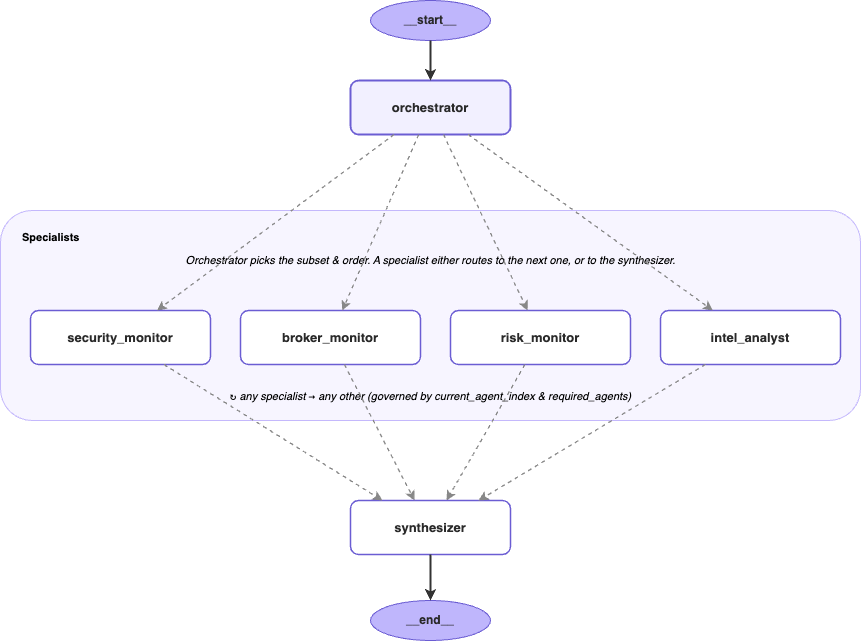
A new engineering guide from n8n argues that production AI agents break down from missing architecture, not from inherent complexity. It lays out repeatable patterns for the moment a single working agent grows into a tangled multi-agent system that nobody can debug. The four focus areas are orchestrator-to-specialist delegation, sub-workflow composition, memory management across sessions, and structured failure handling, each aimed at keeping growing systems modular, testable, and affordable.
The best Docusign alternatives in 2026
More than 20 Docusign alternatives compete in 2026, ranging from free signing apps like SignWell to enterprise tools like Adobe Acrobat Sign and open-source platforms such as DocuSeal. Because all of these methods produce legally binding signatures under US and EU law, the right pick comes down to your signing volume, budget, and the software your team already uses. Many tools offer free tiers covering three to five documents a month, while pay-as-you-go options charge per document instead of a flat subscription.
Make integrations: Capabilities, limitations, and when to use Zapier
Make, formerly known as Integromat, is a visual no-code automation platform that connects roughly 3,000 apps and lets business users build multi-step workflows by dragging and connecting modules on a canvas. The Zapier article frames Make as a strong fit for people who want fine-grained visual control over how data moves, while flagging two trade-offs: a steeper learning curve and operations-based pricing that adds up as workflows grow. By contrast, Zapier supports more than 9,000 apps and aims for faster setup with less ongoing upkeep. The short version is that the right choice depends on whether you value detailed control or speed and broad app coverage.
The 5 best workflow orchestration tools in 2026
Zapier's 2026 guide ranks five workflow orchestration tools for businesses that need to coordinate multi-step processes across many apps, not run single one-off automations. The five are Zapier (best for building safely with AI, 9,000+ connected apps), Make (visual logic, 3,000+ apps), Workato (enterprise iPaaS, 1,200+ connectors), n8n (self-hosting and code), and Microsoft Power Automate (Microsoft 365 users). Orchestration differs from basic automation because it manages task order, dependencies, retries, and recovery when a step fails.
TidyCal vs. Calendly: Which meeting scheduler is best? [2026]
TidyCal and Calendly both let people book time on your calendar without email tag, but they differ most on cost and depth. TidyCal sells a one-time lifetime license starting at $29, while Calendly charges a recurring monthly subscription and adds far more automation, integrations, and team tools. Cost-focused solo operators and small service businesses tend to fit TidyCal, while larger teams that want analytics, AI meeting notes, and advanced routing fit Calendly.
The best customer experience software in 2026
Zapier's 2026 guide to the best customer experience (CX) software names seven top platforms: HubSpot, Zendesk, Freshdesk, Salesforce, Qualtrics, Zoho, and Intercom. The common thread across every pick is built-in AI, including autonomous agents that resolve support tickets, copilots that draft replies for human staff, and analytics that flag customer frustration before people churn. The guide defines CX software as a way to understand the full customer journey, every touchpoint from first marketing contact through ongoing support, rather than a single moment of sale.
Claude Fable 5 and Claude Mythos 5
Anthropic launched two flagship AI models on June 9, 2026: Claude Fable 5, made safe for general public use, and Claude Mythos 5, a restricted version released first to cyberdefenders. Both share the same underlying model, the company's most capable to date, and both are priced at $10 per million input tokens and $50 per million output tokens, less than half the price of the earlier Claude Mythos Preview. Fable 5 ships with safeguards that route sensitive queries to the older Claude Opus 4.8 model, while Mythos 5 has those safeguards lifted in some areas for trusted partners.
Industrial policy for the Intelligence Age
OpenAI released a roughly 13-page policy blueprint, "Industrial Policy for the Intelligence Age," that asks governments to rewrite taxes, benefits, and infrastructure as advanced AI reshapes work. The headline ideas are a public wealth fund giving every citizen a financial stake in AI growth, a robot tax on companies that replace workers with automation, and a subsidized four-day, 32-hour workweek. OpenAI frames the document as a starting point for debate rather than fixed policy and is funding outside research to test the ideas.

Integration Patterns: How To Choose for Your Architecture
An n8n engineering guide lays out about a dozen integration patterns for moving data and events between business systems, split into data patterns and enterprise patterns. The central point is that real production systems almost always run two or three patterns at once, so choosing them deliberately up front saves a costly rebuild later. The guide offers five plain questions to narrow the choice: direction, latency, scale, volume, and cadence.

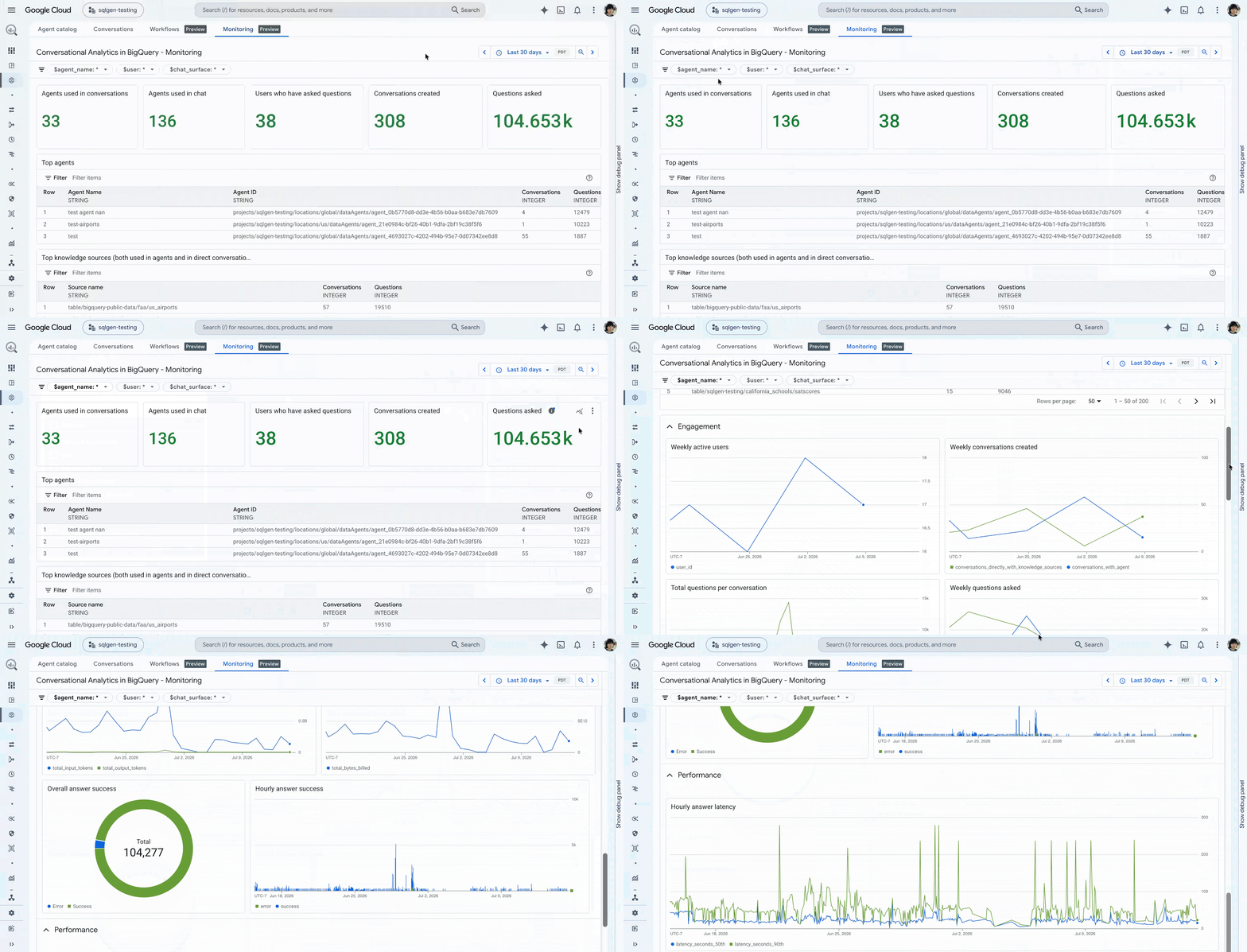
LLM Observability: What To Instrument and How To Act on It
LLM observability is the practice of capturing what an AI model saw, why it decided, and what it returned, so silent failures become debuggable. Unlike traditional software where errors are obvious, language models can run perfectly while producing wrong or made-up answers, which makes a visible trail of each decision the only reliable way to catch problems. The approach pairs traces, metrics, and logs with feedback loops so teams fix issues where their AI agents actually run.

Unlocking AI flexibility in Europe: A guide to cross-region inference for EU data processing and model access
Amazon Web Services published a guide explaining how cross-Region Inference (CRIS) on Amazon Bedrock lets European customers run generative AI workloads with more capacity while keeping data inside the European Union. The feature automatically routes model requests across several EU AWS Regions, such as Frankfurt, Ireland, Paris, and Stockholm, so a request starting in Europe is only ever processed in Europe. Traffic stays on the encrypted AWS network and never crosses the public internet, which helps businesses meet data residency and GDPR obligations. For some models the EU cross-Region option also costs less than calling a single Region directly.

It's safe to close your laptop now: Hosting coding agents on Amazon Bedrock AgentCore
Amazon Bedrock AgentCore Runtime gives each agent session its own isolated microVM with a persistent workspace, secure tool access through Gateway, and built-in observability-so you can run Claude Code, Codex, Kiro, and Cursor in parallel without sharing secrets, ports, or filesystems. Close the lid, go to dinner, and pick up where you left off tomorrow.

End-to-end encrypted ML inference with Amazon SageMaker AI and FHE
This blog has previously discussed FHE for ML inference in the post Enable fully homomorphic encryption with Amazon SageMaker endpoints for secure, real-time inferencing, but this post goes a little further. That previous post showed how to implement FHE-based inference 'from scratch' by hand-crafting a linear-regression algorithm using a low-level library called SEAL. Instead, this post shows a much more flexible and higher-level approach based on concrete-ml, a high-level library built specifically for FHE-based inference. It supports several common types of models 'out of the box' and is ev

Amazon Quick ARNs: Cross-account migration and namespace permissions
In this post, we cover the structure of Amazon Quick ARNs and provide a practical mental model for working with them. By the end, you can look at an ARN and immediately understand what it means for your migration strategy, diagnose permission issues faster, and design multi-tenant architectures with confidence.
Modernizing Healthcare: How Alcidion achieved greater stability and performance with AlloyDB
In clinical informatics, every second counts. For Alcidion, a global leader in smart health solutions, the mission is simple but critical: use technology to reduce cognitive load for clinicians and present the right information at the right time to save lives. Whether it's managing patient flow in an emergency department or ensuring a patient is in the correct ward to avoid adverse outcomes, Alcidion's flagship platform, Miya Precision, serves as a dynamic intelligent care platform for modern hospitals. To power this mission, the platform recently underwent a major architectural transformation

Evaluate your Amazon Nova Sonic voice agent at scale, no microphone required
In this post, we walk you through the Nova Sonic Test Harness, an open source framework that we built to solve both problems. It serves as a rapid iteration tool for tuning system prompts and tool configurations (run a conversation, see results, adjust, repeat) and as a comprehensive evaluation framework for validating voice agent quality at scale. It runs complete multi-turn conversations with Amazon Nova Sonic automatically, evaluates them using LLM-as-judge techniques, and can even detect cases where the model's audio output doesn't match its text output (audio hallucinations). No microphon
Calendly vs. Acuity: Which scheduling app should you use? [2026]
Nobody wants to book a meeting or appointment unless they can do it online. That means you need a scheduling app, unless you have a nostalgic love for 2003-era back-and-forth email exchanges. Two of the most recognizable scheduling apps are Calendly and Acuity. Both platforms are intuitive and reliable and allow users to automate booking, sync with calendar apps, and even accept payments. But while the two apps may look really similar at first glance, they each have their own strengths and targe
UiPath pricing: Exploring RPA pricing models
Understanding UiPath pricing should take three minutes. It doesn't. Take a few seconds to browse the website, and you'll find a mostly hidden pricing structure filled with attended bots, action center limits, and AI consumption units. If you want any further clarification, buckle in for a sales call. You've decided to bring automation to your team, and that's an endeavor in itself; you shouldn't have to decipher a riddle or decode a licensing manual just to nail down a budget. In this guide, I'
The 6 best electronic signature apps to sign documents online in 2026
Paperwork is now more of an abstract concept than something that requires a printer, a few sheets of paper, and a pen. You don't have to physically sign a contract for it to be legally binding, but there are still a few hoops you have to jump through to make sure your electronic signature will count in court or be acceptable to other legal and regulatory bodies. Using a dedicated eSignature app to sign documents online is the best way to go if you want your digital signature to stand up to all t
Track Stripe payments to Facebook Conversions events with AI
If you use Meta to advertise your business, you've probably wondered whether your ads are actually driving any revenue. You could look at metrics like click-through rate (CTR), but that's a superficial measurement. What you really need is to look at your payment data, associate transactions with specific leads or accounts, and then share that information back to Facebook Conversions so the platform can build a more robust picture of who's actually converting. Historically, connecting data from y

What's new for Managed Service for Apache Spark clusters
At Google Cloud, our goal is to let you run large-scale analytical and data science workloads with maximum efficiency so you can process big data pipelines, machine learning, and ETL tasks. We recently announced that the Dataproc service is now Managed Service for Apache Spark, reflecting our deep integration with the Agentic Data Cloud. To support the diverse architectural needs of today's modern data teams, we offer the service in two distinct deployment modes: serverless and managed clusters. The serverless deployment mode completely abstracts infrastructure management for ephemeral or ad-h

Automate model quota request and operational issue triage on Amazon Bedrock
In this post, we introduce Amazon Bedrock Ops Alert, a three-layer automated monitoring solution that proactively detects operational issues, dynamically adjusts alarm thresholds, classifies alarms by category, automatically creates context-aware support cases, helps prevent duplicate cases when an unresolved case of the same alarm category is already active, and delivers contextualized notifications to AI SRE teams. We walk through the solution architecture and how you can deploy it in your own environment.

The fully-managed Remote MCP Server for AlloyDB is now Generally Available
AI agents possess incredible reasoning capabilities and can perform increasingly complex actions. But the reliability of agentic outcomes depends entirely on the quality of the context they can access - context that is frequently locked away in operational databases. To bridge this gap, we are excited to announce the Remote Model Context Protocol (MCP) Server for AlloyDB is now generally available. The Model Context Protocol (MCP) is an open-source standard that gives LLMs a secure, consistent way to connect to external data sources. As part of Google Cloud's recent rollout of 50+ Google-manag

How Trustpilot built a real-time architecture for data enrichment using Gemma
Processing millions of user reviews in real-time, under strict latency and cost constraints, is no easy task. Trustpilot has been doing exactly that with custom machine learning since long before large language models (LLMs) were cool. Now, as the company transitions its core stack to generative AI, here is a look at how we teamed up to build a high-volume streaming pipeline using fine-tuned Gemma models. Powering deep review intelligence at scale Trustpilot's core business relies on delivering deep, actionable review intelligence. As a platform championing transparency and genuine feedback, i

What Google Cloud announced in AI this month
Editor's note: Want to keep up with the latest from Google Cloud? Check back here for a monthly recap of our latest updates, announcements, resources, events, learning opportunities, and more. We've had a busy month! Between announcing Gemini Spark and Gemini 3.5 at Google I/O - and unveiling Google AI Threat Defense, our latest AI-powered cybersecurity solution, we had a lot to share with Google Cloud customers. Keeping up with the latest news takes time, so we gathered the most important announcements, thought leadership, and technical guides in one place to help you quickly catch up. To lea
Cool stuff Google Cloud customers built, May edition: Agentic algorithms for supply chains; virtual try-on APIs; robotic camera operators & more
AI and cloud technology are reshaping every corner of every industry around the world. Without our customers, who are building the future on our platform, there would be no Google Cloud. In this regular round-up, we dive into some of the exciting projects redefining businesses, shaping industries, and creating new categories. For our latest edition, we learn how Urban Outfitters sped up its order management; BASF uses AlphaEvolve algorithms to map global supply chains; the unification strategy for UKG's workforce intelligence; WPP's secrets to training humanoid robot camera operators; how Breu

Developer's guide to Gemini Enterprise and A2UI integration
If you've built a chatbot, you know this conversation: User: "Book a table for two tomorrow at 7pm." Agent: "Okay, for what day?" User: "Tomorrow." Agent: "What time?" A date picker would have ended this in one tap. But until recently, agents had no standard way to render a date picker - or a map, or a multi-select list - inside the chat surface they live in. They could only return text or markdown for generic usage. Today, we're walking through how to fix that with A2UI, an open protocol for agent-driven user interfaces, and how to integrate an A2UI-enabled agent with Gemini Enterprise (GE) s

Cloud CISO Perspectives: How to build an AI-ready security program for the public sector
Welcome to the second Cloud CISO Perspectives for May 2026. Today, Usman Chaudhary, Field CISO, Google Public Sector, offers a guide for CISOs protecting government agencies and critical infrastructure on how to get started - and get the most out of - defending with AI. As with all Cloud CISO Perspectives, the contents of this newsletter are posted to the Google Cloud blog. If you're reading this on the website and you'd like to receive the email version, you can subscribe here. aside_block ), ('btn_text', 'Visit the hub'), ('href', 'https://cloud.google.com/solutions/security/board-of-directo
Evolving Dataflow to process massive datasets for machine learning
Google created MapReduce more than 20 years ago to solve the scaling problems in data processing that the then young company was running into. The AI era that we are in now demands efficient, large-scale data processing for everything from training frontier models like Gemini by Google DeepMind to powering fully autonomous vehicles like Waymo. Many aspects of machine learning, including data ingestion, transformation, and feature extraction, rely heavily on processing massive datasets. To meet this astronomical scale required by efforts across Google, we evolved our data platform, Flume, the s

Nano Banana 2 and Nano Banana Pro are generally available, and already powering creative workflows
Organizations are unlocking entirely new ways to use image generation and editing across their industries. To drive next-generation experiences, businesses are embedding AI directly into creative, agentic workflows. But next-gen workflows require enterprise-grade AI you can trust. What's new: To help customers continue their creative journey securely, we are announcing Nano Banana 2 (Gemini 3.1 Flash Image) and Nano Banana Pro (Gemini 3 Pro Image) are generally available (GA) today via Gemini Enterprise Agent Platform. Backed by enterprise-grade infrastructure and security, these models empowe

AI in SRE: Where and how Google is deploying agentic AI to improve operations
Since its inception over 20 years ago, Google has used Site Reliability Engineering (SRE) to keep services like Search, Gmail, Maps, YouTube and Google Cloud reliable and highly available, adhering to the principles and practices of the reliability-first mindset. Recently though, the emergence of AI has driven multiple step-changes in system complexity. Interactions between components are now more complicated due to a variety of factors: With microservice architectures, systems are distributed across wider geographical locations and data centers that have greater hardware diversity. Enterprise

Announcing the newest cohort of the Google for Startups Accelerator: Middle East, North Africa & Turkey
Google's mission is to organize the world's information and make it universally accessible. In high-growth, technically ambitious markets like the Middle East, North Africa, and Türkiye (MENA-T), we fulfill this mission by supporting AI-First startups building the next generation of information-driven services on a global scale. In a region known for its resilience, we want to help founders flourish in any conditions. The newest cohort of 15 companies in the Google for Startups Accelerator: MENA-T program starts on June 1. They follow on the success of our sixth group, which concluded in Novem

Introducing Google AI Threat Defense to help you outpace the adversary
aside_block ), ('btn_text', ''), ('href', ''), ('image', None)])]> AI-powered cyber threats have been receiving a lot of attention lately. AI has changed the threat landscape; cybercriminals are using it to find security cracks faster than cybersecurity teams can manually fix them. Attacks that used to take weeks to carry out can now happen in mere hours or days. Organizations need to be able to keep pace and protect themselves against AI agent-driven, high-speed attacks - but they can no longer rely on legacy, manual methods. To defend against this range of threats, organizations need more th

The Blueprint: How Movix fills a gap in dental skills with specialized agentic AI
Welcome to The Blueprint, a regular feature where we highlight how Google Cloud customers are tackling unique and common challenges across industries using the latest AI and cloud technologies. We hope to inspire others looking to innovate in their work. The demand for dental appliances, like crowns and aligners, is booming, but it's hard for manufacturers to keep up. At Movix, we're building one of the first agentic AI solutions for dental appliance manufacturers and dental labs to help companies in the sector acquire digital technical expertise so they can scale clinical workflows cost-effec

How Glance turns hours of video into mobile-ready clips with AI
Every day, thousands of hours of new video content sits waiting to be discovered. Most of it lives in long-form, horizontal formats, while audiences are scrolling through vertical feeds on their phones. Glance, a mobile-first content platform, knows this challenge well. The company processes 1-2 hour videos from sources like podcasts, news reports, movies, and web series, and transforms them into 30 to 180-second vertical clips optimized for mobile lock screens. With daily volume projected to grow from 3,500 to over 10,000 videos per day, manual editing wasn't a realistic path forward. The sol
Our response to the TanStack npm supply chain attack
OpenAI details its response to the TanStack "Mini Shai-Hulud" supply chain attack, outlines protections taken to secure systems and signing certificates, and explains why macOS users must update OpenAI apps by June 12, 2026. Learn what happened, what was affected, and how OpenAI is strengthening defenses against evolving software supply chain threats.
Evaluating chain-of-thought monitorability
OpenAI introduces a new framework and evaluation suite for chain-of-thought monitorability, covering 13 evaluations across 24 environments. Our findings show that monitoring a model's internal reasoning is far more effective than monitoring outputs alone, offering a promising path toward scalable control as AI systems grow more capable.
Deepening our collaboration with the U.S. Department of Energy
OpenAI and the U.S. Department of Energy have signed a memorandum of understanding to deepen collaboration on AI and advanced computing in support of scientific discovery. The agreement builds on ongoing work with national laboratories and helps establish a framework for applying AI to high-impact research across the DOE ecosystem.